Allowing for international flights and featuring a detailed 11‑day itinerary
At a Glance
This two‑week itinerary explores the Classic New Zealand Wine Trail from Hawke’s Bay to Marlborough, including winery visits, regional highlights, travel logistics, and tasting recommendations. It’s designed for independent travellers looking for a structured but flexible route through New Zealand’s major wine regions.
Introduction
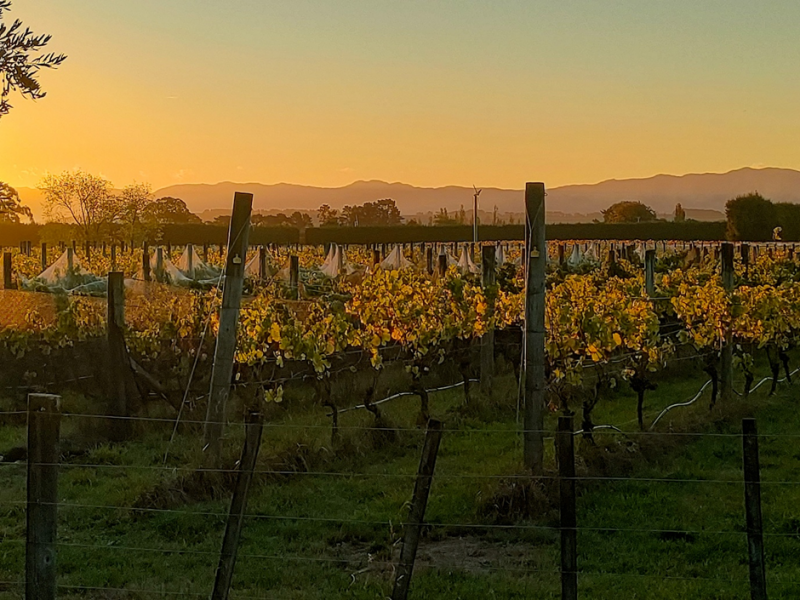
The Classic New Zealand Wine Trail is one of the country’s most rewarding journeys for travellers who want to experience New Zealand through its vineyards, landscapes, food culture, and small towns. Linking three key wine regions — Hawke’s Bay, Wairarapa (including Martinborough), and Marlborough — with the capital city of Wellington, the trail offers a rare combination of diversity and continuity: coastal Chardonnay and Syrah, benchmark Pinot Noir, vibrant Sauvignon Blanc, and a string of cellar doors ranging from historic estates to small, family‑run producers.
Yet for all its appeal, the Classic NZ Wine Trail is not always straightforward to plan. The regions are well connected by road and ferry, but the major international airports sit off to the side, and Wellington — the geographic and cultural heart of the trail — sits in the middle rather than at either end. Travellers often find themselves unsure where to begin, how to avoid backtracking, or how to fit the ferry crossing into a realistic schedule.
This guide sets out a clear, practical 10‑day itinerary that solves those challenges. It shows how to travel the trail in either direction — starting in Auckland or Christchurch — and how to experience each region without rushing. It also links to detailed regional guides for Hawke’s Bay, Wairarapa, and Marlborough, allowing you to explore each area in more depth as you plan.
Classic NZ Wine Trail Itinerary (North → South / South → North) Summary
Legend
🟦 Hawke’s Bay
🟩 Wairarapa
🟧 Marlborough
🟪 Inter‑region travel + winery stops
| North → South | South → North |
|---|---|
| 🟦 Day 1 Fly to Napier/Hastings from Auckland or drive from Taupō Taradale wineries | 🟧 Day 1 Coastal Pacific Train to Picton Or fly to Nelson, drive to Blenheim Johanneshof or Wine + Food |
| 🟦 Day 2 Bridge Pa / Gimblett Gravels | 🟧 Day 2 Wairau Valley wineries |
| 🟦 Day 3 Te Awanga and Havelock | 🟧 Day 3 Wairau Valley wineries |
| 🟪 Day 4 Drive to Martinborough Stop at Le Gra and Urlar en route | 🟧 Day 4 Yealands and Wine Shed Wine + Food |
| 🟩 Day 5 Martinborough wineries | 🟧 Day 5 Dog Point, Fromm and Spy Valley |
| 🟩 Day 6 Escarpment Drive to Wellington Ferry to Picton or fly to Nelson | 🟪 Day 6 Drive to Nelson & fly to Wellington Or drive to Picton & ferry to Wellington |
| 🟧 Day 7 Wairau Valley wineries Wine & Food Blenheim | 🟩 Day 7 Drive to Martinborough Martinborough wineries |
| 🟧 Day 8 Wairau Valley wineries | 🟩 Day 8 Escarpment, Urlar and Le Gra Drive to Hawke’s Bay |
| 🟧 Day 9 Yealands and Wine Shed | 🟦 Day 9 Te Awanga and Havelock wineries |
| 🟧 Day 10 Dog Point, Fromm and Spy Valley | 🟦 Day 10 Bridge Pa / Gimblett Gravels |
| 🟪 Day 11 Drive to Picton, visit Johanneshof Coastal Pacific Train departs 1:40pm to Christchurch Or drive south Or fly Nelson to Christchurch | 🟦 Day 11 Taradale wineries Fly to Christchurch or Auckland |
Arriving from Europe, Asia, or the Americas
If you are flying from or via Asia, the United States, or South America, and you’re fitting the Classic New Zealand Wine Trail into a wider New Zealand itinerary, you will almost certainly arrive into Auckland. From here, most travellers either:
Begin a broader North Island journey
This might include the Bay of Islands, Waipoua Forest, Rotorua, Waitomo, and Lake Taupō. From Taupō, it’s a comfortable two‑hour drive to Napier, the northern gateway to the Classic NZ Wine Trail.
If you want to include winery visits around Auckland, the Far North, or Gisborne, see my North Island Wine Travel Guide.
Fly directly to Hawke’s Bay
If your focus is the wine trail itself, there are direct flights from Auckland to Napier–Hastings Airport, taking about an hour.
Once in Hawke’s Bay, allow at least three days to explore before heading south to Martinborough in the Wairarapa. Spend two days here before the scenic 90‑minute drive over the Remutaka Range to Wellington, where you can either fly to Nelson or take the ferry to Picton, gateway to Marlborough. You’ll want three to four days in Marlborough before continuing south or returning to Auckland or Christchurch.
Arriving from Australia
If you’re flying from Australia and your primary focus is the Classic New Zealand Wine Trail, the most convenient and logical starting point is Christchurch. Both Qantas and Air New Zealand operate direct flights from Melbourne, Sydney, and Brisbane, with a mix of morning, afternoon, and evening departures depending on the day of the week.
Regardless of your arrival time, an overnight stay in Christchurch is usually the most relaxed option before beginning the trail the following morning. If you arrive on a morning flight, you may prefer to connect straight through to Nelson, which has several short direct flights from Christchurch each afternoon. From Nelson Airport it’s an easy drive to Blenheim, the heart of the Marlborough wine region and the southern anchor of the Classic NZ Wine Trail.
If you’re not flying to Nelson, the most enjoyable and scenic way to begin your journey is the Coastal Pacific train from Christchurch to Picton. It departs at 7:00am and arrives at 12:40pm, travelling through some of the South Island’s most dramatic coastal landscapes. The Scenic Plus upgrade includes a fine‑dining breakfast and lunch, making it a memorable start to your wine‑trail adventure. Rental cars are available in Picton, and it’s only a short 25‑minute drive to Blenheim — with your first winery stop conveniently on the way.
Allow three to four days to explore Marlborough before continuing north. From Picton, you can take the ferry across Cook Strait to Wellington, gateway to the Wairarapa wine region. The first half of the crossing through Queen Charlotte Sound is spectacular on a calm day. If you’re prone to seasickness and the weather looks rough, consider driving to Nelson for a short direct flight to Wellington instead.
From Wellington, it’s a scenic 90‑minute drive over the Remutaka Range to Martinborough. Plan two days here — one for the Martinborough Terrace and another for the wider Wairarapa — before continuing north to Hawke’s Bay (around three hours). At the end of your journey, Air New Zealand offers direct flights from Napier to both Christchurch and Auckland for your onward travel.
Marlborough
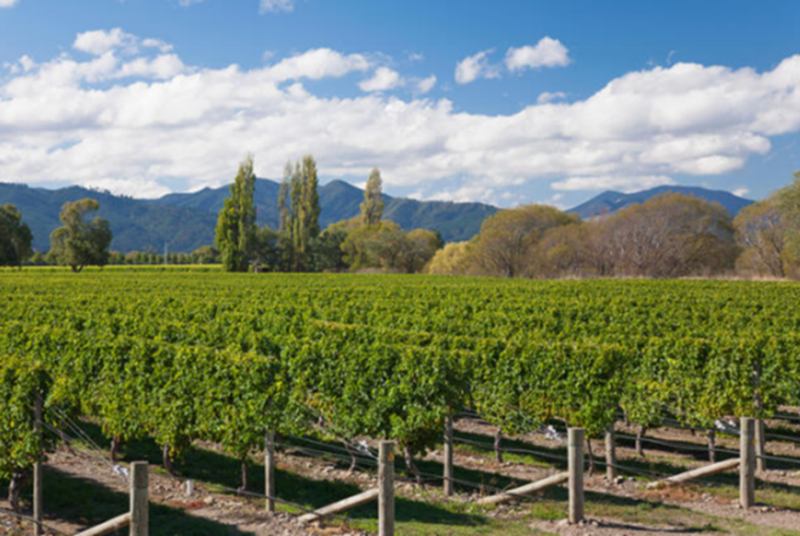
Marlborough sits at the top of New Zealand’s South Island and is the country’s largest and most influential wine region, responsible for around two‑thirds of national plantings and the global rise of New Zealand Sauvignon Blanc. Its success stems from a rare combination of high sunshine hours, cool maritime nights, low rainfall, and free‑draining glacial gravels that preserve acidity while building vivid, concentrated flavour.
Commercial plantings began only in the 1970s, yet by the 1980s Marlborough Sauvignon Blanc had captured international attention for its purity, aromatic lift, and unmistakable style — eventually redefining the global benchmark for the variety. Today the region is far more than its flagship grape: Marlborough produces world‑class aromatics, increasingly refined Pinot Noir, and a growing portfolio of Chardonnay and sparkling wines that highlight the diversity of its sub‑regions and winemaking talent.
Marlborough is best understood through its three distinct sub‑regions — Wairau Valley, Awatere Valley, and the Southern Valleys — each with its own mesoclimate, soil profile, and stylistic signature. Allow three days, ideally four, to explore the region properly.
A more detailed regional orientation — including sub‑regions, travel logistics, and cellar‑door planning — can be found in your full Marlborough guide
A First Stop Before the Valleys — Johanneshof Cellars
Before you reach the Wairau Valley, just ten minutes south of Picton, Johanneshof Cellars sits alone in the rolling hills on the road to Blenheim. While they produce Sauvignon Blanc, the real reason to stop is their exceptional aromatic whites — particularly the Gewürztraminer, a New Zealand super‑classic since 2010 and winner of the Decanter International Trophy for Best Aromatic White Wine in the World (2005). The underground cellars are a highlight and unlike anything else in Marlborough. Bookings essential.
After leaving Johanneshof and continuing toward Blenheim, you enter the broad alluvial plain of the Wairau Valley.
Wairau Valley
The Wairau Valley surrounds the town of Blenheim and stretches west along the Wairau River toward Renwick. A broad alluvial plain framed by the Richmond Range to the north and the Wither Hills to the south, it enjoys long sunshine hours, warm days, cool nights, and a strong maritime influence. Soils are predominantly old gravel riverbeds with pockets of clay, loam, and silt, creating subtle shifts in ripeness, aromatics, and texture across the valley.
Wine styles
Wairau wines are generous and expressive. Sauvignon Blanc shows ripe tropical fruit, passionfruit, capsicum, and classic mid‑palate weight. Pinot Noir tends toward plush dark‑cherry fruit and soft tannins, while Riesling, Pinot Gris, and Gewürztraminer are vibrant and pure. Chardonnay and sparkling wines are increasingly refined, with citrus‑stone fruit profiles and bright acidity.
Recommended Producers — Wairau Valley
Relaxed, elegant tastings with knowledgeable staff. Benchmark Sauvignon Blanc, wild‑ferment Te Koko, refined Chardonnay and Pinot Noir. Excellent on‑site Japanese restaurant.
Nautilus Estate& No 1 Family Estate
Two iconic Renwick producers, especially for méthode traditionnelle. Nautilus offers precise Chardonnay, Pinot Noir, and sparkling wines; No. 1 Family Estate produces world‑class Champagne‑method wines.
Allan Scott Family Winemakers.
One of the first families to plant vines in the Wairau Valley. Bright, expressive Sauvignon Blanc and refined aromatics. Excellent bistro.
Founded by two scientists, Forrest is known for meticulous winemaking and a wide range of interesting varietals including Chenin Blanc, Albariño, Grüner Veltliner, Petit Manseng, Lagrein, and Syrah.
A cult favourite for aromatic whites, especially Riesling. Small‑batch, expressive, and age‑worthy.
One of New Zealand’s most artisanal and adventurous producers. Organically farmed, low‑yield vineyards producing everything from Zweigelt to Montepulciano. Book the private tour.
A small, organically certified family estate with a peaceful garden‑style cellar door. Pinot Blanc, Blanc de Blancs, and single‑vineyard Pinot Noir are highlights.
Awatere Valley
South of the Wairau, the Awatere Valley stretches inland from the coast toward the Kaikōura Ranges. It is Marlborough’s most geographically distinct sub‑region — cooler, drier, windier, and more rugged, with a longer growing season and naturally lower yields. Soils are a mix of greywacke, loess, and alluvial deposits, often shallower and more mineral‑driven than Wairau’s gravels.
Wine styles
Awatere wines are dramatic and distinctive. Sauvignon Blanc is herbal, saline, and mineral, often showing tomato leaf, jalapeño, lime, and taut acidity. Pinot Noir is bright and finely structured, while Riesling and Pinot Gris benefit from the valley’s cool nights and long ripening window. Chardonnay tends to be leaner and more citrus‑driven.
Recommended Producers — Awatere Valley
Dramatic coastal setting with sweeping Pacific views. Bright, pure, often saline wines. Albariño and Rosé are standouts.
Aotearoa’s first Māori‑owned wine company. Vibrant, pure Awatere wines. Tastings available at HOME - Wine + Food, Experience Marlborough in Blenheim.
The founding winery of the Awatere Valley. Benchmark Sauvignon Blanc and excellent Pinot Noir, Chardonnay, Pinot Gris, and Riesling. No longer operating a cellar door but try their wines when dining in Blenheim.
Southern Valleys
Running along the inland foothills of the Wither and Richmond Ranges, the Southern Valleys (Brancott, Omaka, Fairhall, Ben Morven, and Waihopai) form Marlborough’s most structurally expressive sub‑region. Cooler and drier than central Wairau, with strong diurnal shifts, the area is defined by deep clay loams layered over glacial gravels.
Wine styles
The Southern Valleys are Marlborough’s natural home for serious Pinot Noir, producing wines with deeper colour, firmer tannin, and savoury complexity. Chardonnay is finely textured and mineral, often with subtle flint and beautifully integrated oak. Sauvignon Blanc is more restrained and textural, while Pinot Gris and Riesling show extra mid‑palate weight.
Recommended Producers — Southern Valleys
Organic farming, low‑intervention winemaking, and some of Marlborough’s most textural Sauvignon Blancs and age‑worthy Chardonnays and Pinots. Exceptional weekday tour.
European sensibility with a focus on texture and savoury detail. Outstanding Pinot Noir, Syrah, and single‑vineyard bottlings.
Cloudy Bay founding winemaker Kevin Judd’s personal project. Wild‑ferment Sauvignon Blancs, refined Chardonnay, and perfumed Pinot Noir. Book by personal appointment or try their wines at the Wine Shed in Blenheim.
Remote, rugged Waihopai Valley setting. Expressive Sauvignon Blanc, structured Pinot Noir, and excellent aromatics.
Martinborough and the Wairarapa
Although the Wairarapa accounts for only around 3% of New Zealand’s wine production, it plays an outsized role on the Classic New Zealand Wine Trail. The region’s small scale, hands‑on winemaking, and distinctive savoury Pinot Noirs make it one of the most rewarding stops on the journey — and for many travellers, the most memorable.
If you’re arriving from Hawke’s Bay, the drive south takes just under three hours. Your first stop is Opaki, just north of Masterton, where you’ll find Le Gra, a boutique producer on Loopline Road offering relaxed tastings and excellent platters — a perfect lunch stop if you’ve left Hawke’s Bay in the morning.
After lunch, continue through Masterton and turn left onto East Taratahi Road, following it straight to Urlar on Dakins Road. Their five‑wine tasting lets you choose from more than a dozen options, and if you skipped Le Gra, Urlar also offers a very good lunch. Open Friday to Sunday, 11am–4pm. Bookings essential.
Or, having arrived in the region from Wellington you might include Urlar and Le Gra before the three hour drive to Hawkes Bay.
Martinborough is the heart of the Wairarapa wine region and one of New Zealand’s most compact, walkable wine villages. You’ll need a full day to explore properly. The wineries on the Martinborough Terrace can be visited on foot or by bicycle, but you’ll need a car to reach Te Muna Road. Allow 75-90 minutes for the Martinborough-Wellington drive after.
Below are two suggested day plans — one for staying close to the village, and one that includes Te Muna.
Option 1 — A Walkable or Cycle‑Friendly Day on the Martinborough Terrace
Palliser Estate — Elevated Tasting & Tour
Begin with Palliser’s 90‑minute elevated tasting, which includes a tour of the winery and barrel hall, barrel samples, and a guided tasting in the underground cellar.
Walk next door to Nga Waka for the best gourmet pizza in Wairarapa and an expansive tasting.
For a deeper look at Nga Waka Martinborough, my full winery profile is here.
If it’s Monday or Tuesday, head instead to Poppies for an outstanding platter lunch and tasting. Bookings essential.
If you only visited one winery in Martinborough, it should be Ata Rangi. One of the original pioneers, still family‑owned, and home to some of New Zealand’s most celebrated Pinot Noirs and Chardonnays. Book the 2pm guided tasting.
At the eastern end of the same road, Runholder is home to Martinborough Vineyard and Te Kairanga. Bookings essential.
Alternatively, if you lunched at Nga Waka, visit Poppies for a relaxed stand‑up tasting (open until 4pm, no booking required).
Option 2 — A Day Including Te Muna Road
Escarpment Winery — Te Muna Road
Founded by Larry McKenna, Escarpment is renowned for its single‑vineyard Pinot Noirs and distinctive Te Muna expression. Bookings required.
Return to the village for lunch and a custom tasting.
As previously noted, this is a must-do!
Finish the day with a tasting at Palliser.
Practical Notes
Most Wairarapa wineries are small, family‑run operations, and cellar‑door hours can be limited or seasonal. Many are open only on weekends, and some require bookings for all tastings. To avoid surprises, check the Wairarapa Wines cellar‑door schedule, which provides the most accurate, up‑to‑date overview of opening hours across the region.
If you prefer to remove the uncertainty — or want deeper regional insight, access to smaller producers, or a more relaxed day — I offer private, small‑group tours of both Martinborough and the wider Wairarapa through wineinsights.
Hawke’s Bay
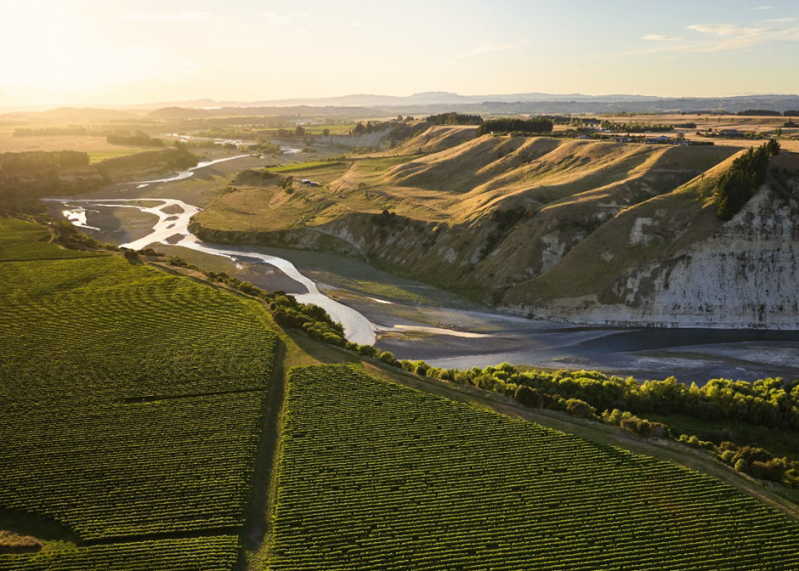
Hawke’s Bay is the northern anchor of the Classic New Zealand Wine Trail and one of New Zealand’s most diverse wine regions. Its landscapes range from coastal terraces to inland river gravels and rolling hills, producing everything from elegant Chardonnay to structured Bordeaux blends and Syrah. Because the region is so varied, it rewards a minimum of three days, ideally more.
Below is a neutral overview of the key sub‑regions, written so it makes sense whether you are arriving from the north or the south.
Sub‑regions of Hawke’s Bay
Taradale
Close to the airport and just off the main route from Taupō, Taradale is home to two of New Zealand’s most historic wineries. It’s compact, easy to navigate, and ideal for an arrival or departure day when you don’t have time for a full itinerary.
Gimblett Gravels
A warm, free‑draining alluvial terrace of greywacke stones, famous for powerful, structured reds — particularly Merlot‑dominant blends and Syrah. Many of the region’s most acclaimed reds come from here.
Bridge Pa
Adjacent to the Gravels, Bridge Pa has red metal gravels and clay loams that produce slightly cooler, more aromatic expressions of Syrah, Merlot, Chardonnay, and Viognier. The Bridge Pa Triangle and Gimblett Gravels are connected by a popular cycle route.
Havelock Hills
Rising behind Havelock North, these slopes offer varied aspects and soils that produce refined Chardonnay and, from warmer sites, Syrah and Bordeaux varieties. Craggy Range sits here beneath Te Mata Peak.
Te Awanga
A coastal sub‑region known for lifted, saline Chardonnay and Syrah. The ocean influence gives the wines freshness and tension, and the cellar doors here are among the most scenic in the region.
How to Spend Three Days in Hawke’s Bay
This structure works whether you’re arriving from Taupō, from the Wairarapa, or from the airport. Each day includes core recommendations plus a reminder that there are many other excellent options depending on your pace and interests.
Day 1 — Taradale (Arrival or Departure Day)
This is a half‑day designed for travellers arriving late morning from Taupō or flying in/out of Napier. It’s compact, easy, and historically significant.
One of New Zealand’s most historic wineries, offering excellent tasting experiences including their flagship TOM Chardonnay, Syrah, and Bordeaux blend. A strong introduction to Hawke’s Bay styles.
New Zealand’s oldest winery, just a few minutes away. A beautiful setting with a wide range of approachable wines and a sense of history.
Brookfields (optional if you have more time)
A small, characterful family estate producing expressive Syrah, Merlot blends, and Chardonnay. A great addition if you have a full afternoon.
There are many other options in and around Taradale, but these three form a logical, relaxed flow for an arrival or departure day.
Day 2 — Bridge Pa and the Gimblett Gravels
This is your structured red‑wine day, ideal for exploring the region’s most famous terroirs. You can drive or cycle — the cellar doors are close together.
A perfect starting point. Excellent Chardonnay, Syrah, and Bordeaux blends. Homage Syrah is a benchmark wine.
Founded by Kate Radburnd, one of New Zealand’s most respected winemakers. Small‑production, high‑precision Chardonnay, Syrah, and Merlot blends. Tastings are intimate and focused.
A long‑established family estate in the Bridge Pa Triangle, producing characterful Syrah, Merlot, and Cabernet blends, plus a well‑regarded Viognier.
A polished, modern cellar door with structured, age‑worthy Bordeaux blends and Syrah. A natural final stop after Radburnd and Alpha Domus.
There are many other wineries in both Bridge Pa and the Gimblett Gravels — including several on the cycle route — so travellers can easily expand or customise this day.
Day 3 — Te Awanga Coast, Craggy Range, and Havelock North
This is your coastal‑to‑hills day, combining scenery, architecture, and some of the region’s most refined wines.
Begin your day on the coast. Striking architecture, ocean views, and superb Chardonnay, Syrah, and Bordeaux blends. A beautiful place for a late morning tasting or lunch.
In the afternoon, head inland to Craggy Range beneath Te Mata Peak. One of New Zealand’s most polished visitor experiences. The Giants Estate Experience is particularly memorable.
Smith & Sheth Oenothèque — Havelock North
Finish the day in the village. A stylish tasting room offering curated flights across multiple regions, small plates, and a relaxed evening atmosphere.
Depending on your interests and the pace you prefer, you could also include other regional icons such as Te Mata Estate or Clearview.
Conclusion
The Classic New Zealand Wine Trail is more than a line on a map — it’s a journey through three of the country’s most distinctive wine regions, anchored by the energy and culture of Wellington. Planned well, it becomes a seamless progression from coastal Chardonnay and Syrah in Hawke’s Bay, through the savoury Pinot Noirs and characterful cellar doors of Martinborough and the wider Wairarapa, to the vibrant Sauvignon Blanc and increasingly diverse styles of Marlborough.
Every traveller approaches the trail differently. Some want a relaxed pace with long lunches and scenic detours; others prefer a more structured route with specific producers in mind. Many simply want to avoid the logistical traps that can cost time and dilute the experience. With the right planning, the Classic NZ Wine Trail becomes not just a series of tastings, but a connected journey through landscapes, people, and stories that define New Zealand wine.
If you’re visiting Martinborough or the wider Wairarapa, I offer private, small group tours that focus on thoughtful hosting, deep regional knowledge, and access to producers who value genuine connection over volume. And if you’re planning the entire Classic NZ Wine Trail, I can also accompany you for the full journey — not just plan it. From Hawke’s Bay through the Wairarapa and Wellington to Marlborough, I’m able to guide, host, and coordinate each stage so the experience feels seamless, personal, and unhurried.
Whether you want help shaping the itinerary or prefer a fully hosted wine trail journey from start to finish, I’m always happy to create something tailored to your pace, interests, and curiosity. If you’d like guidance as you plan your own journey along the Classic New Zealand Wine Trail, you’re welcome to get in touch.
Key Topics
-
Classic New Zealand Wine Trail itinerary
-
New Zealand wine travel planning
-
Hawke’s Bay wineries and cellar doors
-
Wairarapa and Martinborough wine region
-
Wellington food and wine experiences
-
Marlborough wine region and cellar doors
-
Two‑week New Zealand wine itinerary
-
Wine tasting and regional highlights
-
Scenic drives and travel logistics
-
Recommended wineries and tasting notes

About the author
John Penney is a wine experience guide based in Martinborough, New Zealand. His lifelong passion for wine has been deepened through extensive international wine travel, formal wine study (WSET3) and a career in adult learning. Through his Martinborough-based business wineinsights, he provides exceptional wine tour, wine-tasting and wine education experiences for wine lovers and enthusiasts.
Add comment
Comments