When I first developed this workshop, I had a fairly clear picture of who might attend. I imagined the wine enthusiast who has been quietly building their interest over the years — reading a little, tasting a little, perhaps visiting cellar doors on weekends — and who wants to take a step beyond simply enjoying wine to actually understanding it. I also imagined the people working in cellar doors or winery restaurants, often on short‑term contracts or working holidays, suddenly expected to explain winemaking decisions with confidence. You’re handed a tasting sheet, a few quick notes, and then you’re out there representing a winery to paying customers. It’s a lot to take on, and the learning curve can be steep.
But as the course evolved, something became very clear: the workshop wasn’t just for those two groups. It turned out to be just as valuable for people who simply enjoy wine and want to get more out of it — people who aren’t chasing qualifications, who don’t work in hospitality, but who want to understand what they’re tasting and describe it without hesitation. The course has become a kind of sensory “reset”: a way to build real understanding without needing weeks of study or a major financial commitment.
The Essentials Course is deliberately compact — a half‑day, usually held on a weekend — because I want it to be accessible. For industry participants, I’m happy to run it on weekdays to suit opening patterns and rosters. And for employers, I can run the workshop at your own location anywhere in the Greater Wellington region, provided there are at least eight participants. The cost is $150 per person. The focus is on building a strong sensory foundation using New Zealand wines, where the learning is immediate and relevant. You don’t need to memorise regions or grape varieties. You just need to learn how to taste with purpose.
My background helps here. Before wine became my full‑time work, I spent decades in adult learning and capability development. My degree is in learning psychology, and much of my career involved figuring out how people learn, how they retain information, and how to design experiences that actually change behaviour. I’ve also spent years tasting wine, writing about wine, and working in a cellar door myself. If you’d like to know more about my own wine journey and the learning experiences that shaped it, you can explore A Wine Lover’s Progress. All of that comes together in this workshop.
Take malolactic conversion — “malo” — a term that gets thrown around a lot in Chardonnay discussions. In many workplaces, the explanation is quick and vague. Something about apples and creaminess. But in this course, we slow down. We talk about what malolactic conversion actually is, what lactic bacteria do, how acidity changes, how aromas shift. And then you taste it. You taste malic acid. You taste lactic acid. You compare two Chardonnays made with similar winemaking choices, one with full malo and one without. Suddenly the concept isn’t abstract. It’s in your mouth. You feel the difference.
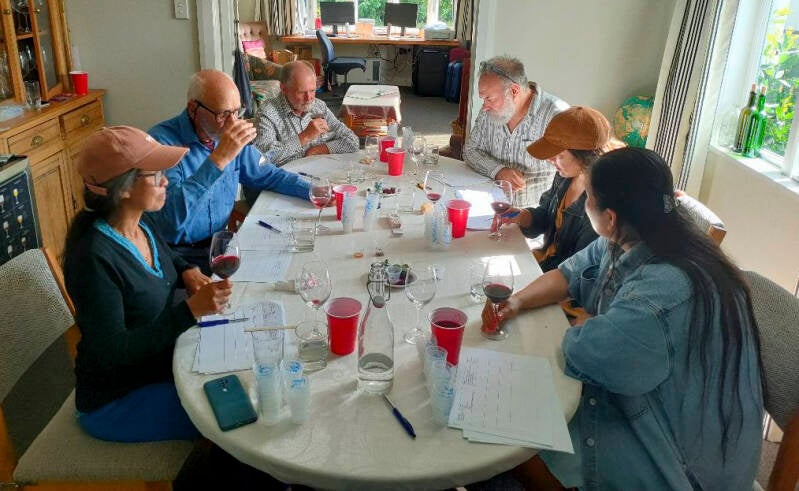
That’s the pattern throughout the workshop. Concepts become experiences. Experiences become understanding. Understanding becomes confidence.
And confidence is what most people are really looking for — whether you’re representing your employer’s wines at a cellar door or simply wanting to make more informed choices for yourself and your friends. The course gives you a vocabulary, but more importantly, it gives you the sensory grounding that makes that vocabulary meaningful. You stop guessing. You start recognising. You start trusting your palate.
One of the most satisfying parts of running this workshop is watching people realise that wine isn’t mysterious. It’s complex, yes — but not inaccessible. Once you understand the building blocks of aroma, flavour, structure, and winemaking influence, the whole world of wine opens up in a way that feels both exciting and manageable. You don’t need to know everything. You just need to know how to taste.
If you’d like to attend the course — or if you’re an employer wanting to arrange a session for your team — you can register your interest using the contact form or email info@wineinsights.org. Once I have a small group ready, I schedule a date that suits. The workshop is hands‑on, practical, and designed to give you skills you can use immediately, whether you’re pouring wine for customers or simply enjoying a glass at home.
About the Author
I’m John — a wine writer, educator, and founder of wineinsights. When I’m not teaching sensory evaluation, I’m guiding small‑group and private Martinborough wine tours, where tasting, storytelling, and regional insight come together to help people connect more deeply with the wines of this place. My background in adult learning shapes everything I do, from the courses I run to the articles I write, with one aim: helping people understand wine in a way that feels clear, enjoyable, and lasting.
Add comment
Comments