By John Penney (WSET3) Wine experience guide, educator and writer

An abbreviated version of this article appeared in the July 2026 edition of the Martinborough Star
Something has shifted in the public conversation about wine. Not long ago, wine sat comfortably in the cultural space of food, hospitality, and conviviality. Today, it often appears in headlines as a health hazard, stripped of context and treated as indistinguishable from the most harmful patterns of alcohol use. The tone has hardened, the nuance has evaporated, and the algorithms have done the rest.
The result is a climate where wine is increasingly framed not as part of a meal or a cultural tradition, but as a risk category—flattened, simplified, and moralised. Yet the reality, both scientifically and socially, is far more complex.
The health evidence is far from black and white
The phrase “no safe level of alcohol” has become a kind of mantra—simple, absolute, and perfectly engineered for the attention economy. But the underlying science is far more nuanced.
Large epidemiological studies consistently show that risk is shaped by pattern, context, and quantity, not merely the presence of alcohol itself. Heavy episodic drinking drives the overwhelming majority of alcohol‑related harm. Moderate, meal‑based consumption sits in a very different behavioural category.
But nuance rarely survives the journey from scientific paper to headline. The public hears absolutes; the evidence itself is anything but.
Wine is consumed differently—and that matters
Wine has always lived in a different cultural and behavioural space from other forms of alcohol. Across many countries, wine is most often consumed:
- slowly
- with food
- in social settings
- in smaller volumes
- as part of long‑established culinary traditions
These patterns influence both physiological impact and social meaning. A glass of wine with dinner is not equivalent to rapid consumption of spirits or binge‑drinking behaviours that dominate global harm statistics. But in the current climate, all alcohol is treated as a single, undifferentiated category—an approach that may be tidy for messaging but is misleading for public understanding.

Wine is most often consumed in social settings with food like this small outdoor birthday celebration.
The ideological tilt shaping global alcohol policy
Another under‑examined factor is the cultural lens through which global alcohol policy is increasingly framed. Several Scandinavian public‑health institutions—rooted in long temperance traditions—hold significant influence in WHO advisory structures. Their worldview emphasises abstinence‑based approaches and treats any level of consumption as inherently problematic.
This influence is not illegitimate, but it is rarely acknowledged. When WHO statements adopt a “no safe level” framing, they often reflect a particular cultural stance rather than a universal scientific consensus. The result is a global narrative shaped disproportionately by regions where alcohol has historically been viewed through a moral or temperance‑based lens.
When a major scientific study was shut down before it could begin
The climate has become so resistant to nuance that even attempts to conduct better science have been derailed. The clearest example is the cancellation of the U.S. NIH‑funded MACH15 trial in 2018—a $100 million, multi‑country, long‑term randomised study that would have been the world’s first rigorous test of whether moderate drinking (one drink per day) has cardiovascular benefits.
This was not another observational study. It was designed as a randomised controlled trial, the gold standard for establishing causation. More than 7,000 participants were to be followed for six years. For the first time, researchers would have been able to directly test whether moderate wine or alcohol consumption influenced heart health, rather than relying on population correlations.
Yet the study was shut down before it properly began.
The cancellation did not stem from scientific flaws in the design. Instead, it followed intense pressure from anti‑alcohol advocacy groups who objected to the possibility that the study might show benefits of moderate drinking. Concerns were raised about industry co‑funding—despite the fact that NIH routinely accepts industry contributions in other fields—and the optics of researching potential positive effects of alcohol in a political climate increasingly dominated by absolutist messaging.
The result was the loss of what could have been the most definitive study ever conducted on moderate drinking. It was a moment that revealed how ideology, advocacy pressure, and fear of inconvenient findings can override scientific curiosity. In a healthier research environment, the appropriate response to uncertainty is better evidence. Instead, the world’s best attempt at generating that evidence was halted.
This episode sits at the heart of the current problem: the public narrative is being shaped not only by science, but by politics, optics, and a growing discomfort with complexity.
When doctors make wine: a perspective missing from today’s debate
One of the most striking omissions in the current conversation is the long, distinguished history of medical doctors who have played central roles in the wine world. These are not fringe figures or hobbyists; they are respected clinicians who understand both the science of human health and the craft of winemaking. Their presence doesn’t “prove” wine is healthy, but it does challenge the idea that the relationship between wine and wellbeing is simple, settled, or one‑directional.
Across the global wine industry, several influential wineries were founded or shaped by doctors who saw wine not as a public‑health threat but as a cultural, agricultural, and gastronomic good—something to be approached with respect, moderation, and understanding.
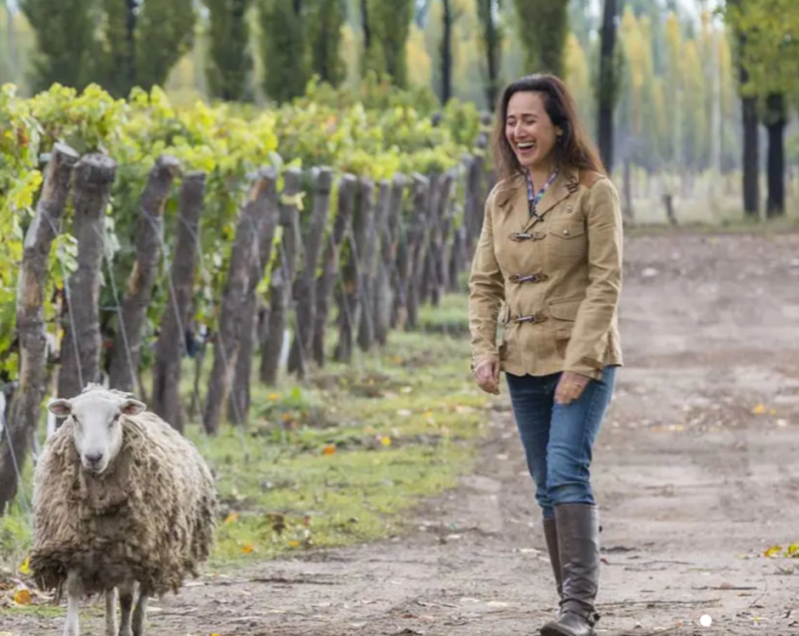
Dr Laura Catena of Bodega Catena Zapata fame
Notable examples include:
- Dr Laura Catena, MD (Argentina) — Emergency physician and managing director of Bodega Catena Zapata. Her scientific training informs the winery’s research‑driven approach to high‑altitude viticulture.
- Dr Ivan Donaldson (New Zealand) — Eminent neurologist and founder of Pegasus Bay. His medical background shaped the winery’s sensory philosophy and long‑term vision.
- Dr Max Lake (Australia) — Sydney hand surgeon and founder of Lake’s Folly, widely regarded as Australia’s first boutique winery. Lake wrote influential books on flavour, aroma, and the psychology of taste.
- Dr Tom Cullity (Australia) — Perth cardiologist who founded Vasse Felix, the first winery in Margaret River and a cornerstone of modern Australian fine wine.
- Dr Philip Norrie (Australia) — GP and medical historian who has written extensively on wine and health, exploring both historical and scientific perspectives.
- Dr John Bry (California) – A vascular surgeon who operates Perfusion Vineyard producing Pinot Noir
- Dr Madaiah Revana (Texas/Napa/Oregon) – Houston based cardiologist who founded Revana Estate in Napa, Alexana Winery in Oregon and Bodega Corazon del Sol in Argentina
- Dr Bonnie Henry (British Columbia) - B.C’s Provincial Health Officer (top doctor) is a co-founder and part owner of Clos du Soleil a winery in Keremeos, B.C.
These individuals do not represent an argument from authority. Rather, they illustrate that the relationship between wine and health has always been more nuanced than today’s absolutist headlines suggest. When trained clinicians choose to devote their lives to wine—often while continuing to practise medicine—it signals that the conversation is more complex than “wine equals harm.”
How algorithms turned nuance into frenzy
Modern media ecosystems reward simplicity, certainty, and alarm. The phrase “no safe level” is algorithmically perfect: stark, fear‑based, and highly shareable. Platforms amplify it because it performs well, not because it reflects the full body of evidence.
This creates a feedback loop:
- alarming headlines spread faster
- media outlets produce more of them
- public perception shifts toward absolutism
- nuance becomes almost impossible to reintroduce
Wine—slow, culinary, ritualised—gets swept into the same category as the most harmful drinking behaviours simply because the algorithm doesn’t care about context.
The missing conversation about relative risk
Another casualty of the current media climate is any meaningful sense of relative risk. Most headlines present alcohol risk in absolute terms, stripped of scale or comparison, which leaves the public with a distorted picture. A common example is the claim that “one drink a day increases cancer risk,” which is technically true in the narrowest statistical sense but deeply misleading without context. The absolute increase in lifetime cancer risk from moderate, meal‑based drinking is tiny—far smaller than the risk associated with obesity, smoking, inactivity, or even daily exposure to urban air pollution. Yet those comparisons rarely appear in the articles or social‑media posts that go viral. When risk is presented without proportion, the public is left with the impression that a glass of wine with dinner is as dangerous as smoking a pack of cigarettes, a comparison no serious epidemiologist would endorse. This flattening of risk is not education; it is distortion, and it feeds the same algorithmic incentives that reward fear over clarity.
What we risk losing
Wine is more than a beverage. It is agriculture, landscape, hospitality, and culture. It is the centrepiece of meals, conversations, and shared experiences. When all alcohol is framed as equally harmful, we lose the ability to distinguish between behaviours that genuinely drive harm and those that sit within long‑standing, socially integrated traditions.
This is not an argument for ignoring risk. It is an argument for proportion, honesty, and context. Public‑health messaging should absolutely target harmful drinking. But it should also acknowledge that the evidence is more complex than the headlines suggest—and that wine, in its traditional context, occupies a very different place in both culture and risk.
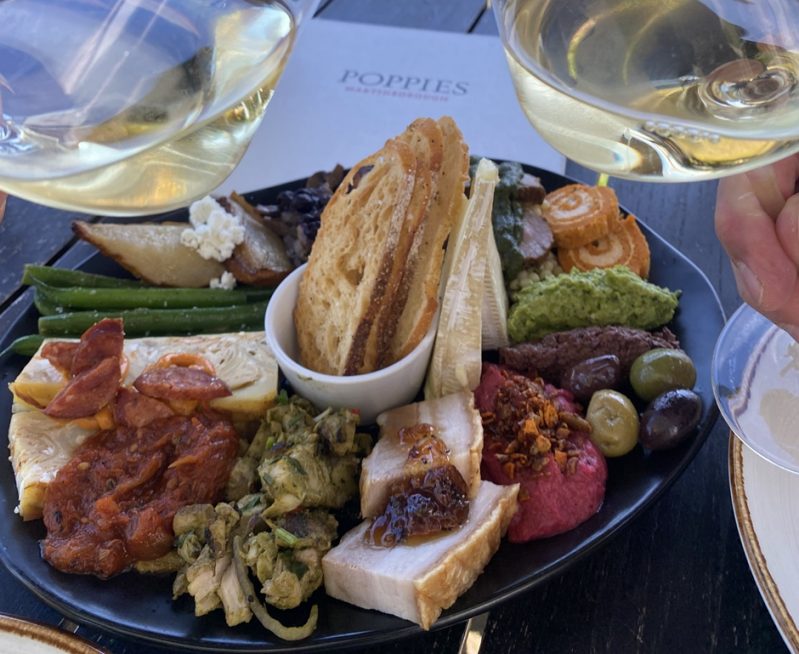
Food and wine, made for each other
A concluding perspective
From where I stand—as a wine tour guide and educator who spends my days introducing people to vineyards, winemakers, landscapes, and the stories behind the glass—the current climate feels strangely disconnected from the reality I see every day. Wine, in its traditional context, is not an accelerant of harm but a catalyst for connection: poured with food, shared in conversation, approached with curiosity rather than excess. The people who make it, including many trained doctors, understand both its risks and its gifts. And the guests who join my tours aren’t chasing intoxication; they’re seeking flavour, insight, place, and a deeper understanding of how wine fits into a life well lived. That lived reality deserves space in the public conversation. If we lose the ability to distinguish between harmful drinking and the cultural, agricultural, and social world of wine, we risk flattening something deeply human into something merely chemical—and that would be a loss far greater than the headlines acknowledge.
About the author.
My lifelong passion for wine has been deepened through international wine travel, formal wine study (WSET3) and a career in adult learning. Through my Martinborough-based business in New Zealand, wineinsights, I provide exceptional wine tour, wine-tasting and wine education experiences for wine lovers and enthusiasts. My expertise is further enriched by my role as cellarmaster for the Martinborough Wine and Food Society, in New Zealand’s renowned Pinot Noir region and my strong wine industry connections.
If you enjoyed this weekly blog, you can subscribe for free using the contact form or by emailing info@wineinsights.org. To see all my daily content follow me on Facebook.
Add comment
Comments