A story of land, people, and patient stewardship — tracing how a Martinborough classic is quietly shaping its next chapter.

A New Chapter Built on Deep Roots
For more than three decades, Nga Waka has been one of Martinborough’s quiet constants — a winery defined not by noise or fashion, but by discipline, restraint, and a deep understanding of its place. When Roger Parkinson planted the Home Block in 1988, he set out to make wines that spoke clearly of the Martinborough Terraces. Thirty‑six vintages later, that founding philosophy remains the backbone of the brand.
Roger’s tenure is one of the longest single‑winemaker arcs in New Zealand. Every Nga Waka wine from 1993 to 2024 carries his imprint: purity over power, structure over showiness, and an unwavering belief that great wine begins with great fruit. His Rieslings — bone‑dry, linear, and modelled on the classics of South Australia — became cult favourites. His Chardonnays and Pinot Noirs, handled with a “less is more” approach to oak and whole bunch, set benchmarks for the region. It is a legacy built on quiet excellence.
A Decade of Thoughtful Stewardship
When Jay Short and Peg Dupey purchased Nga Waka in 2015, they stepped into that legacy with a clear sense of stewardship. Jay’s professional background is in law, but both he and Peg had already gained experience as growers in California and Hawaii — a practical understanding of land, harvest cycles, and long‑term agricultural investment. Their approach to Nga Waka has been measured, careful, and deeply respectful of what Roger built.

Over the past decade, they have quietly strengthened the foundations of the business. Vineyard holdings have doubled. Old vines have been renewed. And in 2020, they appointed Mick Hodson as General Manager — a pivotal moment in Nga Waka’s evolution.
Mick began his wine career in 1992 with Eurowine (now Eurovintage) in Wellington, and over the following decades held senior roles across sales, marketing, and retail. Immediately before joining Nga Waka, he managed the original Glengarry Wines store on Jervois Road in Herne Bay — one of the country’s most influential fine‑wine retail environments. He also spent many years at Hancocks in their marketing team, giving him a deep understanding of distribution and brand building, as well as long familiarity with Nga Waka’s own wines.
With extensive experience in the Martinborough region and a rare blend of commercial insight and on‑the‑ground wine knowledge, Mick’s appointment signalled a shift from a founder‑led structure to a more resilient, professionally supported organisation. Under his leadership, operational systems were strengthened, the cellar‑door project gained momentum, and the business was positioned for the next phase of its development.
Plans for a cellar door moved from idea to blueprint to reality. And while the original intention was to build a small export presence in the United States, the complexities of the American distribution system sharpened Nga Waka’s focus on home — on Martinborough, on the Terraces, and on the wines that have always defined the brand.
The Arrival of Paul Mason
The most significant moment in this transition came with Roger’s retirement at the end of 2024 and the appointment of Paul Mason as winemaker. Paul arrives with twenty years of experience at Martinborough Vineyard, where he followed in the footsteps of Claire Mulholland and Larry McKenna and built a reputation for precision, balance, and deep regional understanding.
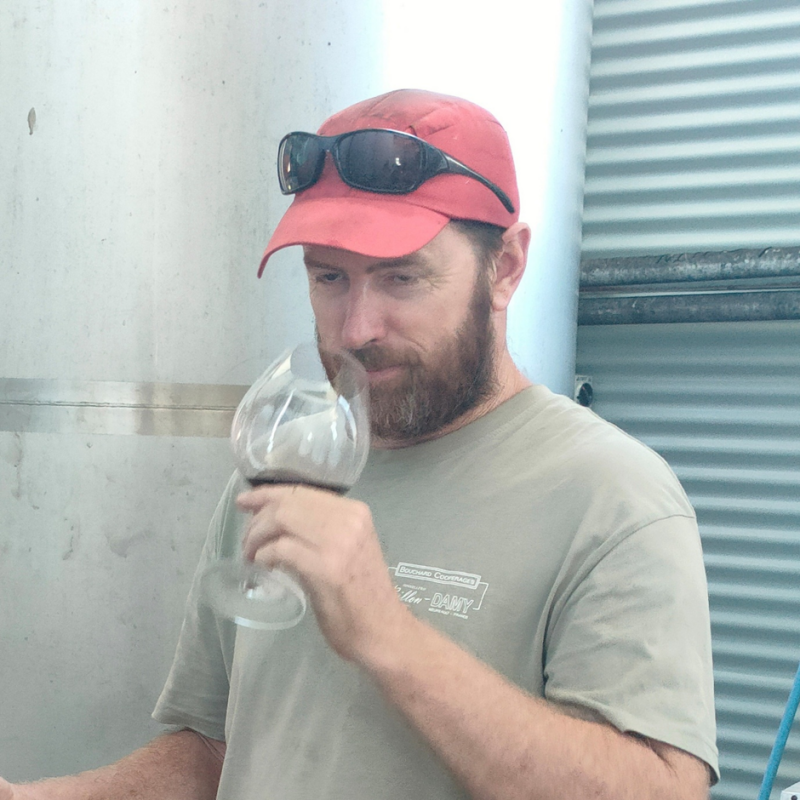
He is, in many ways, the natural successor: a winemaker fluent in Martinborough’s structure and tannin profile, committed to Pinot Noir and Chardonnay, and aligned with the restrained, food‑friendly style that has always defined Nga Waka. His first wines — the 2025 releases — already show his touch: a little more detail here, a little more finesse there, but unmistakably Nga Waka in their bones.
This is evolution, not reinvention.
The Vineyard Legacy
Just as Roger Parkinson shaped Nga Waka’s winemaking identity, long‑serving Vineyard Manager Mike Kershaw played an equally important role in shaping the fruit that defines the wines. Mike joined Nga Waka in 1996, and over 28 vintages became one of the quiet constants of the estate — a steady hand whose meticulous vineyard work underpinned the purity, consistency, and structural clarity that became hallmarks of the Nga Waka style. His contribution is recognised in the naming of the Mike Kershaw Block, one of the estate’s most important vineyard parcels — a lasting acknowledgement of the influence he had on the character and quality of the wines.
Nga Waka’s vineyards sit on the free‑draining gravel river terraces that make Martinborough one of New Zealand’s most distinctive wine regions. Low rainfall, windy springs that naturally temper early‑season vigour, warm summers, and long, cool autumns create ideal conditions for ripening while preserving acidity. Across seven vineyard sites surrounding the village, Nga Waka grows predominantly Pinot Noir and Chardonnay, with smaller plantings of Sauvignon Blanc, Riesling, and Rosé from Pinot Noir.
The estate is an accredited member of Sustainable Winegrowing New Zealand, a programme that requires continuous improvement in environmental management and is independently audited to ensure integrity. This framework has long guided the vineyard team’s approach — from soil health and water use to canopy management and biodiversity — and it remains central to how the vines are farmed today.
In 2024, Mike was succeeded by Matt Harper (Ngāti Kahungunu ki Wairarapa), whose own roots in the region run deep. Matt has worked in vineyards around Martinborough since 1995, including seven years at Nga Waka before stepping into the Vineyard Manager role. Known affectionately as a “tractor whisperer,” he brings a rare combination of technical skill, instinctive vineyard understanding, and generational local knowledge. His family has lived in the South Wairarapa for “quite a few” generations, and that connection to place is woven into his approach to the land.
Together, Mike’s legacy and Matt’s stewardship form a continuous thread — a vineyard lineage that mirrors the winery’s broader story of evolution grounded in deep respect for the past, the land, and the people who care for it.

Lismore and the Long View
If Paul’s appointment signals the stylistic direction of the next decade, the purchase of the famed Lismore Vineyard signals its physical foundation. Acquiring such a prime site on the Martinborough Terraces is rare, and Nga Waka’s decision to take it on — knowing it requires restoration, replanting, and patience — speaks volumes about the winery’s long‑term vision.
The plan is characteristically measured: remove the existing Pinot Noir and Pinot Gris in 2026, restore the soils, and replant in 2027. The first wines will not appear until 2030. Pinot Noir will remain the anchor, but Paul is already thinking beyond it. The warm, sheltered site and free‑draining soils make Lismore one of the most promising places in Martinborough to explore Syrah — a variety Nga Waka has long admired but never had the right site for.
Alongside the recent releases of Chenin Blanc and Gamay Noir, and the planned Syrah plantings, Lismore becomes the clearest expression of Nga Waka’s next chapter: confident, curious, but always grounded in place.
A Cellar Door That Brings the Story to Life
The opening of the Nga Waka cellar door in October 2022 marked another quiet but significant step in the winery’s evolution. Architecturally award‑winning and shortlisted for the NZIA Wellington Architecture Awards, the building is a physical expression of Nga Waka’s identity — contemporary, confident, and deeply rooted in the landscape.

Designed by Victoria Read of Aspect Architecture, with construction by Holmes Construction and landscape design by Hamish Moorhead, the cellar door draws inspiration from the legend of Kupe. The soaring roofline evokes the sails of Ngā Waka‑a‑Kupe, lifting above the solidity of the structure like a waka catching light and wind. Timber and crafted detailing mirror the hand‑made, quietly complex nature of the wines. Framed by the Home Block vines and the three hills that inspired the winery’s name, the space feels both grounded and elevated.
But the real heart of the cellar door is the people who bring it to life.
Since opening day, Nick Van Haarlem has led the cellar‑door team with a blend of strong hospitality experience, deep wine knowledge, and a natural ease with people. His ability to read a room, guide a tasting, and create a relaxed, welcoming atmosphere has become one of Nga Waka’s quiet strengths. Nick is ably supported by Matt Beker, whose own background in wine brings depth, insight, and an intuitive understanding of what visitors are looking for.

Together, they deliver one of the most consistently excellent cellar‑door experiences in Martinborough — warm, knowledgeable, unhurried, and grounded in genuine enthusiasm rather than a script.
Visitors often remark on the balance: knowledgeable without being technical, warm without being over‑familiar, attentive without hovering. It’s the same philosophy that shapes the wines — restraint, clarity, and a respect for the land — expressed through people rather than barrels and vines.
Nestled among the vines and surrounded by the hills that inspired its design, the Nga Waka cellar door feels like the natural extension of the winery’s evolution: a place where architecture, landscape, and hospitality all speak the same language.
A Modern, Visitor‑Ready Nga Waka
The winery’s Silver Qualmark certification adds another dimension to this evolution. It signals not just quality in the bottle, but quality in the experience — sustainability, safety, professionalism, and genuine hospitality. It reflects the systems and investment Jay and Peg have put in place, and it positions Nga Waka as a polished, welcoming presence in a region where visitor expectations continue to rise.
It is another quiet marker of progress — the kind that doesn’t change the wines but strengthens the world around them.
The Next Chapter Begins
Nga Waka today feels like a winery in motion: new winemaker, new vineyards, new varieties, a new cellar door, and a renewed focus on visitor experience. But the soul of the place — the restraint, the clarity, the deep respect for Martinborough — remains unchanged. This is not a revolution. It is a continuation, shaped by new hands but rooted in the same philosophy that has guided the winery since 1988.
And the best way to understand this new chapter is in the glass.
Below are my tasting notes from the current releases — wines that bridge the past and the future of Nga Waka with quiet confidence.
Nga Waka 2025 Rose.
Made from Pinot Noir grapes grown on the Lake Ferry Road Pirinoa Block, the only vineyard not on the Martinborough Terrace and characterised by a layer of clay, picked early, pressed off the skins after 5 hours, fermented in stainless steel.
Pearlescent pale salmon in the glass, with hints of jasmine overlaying the red apple, strawberry and cherry aromas. On the palate a deliciously moreish combination of lively red berry and plum fruit with a distinctly saline edge, crisp acidity and textural dryness.

Nga Waka 2024 Sauvignon Blanc
Martinborough Sauvignon Blanc is always a little more restrained, more tropical and typically drier than the Marlborough archetype and this is no exception. A Gold Medal winner in the 2025 National Wine Awards Aotearoa, the grapes are grown on the heavier clay soils of the Pirinoa Block and fermented in stainless steel.
Pale lemon, with distinct aromas of lime, passionfruit, longan, and capsicum. On the palate citrus flavours dominate the entry, with guava and passionfruit filling out the middle supported by a crisp acid spine, textural mouthfeel and great persistence.
Nga Waka 2025 Riesling.
A new release, from grapes grown on the particularly stony Mike Kershaw block. Cool fermented in stainless with extended time on lees.
Pale lemon in the glass with a slight green tinge, it has lovely aromas of crushed lime, green apple, honey, ginger and white florals. The palate reveals a stylistic shift from its predecessors, more textured, not as austerely dry, but with crunchy acidity, lime and green apple flavours and just a hint of ginger spice this is definitely one for the cellar but hard to resist now.

Nga Waka 2025 Chenin Blanc.
The very first vintage of this classic Loire variety, also from grapes grown on the Mike Kershaw block. Fermented in stainless steel with extended time on lees and 30% agedin old French oak barrels.
Pale lemon in the glass with a green tinge, presenting aromas of yellow apple and ripe pear with a gentle spice somewhere between cardamom and ginger. The ripe pear, apple and quince flavours have a creamy quality that fills the mouth, yet the wine finishes crisp and dry. Match with a green curry?
Nga Waka 2024 Chardonnay.
Made from grapes from Pirinoa, Top Block and Omarere a mix of young and old vines, some dating back to 1995. Gold medal in the 2024 New Zealand International Wine Show. Barrel fermented with just 20% new oak, no malolactic conversion and 10 months on lees.
Light lemon in the glass with aromas of orange blossom, peach & grapefruit. The palate is quite full-bodied with a spicy oak bite, the ripe peach and citrus flavours are supported with a cashew like creaminess that succeeds the fresh acidity, the finish is long with a phenolic edge. I liked this better 3 months ago, it seems to be at a slightly awkward stage of development that hopefully will resolve in a few more months.

Nga Waka 2024 Home Block Chardonnay
100% Mendoza from the Home Block replanted in 2019, this flagship wine was barrel fermented with 25% new oak, unusually no partial malolactic for this one and ten months on lees.
Bright lemon, edging light gold in the glass with distinct spice edged ripe yellow peach, mango and pineapple aromas and a hint of vanilla. The full-bodied palate is rich, ripe and generous with a hint of Easter bun (or is the season playing on my imagination?). There is adequate freshness and minerality nonetheless which brings a long finish edged with toasted oak.
Nga Waka 2025 Gamay Noir
Also, a first vintage of this classic variety from Beaujolais in a cru style. From grapes grown on the Mike Kershaw block, full destemmed to tank where they were fermented under a cover of CO2 gas. Just one hand plunge during 15 days on skins before pressing and racking to old French oak barrels for 9 months.
Bright magenta purple in the glass with distinct aromas of violets, raspberry and cherry with baking spices. On the well-weighted palate lovely red savoury fruit are framed with silky tannins and abundant freshness, already delicious but would love to see it again in 3-4 years.

Nga Waka 2024 Home Block Pinot Noir
From the three best barrels made from Clone 5 and 115 younger vines on the Home Block. Full barrel ferment and 12 months aging in tight grain French oak barriques, 20% new.
Ruby in the glass with aromas of dark cherry, violets, spice and oak. On the palate the classic iron fist in a velvet glove, with soft silky tannins framing powerful ripe berry, spice and tea flavours driving to a long finish.

Nga Waka 2024 Lease Block Pinot Noir
A studied contrast to the Home Block from older vines planted in 1998, predominate clone 5 with Dijon clones making up the balance. Full barrel ferment with 12+ months of maturation in tight grain French oak barriques, 25% new. Gold meal in 2024 New Zealand International Wine Show.
Ruby in the glass, slightly darker than the Home Block with a powerful nose of pot- Pourri, dark cherry and Italian herbs. On the palate dark cherry, plum and cola nut flavours are supported by a distinct sous-bois savouriness, the tannins are bigger than in the Home Block but a little softer, the finish is long and satisfying.
......................................................................................................................................................................................................................................................................................................................
A Quiet Evolution Clearly Underway
Taken together, these wines offer a clear window into Nga Waka’s quiet evolution. The whites show a widening of the palette — the first Chenin Blanc and Gamay Noir, the stylistic shift in Riesling, the precision of the Rosé and Sauvignon Blanc — each signalling a team exploring new territory with confidence and restraint. And then the two Pinot Noirs draw the circle back to the heart of the Martinborough Terraces. The Home Block, all velvet‑wrapped power and floral lift, and the Lease Block, deeper, darker, more savoury and mature in its expression, form a compelling pair: different in personality, united in intent. They remind you that while the range is expanding, the centre of gravity remains firmly rooted in place.
What emerges is a portrait of a winery moving forward with purpose. Vineyard renewal, the introduction of new varieties, the strengthening of the cellar‑door experience, and the long‑view commitment to Lismore all reflect a business evolving without noise or haste. It is an evolution grounded in people — in the continuity from Roger to Paul, from Mike to Matt, and in the steady stewardship of Jay, Peg, and Mick — and in a deep respect for the land that shapes the wines.
Nga Waka’s next chapter is not a break from its past but an extension of it: patient, precise, and anchored in the character of the Martinborough Terraces. If these current releases are any indication, the future will be every bit as compelling as the legacy that underpins it — a quiet evolution, confidently underway
You can purchase Nga Waka wines at the cellar door, on their website, or if you are staying in Martinborough at Martinborough Wine Merchants
About the author
John Penney is a wine experience guide based in Martinborough, New Zealand. His lifelong passion for wine has been deepened through extensive international wine travel, formal wine study (WSET3) and a career in adult learning. Through his Martinborough-based business wineinsights, he provides exceptional wine tour, wine-tasting and wine education experiences for wine lovers and enthusiasts.
Add comment
Comments
An informative and interesting article
Very Kind words! great write up, and happy to be a part of it.
Legend John. Wonderful write up. Love sharing the story of Nga Waka with a wonderful team.