The 2019 season gave New Zealand winemakers the rare luxury of clean fruit and calm conditions, and the resulting Chardonnays reflect that ease: poised, expressive, and regionally distinct. This tasting brought together a small group of local winemakers alongside both Martinborough and Wellington enthusiasts, offering a balanced mix of professional insight and keen consumer perspective as we explored how the vintage played out in the glass.
Vintage Overview
The 2019 vintage delivered one of the most quietly harmonious Chardonnay seasons New Zealand has seen in the past decade — warm, settled, and consistently dry across the country, yet moderated by cool nights that preserved line and tension. While each region expressed the year in its own way, the through‑line was balance: ripe fruit without excess, clean ferments, and the kind of structural clarity that lets winemakers’ hands show.
Auckland enjoyed a warm, even season with minimal disease pressure, giving Chardonnay pristine fruit and long, unhurried ripening — ideal for the purity and drive that define the region’s best sites. Hawke’s Bay saw a similarly settled run, with a dry summer and a beautifully extended autumn; the result was generous stone‑fruit weight supported by fresh acidity, a combination that rewarded both reductive and more opulent styles. Wairarapa’s cooler nights and reliably dry late season produced fruit of precision and length, with natural acidity that kept the wines taut despite the warmth of the year.
Further south, Nelson benefited from a classic sunny, maritime season: bright, clean fruit, moderate alcohols, and a natural vibrancy that shows clearly in the glass. Marlborough’s 2019 was one of its most balanced Chardonnay years of the decade — warm enough for depth, cool enough for definition, and mercifully free of major weather events. Canterbury and North Canterbury enjoyed a long, dry autumn that allowed Chardonnay to ripen slowly and evenly, building fine phenolics and subtle complexity. Central Otago, though best known for Pinot, produced Chardonnay of impressive clarity thanks to a warm summer offset by cold nights, giving wines with ripe citrus, mineral lines, and excellent shape.
Across all these regions, 2019 offered winemakers the rare luxury of choice: clean fruit, stable conditions, and stylistic freedom. The resulting wines are confident, regionally expressive, and already showing the hallmarks of a quietly exceptional vintage.
This tasting also offered an interesting contrast with our earlier review of the 2017 New Zealand Chardonnay & Pinot Noir MWFS Tasting, a vintage shaped by far more challenging conditions. Where 2017 demanded resilience from both vineyards and winemakers, 2019 provided the kind of calm, balanced season that lets regional character shine. Readers interested in how these differences play out in the glass may enjoy revisiting that 2017 tasting.
New Zealand’s World‑Class Chardonnay Landscape
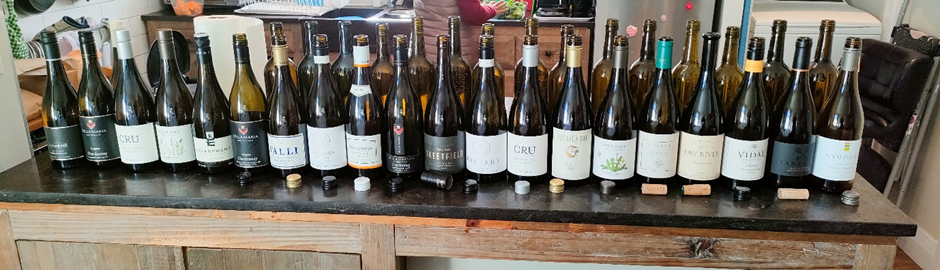
New Zealand now produces world‑class Chardonnay in every major region, a point repeatedly underscored by international critics. Jancis Robinson has described NZ Chardonnay as “one of the wine world’s most underrated treasures”, while Decanter’s regional panels routinely place top New Zealand examples alongside leading white Burgundies in blind tastings. That breadth of quality made curating this tasting unexpectedly challenging: several notable producers were absent due to availability, and even within the wines on hand, narrowing the field to a final twelve proved almost impossible. Villa Maria, for example, had strong contenders from multiple regions — the Taylors Pass Marlborough Chardonnay and the Gisborne Reserve Barrique Ferment both had a legitimate claim to the core lineup. Including them, however, would have over‑weighted the selection toward a single producer, so both were placed in the “plus three” to maintain regional and stylistic balance. The final structure — a “12 plus 3” — reflects both the depth of the 2019 vintage and the diversity of New Zealand Chardonnay at its best.
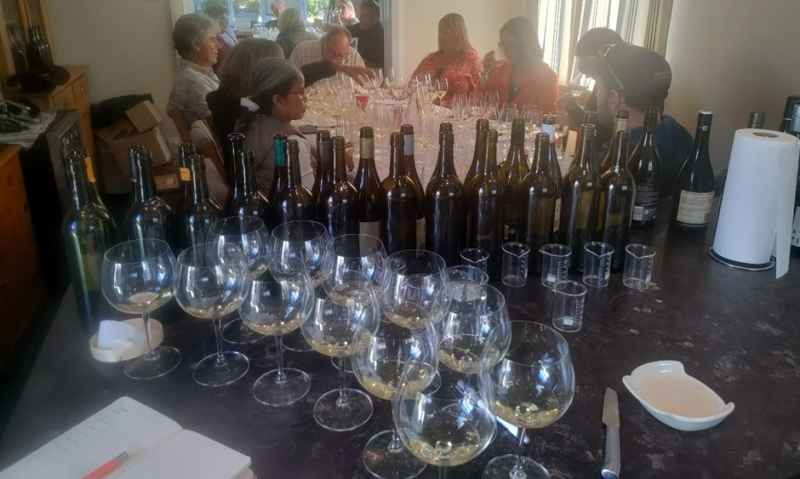
Regional Framework, Winemaking and Tasting Notes
The following 12 wines were the framework for the original tasting.
AUCKLAND
Kumeu River – Hunting Hill Chardonnay 2019
Hunting Hill (3.37 ha), replanted 2000. Hand picked; 100% whole‑bunch pressed; indigenous yeast; 100% barrel fermentation in French oak (25% new); full malolactic; 11 months in barrel.
Lemon gold in the glass with aromas of ripe stonefruits, lemon zest, caramel and licorice. A lovely soft entry with layers of flavour – yellow apple, lemon zest, shortbread and spice with a long complex finish
Tantalus – Cachette Reserve Chardonnay 2019 (Waiheke Island)
Hand picked; whole‑bunch pressed in vertical basket press; fermented in French oak barriques (40% new) with indigenous + selected yeasts (sequential inoculations); 10 months in 225 L barriques; partial malolactic; regular bâtonnage; minimal fining. Tech: Alc 13.5%, RS 3.1 g/L, pH 3.35, TA 5.25 g/L.
Light lemon gold in the glass with aromas of orange blossom, nuts, yellow apple and smoke. The palate revealed some unexpected oxidation, with an Indian spice edge on the fruit that added some richness but wasn’t quite in harmony. The cork looked ok, perhaps this bottle had some unwelcome heat exposure.
Villa Maria – Ihumātao Single Vineyard Chardonnay 2019
From an ancient volcanic crater site on Manukau Harbour. Hand picked; indigenous yeast fermentation in French oak barriques (30% new); 11 months in barrel; assumed partial to full malolactic. Lemon curd
Bit shy on the nose, quite ripe, acid balance?
HAWKE’S BAY
Tony Bish – Skeetfield Chardonnay 2019
Skeetfield Vineyard, Bay View; dry‑farmed old‑vine Mendoza (1990s). Hand picked; whole‑bunch pressed; fermented in French oak barriques (60% new); indigenous yeast; full malolactic; 11 months in barrel.
Light lemon gold with distinct citrus, stonefruit and vanilla aromas. On the palate the entry is soft with ripe stonefruits giving way to more citrus elements and more acidic bite on the long creamy finish. This was the first wine tasted and nicely set the scene for what was to follow.
Smith & Sheth – CRU Chardonnay 2019 (Howell Vineyard)
Howell Vineyard, Bridge Pa Triangle; predominantly Mendoza. Hand picked; whole‑bunch pressed; wild fermentation in French oak barriques (35% new); full malolactic; 11 months in barrel.
Pale lemon gold in the glass with mealy, nutty tones overlaying ripe stonefruit. The palate was similar with a distinct mealiness to the fruit that made me think of porridge with nectarines. Good acidity and a nicely balanced finish.
Vidal – Legacy Chardonnay 2019
From Keltern, Lyons, and Kokako vineyards. Hand picked; whole‑bunch pressed; wild fermentation in French oak (45% new); high solids; full malolactic; 12 months in barrel. Tech: Alc 13.5%, pH 3.2, TA 6.5 g/L.
Lemon gold with quite a reductive struck match nose that overpowered the fruit aromas. On the palate ripe stone fruit flavours were more evident with some creaminess complementing the fresh acidity and a more citrus flavoured finish.
Te Mata – Elston Chardonnay 2019
Havelock Hills estate fruit. Hand picked; whole‑bunch pressed; fermented in French oak barriques (33% new); partial malolactic; 11 months in barrel.
Light lemon in the glass with a citrus nose and a touch of spicy oak. The citrus note predominated on the relatively light and restrained palate with a light, crisp and clean finish.
Villa Maria – Keltern Chardonnay 2019
Keltern Vineyard (inland, limestone‑influenced). Hand picked; whole‑bunch pressed; wild fermentation in French oak (45% new); high solids; full malolactic; 11 months in barrel.
Lemon in the glass with a whiff of flint, ripe stone fruits and a touch of popcorn. Full bodied with lovely ripe stone fruit, lemon curd and balanced acidity with a peacock’s tail finish, this was one of the most popular wines of the tasting.
WAIRARAPA
Dry River – Chardonnay 2019
New block (first crop). Hand picked; indigenous yeast; 12 months in 300 L hogsheads (20% new); full malolactic; 3 months in tank on lees. Tech: Alc 13%, RS 0.0 g/L, pH 3.4, TA 6.4 g/L.
Pale lemon in the glass. Nose had elements of apricot and honey over the citrus and apple fruit base notes that reminded some of Viognier, also reflected somewhat in the palate. Good length and fruit/acid balance but perhaps the most different in the lineup.
NELSON
Neudorf – Home Block Moutere Chardonnay 2019
100% Mendoza on Moutere clay gravels. Hand picked; 100% whole‑bunch pressed; wild yeast; high‑solids fermentation; 100% barrel fermentation (15% new); 12 months on full lees with monthly bâtonnage until completion of full malolactic; 4 months on fine lees in tank. Tech: Alc 13.5%, pH 3.10, TA 6.2 g/L.
Pale lemon gold with mealy and smoky aromas over lemon curd and nectarine aromas. Nice rich stone fruit palate with a fresh acid spine that gives a fresh mineral lift to the finish. Pleasant but not as compelling as previous vintages.
CANTERBURY / NORTH CANTERBURY
Pyramid Valley – Lion’s Tooth Chardonnay 2019
Waikari Estate (limestone + clay). Biodynamic. Whole‑bunch pressed; wild fermentation in French oak (low new %); full malolactic; 12 months in barrel + 6 months in tank; bottled unfined and unfiltered.
Light lemon in the glass with citrus and peach aromas edged with oyster shell and flint. The palate seemed a bit lean and mineral with a more citrus attack which persisted on the long finish.
Pegasus Bay – Virtuoso Chardonnay 2019
Estate vines (old‑vine Mendoza dominant). Hand picked with extended hang time; whole‑bunch pressed; fermented in French oak barriques (~30% new); wild yeast; full malolactic; extended lees contact.
Pale lemon gold in the glass with struck match aromas initially overpowering the fruit behind it, and some quite spicy oak. On the palate quite rich and full-bodied with cooked stone fruit flavours, vanilla, spice and burnt butter, good acidity and quite a powerful long finish but with a slightly bitter edge.
The following three wines were additions to the original lineup and tasted separately after the main selection had concluded
GISBORNE
Villa Maria – Reserve Barrique Fermented Chardonnay 2019
High‑quality Gisborne sites. Barrel fermented in French oak (52% new); mix of wild + cultured yeasts; partial malolactic; lees stirring for texture.
Lemon gold in the glass with pronounced aromas of vanilla and smoky oak leading ripe stonefruit. On the palate full-bodied with rich stonefruit flavours and toasty oak leading the still fresh acidity, quite a tight finish, not as soft and generous as the 2018.
MARLBOROUGH
Villa Maria – Taylors Pass Chardonnay 2019
Taylors Pass, Awatere Valley. Hand picked; whole‑bunch pressed; wild fermentation in French oak (~35% new); high solids; full malolactic; 11 months in barrel.
Pale lemon gold in the glass with citrus, white peach, smoky oak and butterscotch aromas. Full bodied on the palate with fresh acidity and a slight spritz. Grapefruit and white nectarine flavours and quite a long dry slightly saline finish.
OTAGO / WAITAKI
Valli – Waitaki Vineyard Chardonnay 2019
Waitaki Valley; clones B95, 548, 809; limestone over river gravels. Hand picked; 100% whole‑bunch pressed; full‑solids juice to barrel (no settling); fermented in French oak barriques (22% new); weekly stirring through malolactic; 11 months in barrel; bottled unfiltered. Tech: Alc 13.5%, pH 3.49, TA 5.9 g/L.
Light lemon in the glass with an attractive creamy nose of peach crumble. The palate opens with soft ripe fruit that gives way to a grapefruity more acidic mid palate , finishing with good length and freshness.
Conclusion
In the end, the 2019s delivered exactly what the season promised: purity, balance, and a level of regional definition that made the tasting a pleasure rather than a puzzle. Every wine had something to say, and together they underscored a simple truth — New Zealand Chardonnay is no longer emerging; it has arrived.
What stood out most to the group was just how consistently enjoyable the lineup was. In previous years there have been clear favourites, sometimes even runaway winners, but this time preferences were far more evenly spread. That evenness wasn’t a sign of sameness — it was a testament to the overall quality across regions and styles. Even the one slightly oxidised bottle of Tantalus, unfortunate as it was, didn’t shift the broader consensus: 2019 is a vintage defined by balance, confidence, and a remarkably high floor.
About the author
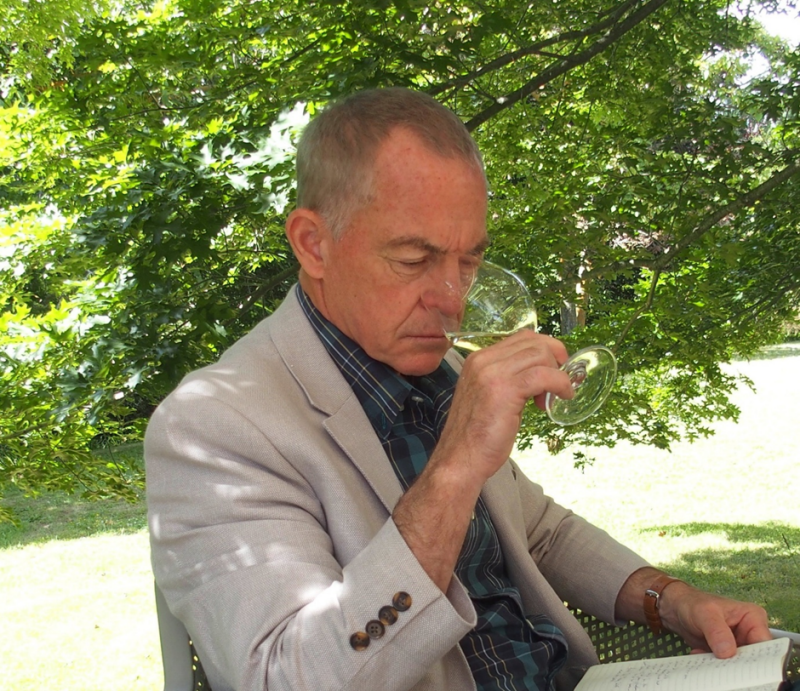
John Penney is a wine experience guide based in Martinborough, New Zealand. His lifelong passion for wine has been deepened through extensive international wine travel, formal wine study (WSET3) and a career in adult learning. Through his Martinborough-based business wineinsights, he provides exceptional wine tour, wine-tasting and wine education experiences for wine lovers and enthusiasts.
Add comment
Comments