A practical guide to real faults, fake flaws and bad luck (part 1)
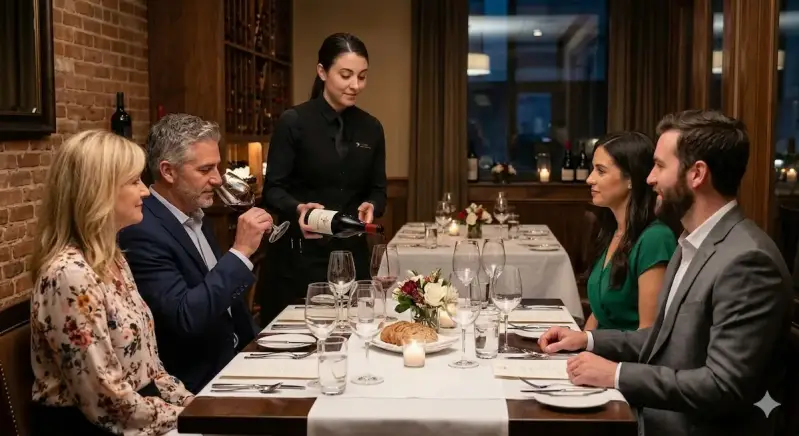
This article is a practical guide to understanding wine faults — what they are, how they appear, and how to tell the difference between a genuine defect and harmless complexity.
Dear Abby,
I am faced with a social dilemma. I am currently hosting a small dinner party at a fantastic restaurant to impress my partner's boss. I chose a bottle from the list, the sommelier opened it with great flourish and poured me the customary taste. I did the obligatory sniff, took a confident slurp... and my soul left my body. It doesn't taste bad, exactly, but something is deeply, profoundly wrong. I just can't put my finger on it.
The stakes are racing through my mind. I know I can't reject a wine just because it's not to my personal taste. It must actually be faulty. But what if the sommelier smiles, tells me it's fine, and leaves me looking like an uncultured idiot? Do I just swallow my pride, accept it, and hope my guests don't notice? But what if they do? What if my boss-in-law proclaims it undrinkable after I’ve already smiled and given the nod? The humiliation! Or worse, what if everyone politely leaves their glasses full, only to gossip about my terrible palate on the car ride home? Help! Do I speak up, or do I choke down the cost of a ruined evening?
— Panicked in Past Midnight
Not everyone will relate to my “agony aunt” introduction. We are fortunate to live in an age where technical precision and quality control (and down-under, screwcaps!) protect us from wine faults once more common. Most of our wine consumption takes place in more relaxed social settings. But one day you are going to taste a wine and wonder “is something wrong with it”.
The problem when that day comes is that wine flaws are rarely black-and-white. Wine is a living, evolving ecosystem where the line between a perfect bottle and a flawed one is often blurred. This is because of a fundamental rule of chemistry: “the poison is the dose”. Many of the identical chemical compounds responsible for catastrophic wine faults are present in your favourite bottles at microscopic levels. In those tiny amounts, they don't ruin the wine—they elevate it, acting as hidden engines that provide regional character, complexity, and a wild, savoury lift. A splash of volatility can make fruit flavours pop; a hint of reduction can provide a sophisticated streak of smoky flint.
To complicate matters, these flaws refuse to exist in a vacuum. A compound's expression changes radically based on the wine’s broader structural matrix. A heavy dollop of residual sugar or a high level of alcohol can beautifully mask a chemical defect that would completely destroy a light, delicate white wine. Furthermore, when you take that nervous sip under the gaze of the sommelier, you are also battling human biology. Our genetics dictate that we all live in entirely different sensory worlds; one person’s glorious twist of complex, rustic "funk" is another person’s unpalatable, unhygienic disaster. Some faults even play hide-and-seek, acting as ghosts in the glass that seem perfectly clean upon opening, only to slowly dismantle the wine's fruit as it breathes. Understanding this grey area is your secret weapon—it changes the game from an awkward guessing match into a confident assessment of how chemistry, environment, and your own unique palate collide.
Wet Cardboard and the Ghost in the Glass
We begin our discussion with the most notorious villain, Cork Taint. This fault is caused by 2,4,6-trichloroanisole, abbreviated as TCA. TCA forms when naturally occurring airborne fungi in cork tree bark encounter plant phenols and chlorine compounds—often leftovers from historical winery sanitisation or cork-processing practices.
At high concentrations, TCA is an aggressive slap to your senses. The wine's fruit, floral, or spice aromas are completely replaced by a musty stench heavily reminiscent of wet cardboard, a damp basement, or soggy newspapers. It is not toxic, but it strips a wine of its soul.
This issue was once a major industry crisis. In the 1970s and 1980s, global TCA contamination rates averaged a staggering 10%. In Australia and New Zealand, the situation was worse. Treated as low-volume, low-value customers by European cork producers, local winemakers routinely experienced failure rates hitting 20%.
Fed up with pouring every fifth premium bottle away, local producers rebelled. This directly triggered the rapid introduction of the aluminium Stelvin screw-cap closure. Led by a collective of defiant winemakers at the turn of the millennium, this "screw-cap revolution" dealt a decisive blow to cork-derived faults in the region. Modern quality control, gas chromatography, and supercritical CO₂ extraction have since vastly improved natural cork production, but TCA still slips through the cracks.
Switching to a screw-cap does not make a wine 100% immune, though it makes it incredibly rare. TCA is an environmental opportunist. If a winery uses unsealed wooden beams, cardboard boxes, wooden pallets, or oak barrels that have historically interacted with chlorine-based cleaning products, a systemic airborne infection can take root. The wine can be contaminated directly inside the barrel or during bottling before the screw-cap is ever twisted on.
I have long been aware of TCA and encountered unmistakable examples early in my wine journey. But TCA is a master of disguise, and it has ambushed me on more than one occasion.
The most recent happened at a blind horizontal tasting of twelve New Zealand Bordeaux blends that I hosted. About half were sealed under natural cork. Wanting to give the wines their best showing, I opened and decanted them into plain, numbered bottles about four hours before participants arrived. I did a quick taste check of each to screen for obvious faults and noticed absolutely nothing wrong; the wines tasted pristine, structured, and alive.
However, the ghost was already in the glass. When the wines were poured later, a couple of participants commented on a strange muting of aroma and flavour in one wine, suggesting TCA. I was sceptical, but by the time lunch was served an hour later, the fault was undeniable. The bright fruit profile had completely vanished, and musty cardboard notes were clearly emerging.
This experience illustrates two frustrating nuances of cork taint. First, at low levels, TCA acts as a time-release assassin, hiding behind the initial burst of fruit aromas and climbing to the surface only as the wine breathes and mixes with oxygen. Second, it highlights interpersonal differences in our genetic sensory antennas. At lower thresholds, my personal radar for TCA is simply not as sharply tuned as some of my fellow tasters. What is a glaring red flag to one may remain completely invisible to another.
When Fresh Fruit Goes Flat
If cork taint is the ghost in the glass, oxidation is the slow, inevitable fading of youth. It is the single most common fault encountered by wine drinkers, occurring from humble supermarket shelves to prestigious collector cellars. Oxidation occurs when a wine’s volatile organic compounds—namely its alcohols and polyphenols—are exposed to oxygen over an extended period, permanently stripping the wine of its freshness and flattening its fruit flavours.
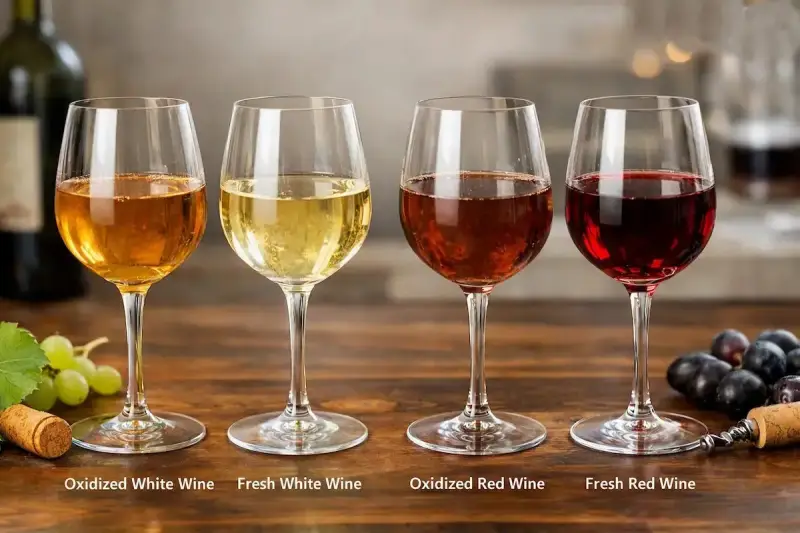
Visually, oxygen over time deepens white wines into an unappealing amber-brown, while acting as a bleaching agent that fades red wines into a dull brick-orange. On the nose and palate, fresh primary fruits vanish, replaced by a distinct smell of bruised apple, stale cider, walnut shells, and a sharp, nutty character reminiscent of a dry Amontillado Sherry.
But oxidation is not always the enemy. In world-class Tawny Ports, Oloroso Sherries, or the historic Vin Jaune of the Jura, winemakers intentionally expose the liquid to years of controlled oxygen to build complex nutty layers. But when that identical sherry-like character shows up uninvited in a dry, aromatic table wine, it is a catastrophic failure.
For the everyday drinker, accidental oxidation is usually the result of a bottle being left open on the kitchen counter too long. You might also encounter this betrayal in a local pub or restaurant when ordering wine by the glass. If a venue has a slow turnover, or if a bottle was opened right before consecutive closed days, that half-empty bottle sits slowly dying. When it reaches your glass, you are served a flat, tired remnant. Don’t be shy in asking how long the bottle has been open and requesting a glass from a fresh bottle if you think this has happened to you.
Oxidation can also happen inside a sealed bottle if the closure suffers a mechanical failure. I experienced a perfect example of this with a case of Vinoptima Ormond Gewürztraminer 2010. This was a legendary New Zealand wine known for its longevity and structural precision. Almost every bottle in the box was a masterclass in clean bottle-age complexity, sealed beautifully with one of the longest corks you will ever see. But with just one bottle, the cork pulled out with zero resistance.
Whether due to a cork anomaly or a bottle neck anomaly I don’t know but the result was clear. There was no effective oxygen seal. The wine inside had spent years slowly drinking in the surrounding air. When it hit the glass, the brilliant, aromatic lychee and spice signatures of Gewürztraminer were entirely absent, replaced by the heavy, flat, distinctive punch of dry sherry. If the seal fails, oxygen always wins.
The Struck Match and The Rotten Egg
If oxidation is the result of a wine breathing too much, reduction is the literal opposite: a wine starved of oxygen. When a wine is kept in a highly anaerobic environment during winemaking or aging, the lack of oxygen allows yeast and sulphur compounds to produce volatile gases known as mercaptans and hydrogen sulphide.
On one commercial level, reduction is actually a winemaker's best friend. Most modern white winemaking—especially for aromatic varieties like Sauvignon Blanc and Pinot Gris—is deliberately, defensively reductive. By using stainless steel tanks, blanketing the juice with inert nitrogen gas, and sealing the bottle under an airtight aluminium screw-cap, winemakers lock oxygen out. This airless environment is exactly what preserves the explosive, fresh fruit flavours and vibrant green-herb characters that drinkers love.
At low levels, reduction is highly fashionable. In premium New Zealand Chardonnay or fine French Syrah, a tiny touch of deliberate reduction manifests as a classy aroma of a freshly struck match, smoky flint, or roasted gunflint, adding a tight, coiled energy that many enjoy.

However, cross that threshold, and the character turns aggressively foul, morphing into the stench of rotten eggs, burnt rubber, boiled cabbage, or stagnant sewer gas. The poison is the dose.
Fortunately, for a young wine, a heavy reduction is usually temporary. A vigorous swirl in the glass or a quick double-decanting introduces oxygen, causing the foul-smelling gases to completely evaporate (or "blow off") within five to ten minutes, revealing the pristine fruit underneath.
But what happens if a heavily reductive wine is left to age in the cellar? This is a massive trap for collectors who assume aging fixes everything. Locked away in an airless bottle for years, the volatile sulphur compounds undergo chemical reversion. They transform into complex, heavy mercaptans that permanently bind into the wine's chemical matrix. When you finally open that prized bottle years later, the rotten egg and burnt rubber notes will not blow off with air, and the fruit will have been permanently smothered.
The Dinner Table Rescue
If a vigorous swirl fails to clear that stubborn stench in a young wine, you can perform an emergency rescue with some simple chemistry.
The traditional advice is to drop an old, solid copper coin into your glass. The copper bonds with the sulphur molecules, transforming them into odourless copper sulphide. Almost instantly, the foul, rubbery smells vanish, and the wine’s underlying fruit aromas are beautifully liberated. But unless you have a pre-1982 New Zealand one-cent piece tucked away, this is harder than it sounds, as modern “copper” coins are merely thinly plated and lack the chemical strength to react. (“Copper” coins throughout the world today usually have little actual copper).
Instead, a perfect modern substitute is a solid copper boatbuilding nail (the traditional rose-head type used in timber boat construction) or a clean piece of solid copper electrical wire. Drop it into your glass or decanter and swirl for thirty seconds. Just ensure the copper is sanitized before use.
Aromatic Lift or Acetone Sting
Volatile Acidity, universally known as VA, represents another grey area where a technical flaw can double as a secret stylistic weapon. VA is not simply a winemaking fault born of negligence; some degree of VA is an intrinsic and inescapable part of the winemaking process. Even in a clinically sterile laboratory environment using the most pristine fruit, wine yeast naturally produces a small baseline level of acetic acid as an unavoidable byproduct of turning grape sugars into alcohol.
However, when oxygen enters the equation, Acetobacter bacteria can multiply, converting the wine’s alcohol into acetic acid—the primary component of vinegar. This is where the secondary chemical trap springs: that newly formed acetic acid reacts directly with the wine's ethanol, triggering esterification. This reaction creates a secondary compound called ethyl acetate, which has the pungent aroma of nail varnish and aeroplane glue. This typically occurs during a sluggish fermentation or inside poorly topped-up barrels.
Cross the acceptable threshold, and VA transitions from an inescapable byproduct into an aggressive assault. The wine smells like a freshly tossed green salad with a heavy pour of malt vinegar, or stings the nostrils with the pungent, chemical sting of acetone. The palate turns harsh, scraping, and sour.
Yet, when kept under strict control at microscopic levels, VA acts as a vital aromatic turbocharger. Because it vaporises rapidly, it physically lifts the wine's perfume out of the glass. A tiny touch of VA cuts through heavy aromas, making dark fruit notes pop, and giving the bouquet an ethereal, vibrant, and almost sweet aromatic lift. Whether VA is a catastrophic fault or a beautiful asset depends entirely on the wine's structural matrix. VA is a master of camouflage, and its perception is completely dictated by the alcohol and sugar levels surrounding it.
In a bone-dry, light-bodied white wine, even a tiny speck of VA will stick out like a sore thumb, tasting aggressively sour and sharp. However, high residual sugar and elevated alcohol can beautifully integrate and absorb significant amounts of volatile acidity. This is why world-class sweet wines like Sauternes, or massive, high-alcohol reds like Amarone della Valpolicella, frequently carry levels of VA that would ruin any other bottle. The luscious sugar and rich alcohol act as a dense structural cushion, wrapping around the volatile acid so that it presents to your palate as complex honey, dried orange peel, or balsamic depth rather than cheap vinegar.
This chemical shapeshifting has created a massive cultural schism in the modern wine world, particularly with the rise of low-intervention and "natural" wines. Because these winemakers actively avoid using sulphur dioxide, their wines frequently see a surge in volatile acidity. Many of these bottles technically smash right past the legal EU and international limits for VA. Yet, to a growing demographic of natural wine drinkers, these bottles are celebrated as a vibrant, living, and beautifully expressive.
Finally, understanding VA gives us a sobering perspective on the true nature of cellaring. We like to think of aging wine as a romantic journey toward ultimate perfection, but from a purely biochemical standpoint, cellaring is actually a controlled deceleration of inevitable decay. Left completely to nature, the ultimate evolutionary destiny of all wine is vinegar. When we cellar a bottle, we are playing a high-stakes game against bacteria and oxygen, using pristine corks, screw-caps, and chilly temperatures to slow that downward descent to an absolute crawl. Every great bottle you open after a decade in the cellar is a temporary victory over a natural process that is constantly trying to turn your investment into salad dressing.
Delving deeper
When you look back at that anxious moment under the watchful gaze of the restaurant sommelier, it becomes clear why diagnosing a wine is such a fine balancing act. As we have seen with the phantoms of low-level cork taint, the fading of oxidation, the traps of reduction, and the intrinsic lift of volatile acidity, a wine is never simply "perfect" or "spoiled”. It is a dynamic chemical matrix where the poison is almost always dictated by the dose.
But air and closure-driven chemistry are only half the story. The true wildcard of wine flaws enters when the threat inside the glass shifts from atmospheric imbalances into a live, biological battleground—and where your own unique human attributes determine whether you can even taste the defect at all. In the second part of this guide, we will tackle the wild yeast splitting the wine world down ideological lines, the notorious bacterial phantom you can never smell in the glass, and the environmental disasters capable of baking a premium vintage from the outside in. Coming soon!

About the Author
John Penney is a wine experience guide based in Martinborough-Wellington, New Zealand. His lifelong passion for wine is shaped by extensive international wine travel, formal study (WSET Level 3), and a career in adult learning. He writes about wine from both technical and cultural perspectives, drawing on real-world tasting, wine travel, and extensive research. Through his wineinsights business he provides Wairarapa wine tours, wine tasting in Martinborough, and wine education experiences for wine lovers and enthusiasts. If you are ready to step off the digital treadmill and dive into some serious reading check out his curated list of wine books. If you enjoyed this weekly article and would like to subscribe for free, please use the contact form
Add comment
Comments