
Easy wine outings to slot into a Japan holiday, with trains, bookings and what to expect at the tasting counter. Guest article by Diane, founder of Diane Wine Voyage, our go-to source for Japanese wine travel.
At a Glance
This guide is especially for New Zealand travellers heading to Japan who would like to taste Japanese wine without building the whole trip around it. (Other travellers, especially from Australia will also find it useful.) It covers a tasting bar, urban wineries and wine villages you can reach in a day from Tokyo and from Osaka, how to get there by train, when to go, and a few things that will surprise you at a Japanese cellar door.
Introduction
If you've spent a day tasting in Martinborough, you may already have met Japanese winemaking without leaving New Zealand. Hiroyuki Kusuda, who founded Kusuda Wines there in 2001, was the first Japanese winemaker to set up in New Zealand. Today Japanese winemakers are working from Hawke's Bay to Central Otago.
However, the trip in the other direction is much less known. Japan has been making wine since the 1870s, and there are wineries in almost every corner of the country. Most of the wine is drunk at home, which is exactly why a holiday is the best chance you'll get to taste it.
I'm Diane, a French wine lover who fell for Japanese wine a few years ago. My first real contact with it was a weekend in Yamanashi with my sister, who was driving. In Japan that means she wasn't tasting, which tells you something about how strict the drink-driving rules are. We'll come back to that.
A quick word on what's in the glass, because it won't taste like home. Japan is humid, rainy and hit by typhoons at harvest time, so growers have had to find their own answers. Many vines are trained on high overhead pergolas to keep the grapes away from damp ground air. And the signature grapes are ones you've probably never met:
- Koshu, a pink-skinned grape grown in Japan for centuries, makes pale, delicate whites with citrus, white peach and a soft acidity. Coming from Marlborough Sauvignon Blanc, it will feel very quiet at first. Give it a plate of sashimi and you’ll never drink anything else when you order sushi.
- Muscat Bailey A is a Japanese crossing that gives light, fruity reds with a strawberry-candy note. Served slightly chilled, it's a very easy lunch wine.
- Delaware is an American hybrid, often made into off-dry or sparkling wines, and a big part of Osaka's wine story.
You'll also find Chardonnay, Merlot, Pinot Noir, Albariño and plenty of unexpected varieties. If you'd like a head start, I've written a guide to Japanese grape varieties and an overview of the main wine regions of Japan.
Please note that the times and timetables I give are those I’ve experienced but make sure to check when you go there. Opening times, train timetables are subject to change.
Tokyo or Osaka? The Options at a Glance
| Base | Wine outing | Travel time (one way) | Best for |
|---|---|---|---|
| Tokyo | An English-guided tasting at 3grapes | In the city | Your first afternoon, even jet-lagged |
| Tokyo | Katsunuma, Yamanashi | About 1.5 hours by train | The classic day trip: Koshu and three historic wineries |
| Tokyo | Tomi, Nagano | About 2 hours by Shinkansen and local train | A loong lunch with a view and a shop ful of Nagano wines |
| Tokyo | Niigata Wine Coast | About 3 hours by Shinkansen, local train and shuttle | Seaside wineries a short walk apart |
| Osaka | Shimanouchi Fujimaru urban winery | In the city | Dinner with wine made downstairs |
| Osaka | Kashiwara and Habikino | About 30 minutes by train | A half day in Osaka's century-old wine country |
| Kyoto | Tamba Wine | About 1.5 hours by train and bus | Adding wine to a Kyoto stay |
Arriving from New Zealand
Most direct flights from New Zealand land at Tokyo Narita. Air New Zealand flies there from Auckland, and has announced direct flights from Christchurch starting in late November 2026. That makes Tokyo the natural starting point for most Kiwi travellers.
Osaka usually means one stop, either through an Asian hub or with a domestic connection. Plenty of travellers simply combine both cities: the Shinkansen (bullet train) links Tokyo and Osaka in about two and a half hours, so you can use the Tokyo section at the start of your holiday and the Osaka section at the end, or the other way round.
If you're buying a Japan Rail Pass, good news: it covers the limited express trains to Yamanashi and the Shinkansen to Nagano and Niigata. You just need to reserve your seat.
Before You Go: What a Japanese Winery Visit Is Really Like
Some of this I learnt on my own visits, the rest is worth knowing before you set off.
Don't expect to meet the winemaker. At a New Zealand cellar door, you might well be poured a glass by the person who made the wine. In Japan, I've never met one. The person behind the counter is usually from the sales team, and their job is to help you taste and buy.
You'll often taste from a machine. Many tasting rooms use self-service wine dispensers, and you pay per glass. The upside is that you can try several wines at your own pace.
Bring your own glass. Sometimes the tasting comes in a plastic cup, which doesn't do a delicate Koshu any favours. A glass wrapped in a scarf at the bottom of your bag makes a real difference. In Katsunuma, you can even buy one on the spot (more on that below).
English isn't always easy. If you can get Wi-Fi or have a local SIM, Google Translate will be your best friend. Short, simple sentences translate much better than long polite ones, and the camera mode is handy for reading labels.
Skip the perfume. Scent gets in the way of tasting, and some wine bars in Japan will politely ask strongly perfumed guests to leave.
Check the label for "Nihon wine". Since 2018, only wine made entirely from Japanese-grown grapes can be labelled 日本ワイン (Nihon wine, or "Japan wine"). Some wineries also make wines from imported juice or concentrate, so this is the word to look for if you want the real local expression.
Leave the car behind. Japan's legal limit is 0.15 mg of alcohol per litre of breath, lower than New Zealand's adult limit of 250 micrograms (0.25 mg). Wineries can't serve anyone who is driving or cycling, even for a taste you plan to spit out, and passengers who knowingly ride with a drink-driver can be penalised too. Everything in this guide is reachable by train, bus or taxi.
Pick your season. Late August to early September is when Koshu grapes hang heavy on their pergolas. Harvest continues through the autumn, when the bigger wineries hold festivals, but smaller ones may have shorter hours while they're busy picking. Spring is lovely and quieter, as long as you avoid Golden Week, a string of national holidays in late April and early May. And if you're travelling over the New Zealand summer holidays, note that many wineries close around New Year, from late December to early January.
Bring a few bottles home. Most of the wines you'll taste are never exported to New Zealand. Your duty-free allowance is 4.5 litres of wine, which is six standard bottles. Rather than carrying them all day, you can send them with a courier such as Yamato to your hotel, or even to the airport departures area for your flight home.

From Tokyo
Start in the City: 3grapes
You don't need to leave Tokyo to taste Japanese wine, and it's a gentle way to spend your first afternoon while the jet lag hasn't quite let go.
If I had to pick one place in Tokyo, it would be 3grapes, in Yoyogi, a few minutes from Meiji Jingu shrine. It's exactly the kind of place I had been looking for: the team runs guided tastings in English, which makes all the difference.
You taste five Japanese wines from different regions in about an hour, with food pairings if you choose the standard or premium option. There's also a short three-wine tasting if you're pressed for time, and you can simply drop in for a glass. It's open from 10am to 6pm and closed on Wednesdays. Tastings start at ¥9,500 per person, and if you book through my page, the code DIANE gives you 5% off.
Want more addresses? My guide to the best Japanese wine bars in Tokyo has a few more for your second night.
Day Trip 1: Katsunuma, Yamanashi
If you only do one wine day from Tokyo, make it this one. Yamanashi is Japan's historic wine heart and the home of Koshu, and Katsunuma is the village where you'll find the highest concentration of wineries. On a clear day, Mount Fuji watches over the whole valley. I've written a longer guide to the Yamanashi wine region if you want the background.
Getting there
Limited express trains (Kaiji or Azusa) leave Shinjuku roughly every hour and take about an hour and a half to Enzan or Katsunuma-budōkyō stations. All seats are reserved, and not every train stops at Katsunuma-budōkyō, so check the timetable when you book. Highway buses from Shinjuku are a cheaper alternative, at around 1 hour 40 minutes.
Getting around
The wineries aren't within walking distance of the station, so take a taxi to your first stop: most are within about 15 minutes and ¥2,000. After that, Katsunuma is a lovely place to explore on foot, and the three wineries below can be linked by walking. If it starts to rain, any winery will call a taxi for you. There are also two local bus routes, but they only run about every three hours.
If you'd rather have someone else handle everything, Canadian David Ellis organises private English-language tours through Close to Mount Fuji. You can also charter a taxi for around ¥7,000 to ¥8,000 an hour with local companies such as Koshu Taxi or Yamanashi Wine Taxi.
Pick your day carefully. Opening days vary a lot in Katsunuma, and many wineries close on Tuesdays or Wednesdays. For the three wineries below, a Thursday, Friday or Monday is the safest bet.
First stop: a glass
On your way to the first winery, ask your taxi driver to stop at this wine shop, which has been selling Katsunuma wines since 1939. It stocks around 200 wines from 60 local wineries, and it's where you can buy a Katsunuma wine glass (around ¥1,000) to carry with you for the rest of the day. It opens early, but closing days are irregular.
Three wineries for your first visit
Make this your first winery, because Grace opens at 9am. Founded in 1923, Grace is a family affair: fifth-generation Ayana Misawa, who trained in Bordeaux, now oversees the vineyards and winemaking. It also put Koshu on the international map when its 2013 Cuvée Misawa Akeno Koshu became the first Japanese wine to win a gold medal at the Decanter World Wine Awards, in 2014. The tasting room is a great place to compare Koshu from different vineyards side by side. You don't need to book, but there are no tours, groups are limited to four people and children aren't allowed. It's open until 4:30pm, with a lunch break between 12pm and 1pm.
Château Mercian Katsunuma Winery
Roughly 15 to 20 minutes' walk east of Grace. Château Mercian is probably Japan's best-known wine name, and its roots go back to the Dai-Nihon Yamanashi Wine Company, founded in 1877. Its free museum is housed in a wooden winery building from 1904, the oldest of its kind in Japan. At the Wine Gallery (10am to 4:30pm), you can taste by the glass and, if you order ahead, eat a bento lunch outdoors overlooking the vineyard. That makes it the natural place to stop for lunch. A tip: if they're pouring them, ask for the Hokushin Left Bank and Right Bank Chardonnays from Nagano, made from vineyards on either side of the Chikuma River. It's a fun way to see how much the site changes the wine. If you want to go deeper, the English guided tour (two hours, six wines, ¥15,000) runs on weekdays and must be booked ahead.

After lunch, culture lovers can add Daizenji, the "grape temple", founded in 718 by the monk Gyōki, who legend says brought wine grapes to Japan. Its Kamakura-period main hall is a National Treasure, and yes, the temple makes its own wine: you can have a glass for ¥300 after paying the ¥500 entry fee. It's a short taxi ride from Château Mercian, and it closes at 4:30pm, so go before Kurambon rather than after.
Finish with my favourite, about 20 minutes on foot from Château Mercian or a short taxi ride from Daizenji. The Nozawa family founded Kurambon in 1913, and fourth-generation Takahiko Nozawa, who trained in Burgundy and the south of France, now farms the family vineyards as naturally as possible. The old building, a 140-year-old farmhouse once used for raising silkworms, is free to visit and has a small wine museum. You taste six wines from self-service dispensers, and the ageing cellar feels more like Burgundy than Japan. Look out for the labels, which illustrate a children's story by the Japanese writer Kenji Miyazawa. It's open from 1pm to 4pm (plus 10am to 12pm at weekends) and closed on Wednesdays. When you're done, ask them to call you a taxi back to the station.
If one day feels too short, stay the night. Kōfu, 20 minutes away by train, has plenty of wine bars, and Yamanashi is also the gateway to the Mount Fuji Five Lakes area, so it's easy to turn wine into a two- or three-day escape.
Day Trip 2: Nagano or Niigata
If you have a second free day, you have two very different options.
Option 1: Tomi, Nagano
Nagano shows you where Japanese wine is heading. Cooler and higher than Yamanashi, it's where Chardonnay and Merlot have found a real home. For more on the region, see my guide to the Nagano wine region.
Getting there: take the Hokuriku Shinkansen from Tokyo to Ueda (about an hour and a half), then the Shinano Railway to Tanaka station (about 12 minutes).
Villa d'Est Gardenfarm and Winery
This is where I'd go for lunch. About 15 minutes by taxi from Tanaka station, the café restaurant sits on a hillside with an English-style garden and mountain views, and serves a seasonal menu with wine by the glass. Check lunch times on its website before you go, and ask the staff to call you a taxi back to Tanaka. It's closed from late December to February.

Back near the station, five minutes' walk from Tanaka, this bistro and wine shop is set in a former church and specialises in wines from Tomi and the wider Chikumagawa Wine Valley. It's the best way to taste across lots of small Nagano producers in one place, and it's where I did my own tasting. The shop is open from 11am to 7pm, and it's closed on Mondays and Tuesdays, so plan your Nagano day between Wednesday and Sunday.

Option 2: The Niigata Wine Coast
This one is on my own list for next year, so I haven't been yet. On a strip of sand dunes facing the Sea of Japan, five wineries sit just a few minutes' walk from each other, so you can easily go winery-hopping on foot. The signature grape is Albariño, grown in sandy soil with the sea breeze drying the vines, which makes a coastal style quite unlike anything else in Japan. I've written more about it in my guide to the Niigata wine region.
Getting there: the Joetsu Shinkansen takes about two hours from Tokyo to Niigata. The Wine Coast is then a 40-minute drive, or a short train ride on the JR Echigo Line to Uchino station, where a free shuttle bus takes you to the wineries. It leaves Uchino at 9:30am and 1:30pm and comes back at 11am and 4pm, so for a full day, take the 9:30am shuttle out and the 4pm one back. Contact the wineries at least a day ahead to confirm your tastings and check that the shuttle is running. Cave d'Occi's Wine Coast page is a good starting point, and Le Cinq and Fermier, among others, have English-speaking staff.
When to go: most wineries are open on Mondays, Thursdays and Fridays, so aim for one of those days. Cave d'Occi, the pioneering winery that started the Wine Coast in 1992, recommends autumn, before the harvest rush, or spring, when its English garden is in flower. If a day feels too short, you can stay overnight at Winerystay Travigne, right among the vineyards.
From Osaka
I'll be upfront: I haven't made it to Osaka's vineyards yet, so this part of the guide comes from research rather than my own experience. It's high on my list, because the story is a surprising one.
Osaka doesn't look like wine country. But Koshu vines were brought to Kashiwara, on the city's south-eastern edge, back in 1878. By the early Showa era, in the late 1920s and 1930s, Osaka had one of the largest grape-growing areas in the whole of Japan, and the Kawachi district alone had more than a hundred small wineries. Urban sprawl has since swallowed most of the vineyards, and only a handful of wineries remain. They earned their own geographical indication, GI Osaka, in 2021. The grape to look out for here is Delaware.
Start in the City
Shimanouchi Fujimaru Winery (Chuo, near Matsuyamachi and Nagahoribashi stations)
Tomofumi Fujimaru opened Japan's first urban winery here in 2013, close to Kuromon Market, to bring wine closer to the people who drink it. He was also the first in Japan to import Georgian qvevri, the clay jars used for fermenting wine. His own vineyards in Kashiwara are mostly planted with Delaware. The tanks are on the ground floor and the Italian-style restaurant is upstairs, so dinner comes with a view of where your wine was made. Wines by the glass start at ¥550. It's open from Thursday to Monday, noon to 11pm, and booking by phone or through its Instagram (@shimanouchi_fujimaru) is a good idea.
Day Trip 1: Kashiwara and Habikino
About 30 minutes by train from central Osaka, these two neighbouring cities hold Osaka's remaining wine country. It works well as a half day, or a full day if you add some history.
Katashimo Winery (Kashiwara)
Founded in 1914, it's the oldest surviving winery in western Japan and the largest in Osaka, now run by a father and daughter from the fourth and fifth generations. Nearly all the vines are grown on pergolas, and some Koshu vines are up to 110 years old. Look out for their Delaware, including a traditional-method sparkling, and wines from Katashimo Honbudō, a local strain of Koshu. There's a café and a small museum of old winemaking equipment, the shop offers a tasting of three wines, and you're free to walk the footpaths through the vineyards. Tours must be booked in advance. The shop is open daily from 10am (until 6pm on weekdays, 5pm at weekends). It's an 8-minute walk from Ando station on the Kintetsu Osaka Line, or 15 minutes from JR Kashiwara station.
Kawachi Wine (Habikino)
A family winery founded in the 1930s, with vineyards at the foot of Mount Nijō and a focus on Delaware. It's eight minutes on foot from Komagatani station, on the Kintetsu Minami Osaka Line that starts at Osaka-Abenobashi, next to Tennōji. You can taste in the shop (open daily until 6pm), and tours can be booked online through its website. If you have time, Asuka Wine, another family winery founded in 1934, is about 2 km away (closed on Saturdays).
Katashimo and Kawachi Wine sit on different train lines, so check Google Maps for the best connection, or take a short taxi ride.
Make a day of it
Habikino is also home to part of the Mozu-Furuichi Kofun Group, a World Heritage site of giant keyhole-shaped burial mounds, including the mausoleum attributed to Emperor Ōjin. Between mid-August and early October, the Kashiwara Tourism Grape Center lets you pick your own grapes.
Day Trip 2: Tamba Wine, Kyoto Prefecture
If your trip includes Kyoto, that's the easiest base for this one.
Tamba Wine is Kyoto's oldest winery. Tetsuo Kuroi, the owner of an electrical company, founded it in 1979 after business trips to Europe, where he fell for the way food and wine were paired. His idea was to make wines that go with Kyoto cuisine, and his son Mamoru runs it today. It's a winery that likes to experiment, with some 50 grape varieties planted, and you'll find everything from Pinot Noir and Tannat to an orange Delaware and a sparkling Saperavi. Admission is free and you can drop in for a tasting. On weekends there are three tours a day (11:30am, 1:30pm and 3:30pm); weekday tours need a reservation. The restaurant serves lunch with local Tamba beef. It's generally open from 10am to 5pm (6pm at weekends), but closing days change with the seasons, so check its website before you go.
Getting there: take the JR Sagano Line from Kyoto to Sonobe (about 40 minutes), then a JR bus to the Tanba Kōgen stop (about 20 minutes) and walk for 10 minutes. Check the bus times before you set off, or take a taxi from Sonobe station.
Practical Notes
- Check hours before you go. Closing days vary from winery to winery and sometimes change with the seasons. Small wineries and bars often post their latest hours on Instagram rather than on a website.
- Book ahead when a tour is involved. Booking forms are often in Japanese only. Your hotel concierge can usually help with a phone call.
- Carry some cash and an IC transport card such as Suica, which works on trains and buses in both Tokyo and Osaka.
- Pack your glass, your translation app and a way to get online.
- Plan your bottles. Buy at the winery when you find something you love, because you're unlikely to see it again at home, and let a courier carry them for you.
- Show the name in Japanese. Taxi drivers and station staff will find your destination much faster:
- Katsunuma-budōkyō station: 勝沼ぶどう郷駅
- Nitta Shōten: 勝沼ワイナリーマーケット 新田商店
- Grace Wine: グレイスワイン
- Château Mercian: シャトー・メルシャン 勝沼ワイナリー
- Kurambon Wine: くらむぼんワイン
- Daizenji: 大善寺
- Villa d'Est: ヴィラデスト ガーデンファーム アンド ワイナリー
- Tomi Wine Chapel: 東御ワインチャペル
- Cave d'Occi: カーブドッチ
- Shimanouchi Fujimaru: 島之内フジマル醸造所
- Katashimo Winery: カタシモワイナリー
- Kawachi Wine: 河内ワイン
- Tamba Wine: 丹波ワイン
Conclusion
Japanese wine asks for a little more planning than a day in Martinborough or Marlborough. You'll probably taste from a machine, with a translation app in your other hand. In exchange, you get wines that almost nobody outside Japan gets to taste, in places where wine has been made for well over a century.
Start with one outing. An hour at 3grapes, or a day walking between Katsunuma's wineries, is enough to find out whether Koshu is your kind of white. And if it is, you'll probably come home with six bottles in your suitcase and a list of wineries for next time.
If you want to prepare before you fly, my 30-minute video masterclass on Japanese wine walks you through the regions and grapes, and includes a map of Japan's wine regions and a Tokyo wine bar recommendation. And you'll find more guides on Diane Wine Voyage.
Key Topics
- Japanese wine travel for New Zealand visitors
- Winery day trips from Tokyo
- Winery day trips from Osaka and Kyoto
- Yamanashi and Katsunuma wineries
- Nagano and Niigata wine regions
- Osaka wine, Kashiwara and Habikino
- Koshu, Muscat Bailey A and Delaware
- Japanese wine tasting in Tokyo
- Tasting etiquette and practical tips in Japan
About the Author
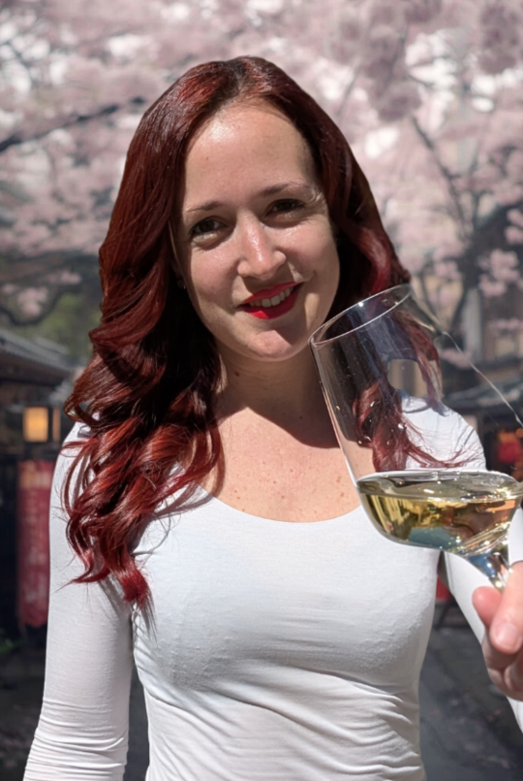
Diane is the founder of Diane Wine Voyage, a blog dedicated to Japanese wine, and shares her discoveries with French-speaking wine lovers on social media as Diane Kanpai. French, WSET Level 2 certified and endlessly curious, she writes for wine lovers who want to explore beyond the regions they already know, with practical guides to Japan's grapes, regions and places to taste.
About wineinsights
Wineinsights is run by John Penney, a wine experience guide based in the Martinborough–Wellington region of New Zealand. John writes about wine from both technical and cultural perspectives, drawing on real‑world tasting, wine travel, and deep research across global regions. Through wineinsights he offers Wairarapa wine tours, wine tasting in Martinborough, and wine education experiences for wine lovers and enthusiasts.
Wineinsights is also part of a wider international wine community, where collaboration, shared learning, and cross‑regional insight are central. Guest articles like this one reflect that ongoing exchange — connecting New Zealand readers with global wine voices and helping travellers explore wine regions beyond those they already know.
John’s portfolio now includes more than 75 articles on wine regions, grape varieties, sustainability, culture, and travel. If you enjoyed this guide, you can subscribe for free updates using the contact form.
Add comment
Comments