New Zealand Syrah Comes of Age

Introduction
The 2015 vintage provided a compelling opportunity to examine Syrah from several of New Zealand's leading regions alongside a single example from Côte-Rôtie, one of the variety's most celebrated homes. Much like the wines featured in last year's look at the 2014 vintage, these bottles—now more than a decade on—have reached an age where primary fruit is beginning to give way to greater complexity, making assessment of both regional character and vintage influence particularly revealing.
Hawkes Bay
In New Zealand, 2015 was widely regarded as an outstanding year for Syrah. Across the eastern regions of the North Island, warm and predominantly dry conditions created an ideal environment for ripening. In Hawke's Bay, a cool spring gave way to a dry summer with significantly below-average rainfall. As soils dried, vine growth moderated and berry size remained small, concentrating flavour compounds, colour and tannin. The absence of disease pressure allowed growers considerable flexibility in determining harvest dates, resulting in wines with both impressive fruit concentration and the balance required for long-term cellaring.
Waiheke
On Waiheke Island, the season was similarly favourable. Warm, dry weather delivered full ripeness while the maritime climate tempered extremes, helping retain freshness and aromatic lift. The vintage produced Syrahs of notable richness and texture, yet with the floral, peppery and mineral nuances that have become signatures of the island's best examples.
Martinborough
Further south, Martinborough experienced a vintage that was far from straightforward. Strong spring winds damaged young shoots and temporarily stalled vine growth, reducing crop potential before the season had properly begun. A dry summer and warm February winds then shifted the season decisively in favour of ripening. Lower yields and smaller berries delivered concentration, while the dry conditions minimised disease pressure and allowed fruit to remain on the vine until optimal maturity was achieved. For Syrah, a variety that can struggle to achieve full ripeness in cooler years, 2015 provided unusually favourable conditions, producing wines that combined depth and structure with the freshness and savoury complexity that are hallmarks of Martinborough.
Côte-Rôtie
In Côte-Rôtie, 2015 is widely regarded as one of the finest vintages of recent decades. Winter rainfall replenished soil moisture reserves before an exceptionally warm and sunny growing season accelerated ripening. Timely rain towards the end of August refreshed the vines and completed the ripening process before fine conditions returned for harvest. The result was a vintage of remarkable quality, producing wines of unusual concentration, depth and perfume, supported by ripe, silky tannins and exceptional ageing potential.
Sampling a great vintage

Taken together, these conditions made 2015 a particularly significant vintage for Syrah. In both New Zealand and the Northern Rhône, growers were presented with an opportunity to achieve complete ripeness while retaining balance and freshness. A decade later, the wines offer an illuminating snapshot of how one exceptional growing season was interpreted by different regions, vineyards and winemakers.
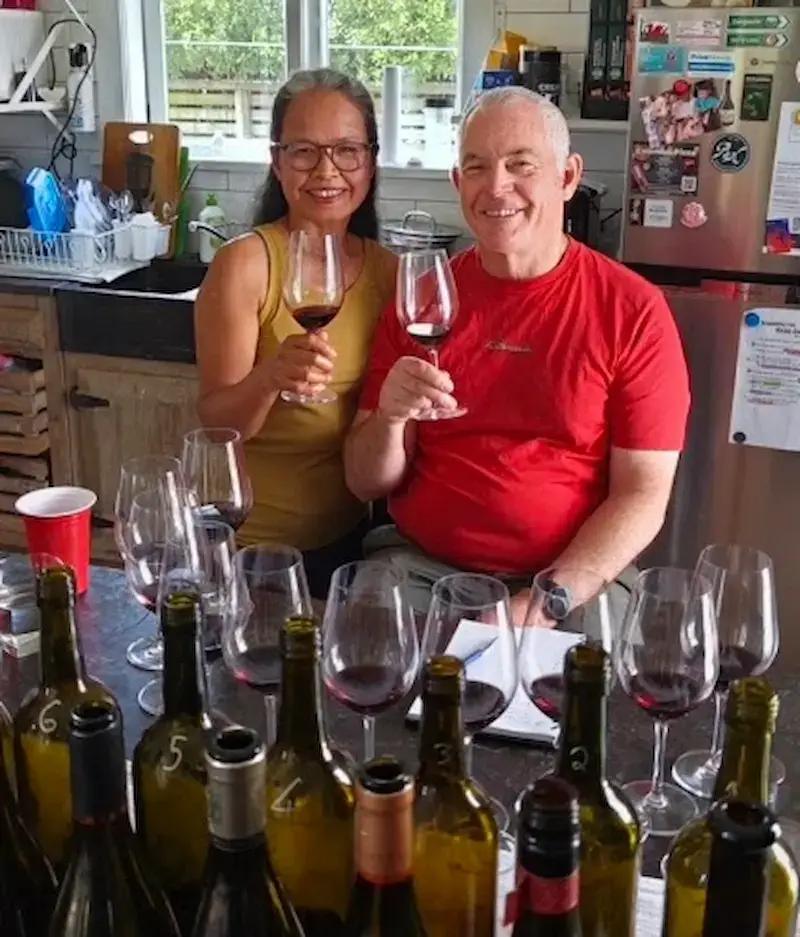
To explore how the wines had evolved after a decade in bottle, I assembled a line-up of twelve wines from the 2015 vintage. Eleven were New Zealand Syrahs, comprising eight from Hawke's Bay, two from Waiheke Island and one from Martinborough. Most had been purchased on release and cellared since, while a handful were acquired more recently at auction to fill notable gaps in the line-up. The sole Côte-Rôtie was generously provided by one of the tasting participants. All wines were opened between 8.00am and 8.30am on the morning of the tasting and decanted into identical plain bottles before being assigned a number to conceal their identity until after assessment. The tasting commenced at 12.30pm, with wines first evaluated blind on pouring and then revisited once lunch was served to assess their performance with food.
Following the tasting, participants were asked to nominate their favourite wine, second-favourite wine and least-favourite wine, and to indicate where they believed each wine originated. While a clear overall winner and runner-up emerged once the votes were collated, eight of the twelve wines were championed as the favourite wine by at least one participant, a testament to the remarkable quality and diversity of the line-up. Perhaps the greatest surprise was that nobody correctly identified the Côte-Rôtie, despite the considerable wine experience represented around the table. As the tasting notes suggest, this may owe something to the particular producer and style of wine rather than any inability to recognise Northern Rhône Syrah. The wine showed rather differently from the archetype many enthusiasts might associate with producers such as Guigal, Gaillard or Rostaing, making its identity far less obvious than expected.
The tasting notes that follow are presented in the order in which the wines were tasted. The serving order was not intended to represent quality, reputation or any other hierarchy. Nor was it entirely random. Rather, it was arranged to create a degree of variety throughout the line-up while avoiding any obvious clues that might influence participants' expectations before a wine was poured.
Passage Rock Reserve Syrah Waiheke 14% ABV
Blended from vines grown on the fractured red clay Waiheke soils from three different sites including some of the oldest Syrah plantings on the island (1996). Grapes had a cold soak followed by a hot ferment with plunging or pump overs 3 x daily. After 20 days the wine was pressed off the skins and racked to mostly new French oak barriques for malolactic conversion and aging over 10 months. Only the top 20% of barrels were used for the final blend before bottling and two years in bottle before release. Ruby-purple in the glass with aromas of blackberry, blackcurrant, vanilla and oak spice, and a whiff of black pepper. Rich and full-bodied on the palate with firm tannins and bright acidity, flavours of dark berries, black pepper, olive tapenade and pepperoni with a long complex finish. One person’s favourite, 2 people’s second favourite and a good start to the lineup.
Smith & Sheth Omahu CRU Syrah Hawkes Bay. 13.2% ABV
Grapes harvested from 15–20-year-old vines on the Gimblett Gravels free draining riverbed soils. Destemmed berries with a small addition of whole clusters spontaneously fermented in open top fermenters with daily punch downs or pump overs aiming for a gentle extraction over 20 days, before racking to French oak barriques 30% new for malolactic conversion and 16 months aging. Ruby purple in the glass with lifted aromas of violets, blackberries, dark plums, and pepper spice. Noticeably lighter in body than the previous, with black fruit, olives and savoury spices on a supple spine of fine tannins and fresh acidity with a long seamless finish.
Dry River Syrah Martinborough 12.5% ABV
Grapes sourced exclusively from the dry-farmed Lovat vineyard on Martinborough Terrace. 70% of the potential yield was dropped and the retained small berries had exceptional skin to juice concentration. A spontaneous ferment was combined with gentle extraction to preserve fragrance rather than heavy tannin. The wine was matured in seasoned French oak barrels chosen to frame the fruit rather than dominate it. Ruby purple in the glass with distinct violet and pepper aromas, the rotundone just edging into black rather than white pepper with black cherry, cassis and plum fruit and some dried herb complexity. The palate is medium-bodied with fine tannins, bright acidity and a noticeable liquorice edge on the lingering dark fruit, spice and roast meat flavours.

Te Mata Estate Bullnose Syrah Hawkes Bay 13.5% ABV
Hand harvested Syrah from Bridge Pa and Gimblett Gravels, destemmed with a warm plunged fermentation and extended skin maceration before pressing and racking to French oak barriques 40% new for 15 months. Ruby purple in the glass, the aromas are pronounced and layered, opening with violets and rose florals then dark cherry, Doris plum and cassis, followed by dark pepper, herbs, chocolate and olive. The palate is medium-full bodied with fine soft tannins, dark berry fruit and juicy acidity that leads to a long satisfying finish. The overall second favourite wine of the tasting.
Squawking Magpie SQM Syrah Hawkes Bay 13.8% ABV
Handpicked Syrah from Gimblett Gravels fermented in small open-top vats to allow close cap management then basket pressed off the skins and aged for 18 months in French oak barrels (33% new) before bottling and a further 6 years bottle aging before release. Deep ruby with a purple core and a garnet rim. The dark fruited aromas are supported by tobacco and clove spice and a whiff of violets. The palate is soft and plush with berry and Christmas Cake flavours, fine tannins, lively acidity and some wet stone on the finish.
La Terre du Milieu Syrah Hawkes Bay 13.5%
A bespoke small parcel project commissioned by a group of French investors, made by consulting winemaker Lynette Hudson and distributed by United Cellars. Hand sorted Hawkes Bay Syrah with a cold soak prior to fermentation, active cap management followed by malolactic conversion and maturation in Burgundian oak. Ruby in the glass with a purple core, the aromas are quite earthy-savoury and lifted with leather, herbs and peppery cured meats overlaying the dark berry fruit. The palate is medium-bodied and structured with slightly drying tannins and bright acidity framing the ripe dark berry fruit, clove and pepper spice and a little dark chocolate. For me this was a wine that showed markedly better with food and six participants thought this might have been the Côte-Rôtie.
Church Road Grand Reserve Hawkes Bay 14% ABV
Hand-harvested fruit from the Redstone Vineyard in Bridge Pa, destemmed, inoculated and fermented warm to extract deep colour tannin and flavour. Aged 17 months in barrel mostly French, 13% Hungarian, 34% new, the wine was also held on light lees for six months to build a richer creamier palate. Deep purple black in the glass with savoury-edged aromas of dark plum, blackberry, bacon, pepper and baking spices. The palate is characteristically Church Road: plush and broad with rich berry fruit, chocolate and iodine notes framed by blocky tannins and good acidity with a satisfying long finish, not the most elegant but surely the best bang for buck in the lineup.
Elephant Hill Airavata Syrah Hawkes Bay 13.5% ABV
Syrah fruit was hand harvested in four passes from Gimblett Gravels 71%, and Te Awanga 29%, warm co-fermented with 1.7% Viognier and 18% whole-bunches in small open top oak vats with hand plunging. Only free run juice was used for this wine which was aged for 26 months in French oak barriques 40% new with zero racking, then blended and rested 7 months in stainless before bottling, unfined with minimal filtration. Ruby-purple in the glass with lush dark plum, bramble and blackcurrant aromas, succeeded by cracked pepper, smoke, mocha oak and char. The palate is lush and velvety with ripe berries, gamey meat and savoury spice framed by soft fine-grained tannins and good acidity with a long, balanced finish.
Yves Cuilleron Bassenon Cote Rotie 13% ABV
90% Syrah and 10% Viognier hand harvested from a south facing parcel on the Coteau de Semons on gneiss and granite soils. [This possibly sets it apart from the better known more classic Cote Rotie benchmarks from the steeper iron-rich mica-schist soils around Ampuis] Partially destemmed before a three week fermentation in open top temperature controlled vats with regular punch downs and pump overs. Malolactic conversion and maturation for 18 months in French oak, partly new. Deep ruby in the glass with a purple tinge, this opened with stunningly intense violet perfume over dark berry fruits with distinctly savoury game, olive tapenade and wood smoke elements. The medium-bodied palate is elegant and silky with Chinese salty plum, blackberry, and mocha lightly framed by crisp acidity, fine sinewy tannins and a dusting of cocoa powder on the long finish.
Tantalus Voile Reserve Syrah Waiheke 14%
98% Syrah co-fermented with 2% Viognier, handpicked and sorted from estate blocks in Onetangi Valley, incorporating just 2% whole bunches. Cold soaked and small batch fermented with indigenous yeasts, gentle hand plunging and then basket pressed to French oak barriques 60% new for 12 months, bottled unfined and lightly filtered. Ruby purple in the glass with lifted violets over the ripe dark berry, black pepper and overtly spicy oak aromas. The medium-full bodied palate has rich dark berry, cocoa and liquorice flavours on a frame of fine sinewy tannins, fresh acidity and spicy oak, finishing with some dried fruit and leather complexity.
Sacred Hill Deerstalkers Syrah Hawkes Bay 13%
Handpicked Syrah at low yields from the Deerstalkers Vineyard on Gimblett Gravels. Following a week-long cold soak the fruit was fermented with indigenous yeasts incorporating 20-30% whole clusters. After malolactic conversion the wine was matured for 14-16 months in French oak barriques and puncheons, 30% new before bottling. Ruby purple in the glass with intense aromas of blackberry, cassis and violets giving way to black pepper, dried herbs and smoked meat. The medium-full bodied palate features plush ripe berry fruit, mocha and spice on an elegant frame of fine powdery tannins, and balanced acidity carrying through to a long mineral edged finish. This was my personal Wow! wine of the tasting and the favourite overall.
Trinity Hill Homage Syrah Hawkes Bay 13%
Created as a tribute to Gerard Jaboulet this features grapes from the original 1995 Gimblett Gravels along with Jaboulet sourced cuttings. Individual parcels incorporating 25% whole clusters were vinified separately with 2% Viognier for floral lift and tannin fixation with gentle plunging and pump overs. Matured in a mix of French oak barriques 60% new and large 5,000 litre oak casks, bottled unfined and unfiltered. Ruby purple in the glass with lifted aromas of ripe black fruits, peppery spice, cured meats and olive. The medium-full bodied palate is supple with the oak nicely integrated. Flavours of blackberry, plum, olive tapenade and cloves are perfectly framed by silky fine tannins and balanced acidity. There is a distinctly meaty edge on the long finish. For me, this was the wine that most resembled my mental Côte-Rôtie benchmark.
Final Reflections
Several themes emerged from this tasting. First and foremost was the remarkably high quality of the line-up. Despite being drawn from different regions, producers and winemaking philosophies, the wines shared a common thread of ripe fruit, freshness and balance. Importantly, none displayed the green, under-ripe characters or elevated rotundone-derived white pepper notes that can occasionally dominate New Zealand Syrah in cooler vintages. Instead, the wines offered a broad spectrum of expression, ranging from intensely floral and perfumed to deeply savoury and structural, while consistently demonstrating the benefits of an exceptional vintage and a decade of bottle age. The fact that eight of the twelve wines were selected as a favourite by at least one participant speaks volumes about both the quality and diversity of the wines presented.
The other notable result was the inability of any participant to correctly identify the Côte-Rôtie. Given the collective experience around the table, this was unexpected. In retrospect, part of the explanation may lie with the specific wine chosen. Many wine enthusiasts mentally associate Côte-Rôtie with the savoury bacon fat, cracked pepper, olive tapenade, smoke and ironstone characters often found in examples from the steep mica-schist slopes around Ampuis and in wines from producers such as Guigal, Gaillard and Rostaing. The Yves Cuilleron Bassenon, however, originates from the warmer gneiss and granite soils of the Côteau de Semons and presented a rather different personality. The wine showed a strikingly floral and fruit-forward profile, while the relatively generous proportion of Viognier in the blend, particularly in a warm vintage such as 2015, further amplified its aromatic lift and immediacy.
Far from standing apart from the New Zealand wines, the Côte-Rôtie integrated seamlessly into the tasting. Rather than highlighting obvious regional differences, it served as a reminder that both site and producer style can be as influential as appellation. More broadly, the tasting demonstrated just how well New Zealand's leading Syrahs have matured. A decade after harvest, the wines remain vibrant, complex and immensely enjoyable, combining the fruit purity that has become a hallmark of New Zealand Syrah with the savoury nuances and textural sophistication that only time in bottle can provide. The 2015 vintage was clearly an exceptional one, and this tasting provided compelling evidence that many of these wines still have years of rewarding evolution ahead of them.
Add comment
Comments