As I mentioned in A Wine Lover’s Progress, my return to New Zealand in 2015 after years in Asia marked the beginning of a much deeper engagement with the world of wine than I could ever have predicted. Among the many influences that shaped that journey, none proved more pivotal than my encounter with Michael Hutton, owner with his wife Katie, of Wineseeker — the specialist wine shop on the corner of Wakefield and Victoria Streets that I happened to pass one May afternoon.
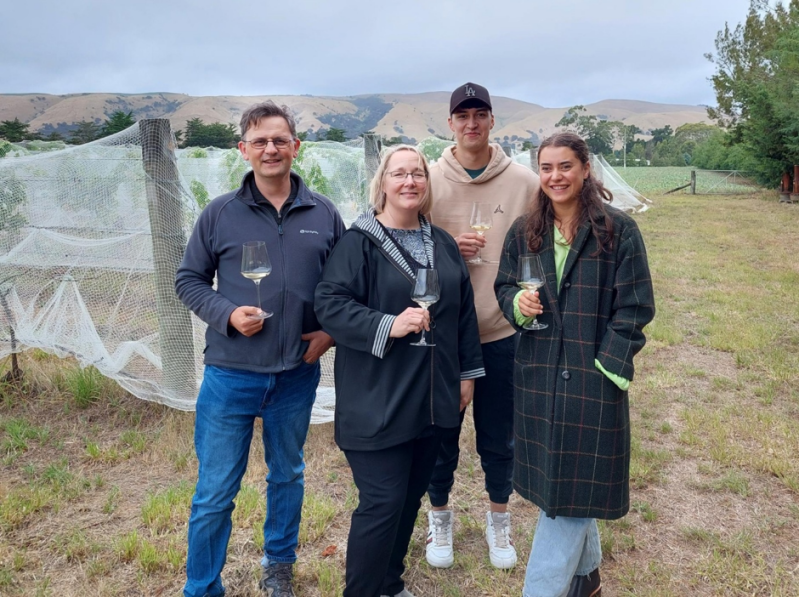
Selecting a portfolio of terror-driven wines begins with on-the-ground research
How my personal wine journey was influenced by a specialist Wellington wine shop.
Looking back through my emails, I see that my first order was placed on 2 June, the same day I joined their wine club. But what truly drew me in were the signs in the window advertising tasting classes: a Tour de France for Bastille Day, and a Wine Tasting Essentials workshop. The latter was my first structured introduction to paying attention to what was in the glass — an approach I still use today. The former expanded my French wine horizons beyond the Bordeaux I had mostly been drinking in Myanmar and ultimately inspired my wife and I to take an on‑the‑ground tour of France’s major wine regions in 2017.
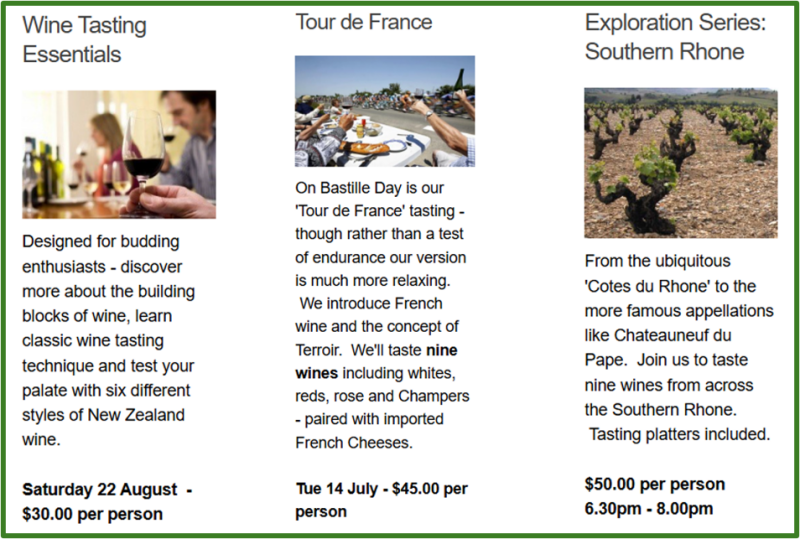
The online versions of the window posters that first drew me into explore Wineseeker
Over the next two years I attended most of Michael’s regular tasting workshops. They were always thoughtfully curated: clear introductions to region and terroir, beautifully paired tasting platters, and a selection of wines that opened new doors for me — Alsace, the Southern Rhône, Catalonia, Northern Italy, Argentina, Sangiovese, and more. Between events, there were always interesting bottles open for tasting in-store, and these discoveries nudged me toward completing WSET2 and even an online winemaking course through the University of Adelaide.
When we moved from Wellington to Martinborough, my attendance inevitably slowed, and the Covid‑19 lockdowns of 2020 brought a sudden halt to those much‑loved evenings. The shop eventually closed, re‑emerging as eWine — an online business that continues the same thoughtful, but now more-focused curation of regionally expressive, characterful wines at excellent value.
Michael and I have stayed in sporadic contact over the years and finally caught up properly last month. As the successor to Wineseeker, eWine carries forward the ethos that shaped so much of my own development as a wine professional. I wanted to tell that story — or rather, to give Michael the space to tell it himself. His answers to my questions follow.
In conversation with Michael: Origins, Philosophy and Reinvention
- What were your earliest experiences with wine, and how did your more serious interest develop?
- I can lay the blame for my introduction to wine squarely in the hands of my loving parents. My earliest recollection of wine comes from little sips of (possibly watered down) wine from a tiny sherry glass in my early teens. Wine in our house was reserved for special occasions, so in hindsight there was always an aura of exclusivity around a bottle being opened.
- My first real independent wine experience was in my early university years, and a weekend trip to nearby Martinborough in the 1990s. I recall the explosive flavours of Sauvignon Blanc from Voss and Lintz Estates, the latter of which was afterwards embroiled in scandal. (Lintz was forced to give back a gold medal from Air New Zealand wine awards as it was demonstrated that the wine supplied to the tasting panel was not the same wine as that on offer at the winery). Neither wine producers now exist, although the vineyards they planted remain.
- My palate for both great food and fine wine evolved swiftly. No fine dining meal was complete without its match in wine. My experience and knowledge in wine blossomed through the combination of holiday travels, and the enthusiastic encouragement of local wine retailing stalwarts. I have fond memories of being teased by Mr Peter Rumble, never leaving his subterranean premises without a bottle or three. The introduction to international wine was a more gradual process, and the discovery of the dizzying array of flavours, textures, intertwined with history and culture continue to fascinate me.
- If I understand correctly your original academic qualifications were in finance and property and your earlier career was in finance for the health sector? What prompted your move into fine wine retailing?
- My career before wine was in the wholly unrelated field of financial services and banking. My clients in that sector were largely self-employed business owners, and the desire to be master of my own destiny proved to be irresistible. If one aspires to run a business, I firmly believe that this should be in an industry that one is passionate about, and for me that was the world of wine. Wineseeker at that stage was already an established shop of 5 years in Victoria Street, of which Katie and I were already customers. The owners at the time Nicola Belsham and Carl Fraser were ready to move on, and I stepped in to acquire the business. In the first year, I was still working full time at the bank, with evenings and weekends in the shop. It was all too obvious that a cross-roads was looming - do I continue a career in the financial sector or follow my heart into the world of wine.
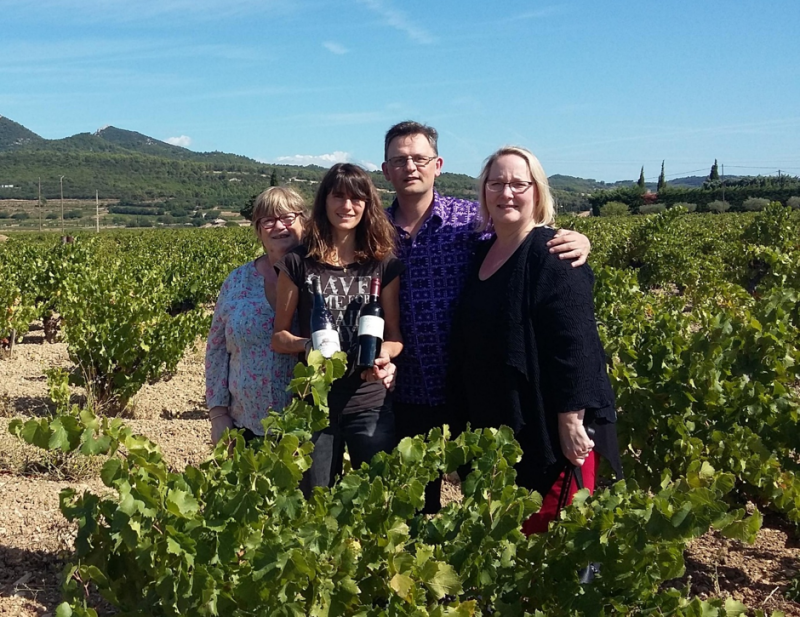
Expressive, “terroir-driven” wines are at the heart of the eWine selection and sourcing these means getting boots on the terroir as well as tasting the wines, in this case at Domaine La Garrigue in Southern Rhone.
- Tells us about the original concept of Wineseeker. What was your mission and your essential customer proposition.
- The evolution of Wineseeker was step-wise over several years. A steep learning curve in operating a small business came hand-in-hand with rapidly expanding experience and tasting palate for quality wine. We increasingly stocked more international wines, relying on an array of importers supplying bottles. To build knowledge and credibility with these wines I pioneered an array of hosted wine tasting events in-store. My personal preferences were changing too, I found the more savoury and textural wines of Europe more engaging, and the sheer variety of wine from offshore soon meant we were selling equal volumes of global goods alongside hand-picked and artisan NZ producers. The mission stayed largely unchanged – get more people excited about the world of wine and make it more accessible. Perhaps it was inevitable from that point that we would expand our business to start importing European wines.
- I first came into your shop for one or your tasting sessions – I believe it was the Tour de France for Bastille Day in 2015, and one of the reasons I remember was because I sat next to a young lady from Alliance Francaise who told me her favourite wines were from the Haut Medoc. My wife and I and sometimes our friends too attended many of these very educational tastings. Tell us about them from your perspective, what was your aim, what was the format, and how many attendees were like me and really got inspired to a more serious exploration of the world of wine?
- The wine tasting events we create in the shop were a natural extension of a wider embrace of international wines. It’s so easy for us to just drink what we already know, and what is easily available locally. New Zealanders are by no means the only ones with parochial tendencies for wine drinking, it is not uncommon to find French wine aficionados unfamiliar with wines outside their own home region, much less the diversity of international wines. I believe that one of the real joys of wine is in that diversity, the dizzying array of flavours, textures,
- The essence of terroir is that a wine is a total product of the place that it comes from. The idea that a wine can taste substantially different depending on the soil, the topography, macro and micro-climate, and the techniques used by the winemakers through choice or by tradition, it’s incredibly fascinating. Being very careful with the spelling and pronunciation, I would consider myself a ‘terroirist’.
- Our tasting events were designed to guide our diverse range of customers into this larger world of wine. The tastings would take a theme of perhaps a general wine region (eg- Burgundy), or differing versions and evolutions of a grape variety (eg- different members of the Pinot family), examples of sub-regional differences (Gibbston vs Bannockburn vs Bendigo Pinot Noir in Central Otago). We would seek out wines that were classical examples of their origin, with a bias towards indigenous grape varietals.
- Each event I would research the regions and individual wines to be able to present a curated tasting event that was a balance of entertainment and education. It helped to upskill my own capabilities and those of my staff in the shop too. What better way to taste a wider array of wines than to get others to help pay for it!
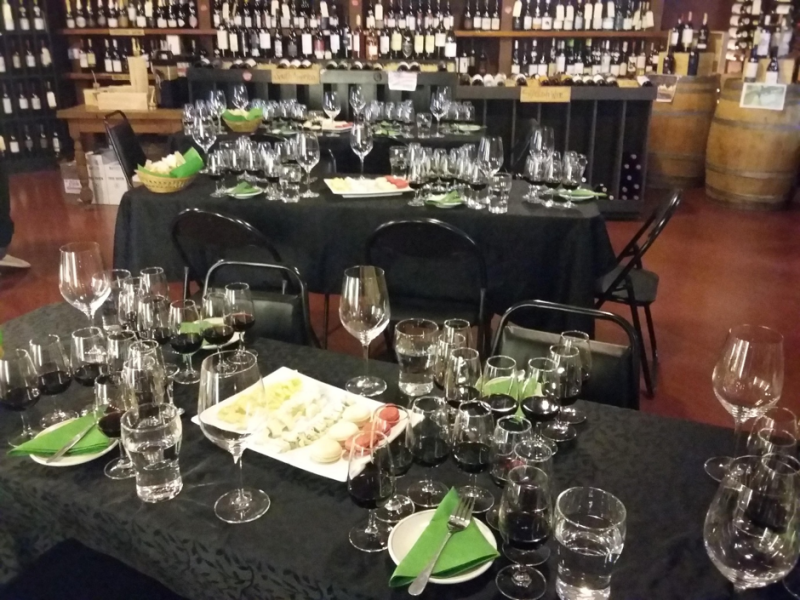
Tables set up inside Wineseeker for one of their signature tasting events
- To choose what you would import you have travelled extensively in international wine regions. What are some of the most memorable?
- Every wine region has its own uniqueness to it, it would be hard to choose any one particular experience as being most memorable. Perhaps one of the most simultaneously entertaining and nerve wracking was a day’s journey to Penedes, less than an hour from Barcelona. Katie and I were warmly welcomed by the Patriarch of the winery, along with his best friend, photographer, and financial manager. We started with a grand tour of each of the different vineyard blocks, spread across plateaus and slopes within a protected national park, and across 600m change in elevation. Following this was an extensive tasting of each of the wines at the cellar door. What we did not then expect was a sumptuous late three course lunch at a local restaurant, with very talented young chef (clearly another best friend of the vineyard owner), featuring exquisite razor-clams harvested that morning from the opposite side of Spain. All washed down with ample volumes of the vineyards wines. Then comes the harrowing part- our host insisted on driving us back into Barcelona, navigating narrow windy country roads while having an animated conversation on his cellphone in one hand, taking both hands of the wheel to change gears mid corner, and his friend helpfully reaching across the car to hold the wheel to avoid us careening off into the wilderness! Thankfully we arrived back in the city without any need to experience the Spanish healthcare system.
- Visiting the Bordeaux wine region a few weeks after a major frost event was a real eye opener – appreciating how the natural geography impacted different growers in the region. On one day we visited three wineries- the first was in the Graves sub-region close to Bordeaux city. The proprietor took us around the vineyard and showed us the areas that with more shade, or small dips in the undulating vineyard surface that had no grapes growing, a loss of 10% of a typical year’s harvest. The second vineyard was further north in the Margaux appellation – it was sad to see that the majority of vines had lost their fruit from frost damage, with some secondary flowering showing. It would be a loss of 80% of yield that season. The third vineyard was in the Entre-Deux-Mers, a sizeable family vineyard around the town of Ladaux. It was a total loss; no wine would be made that year at all. It was a sobering reminder of how the changing climate is changing our wine world.
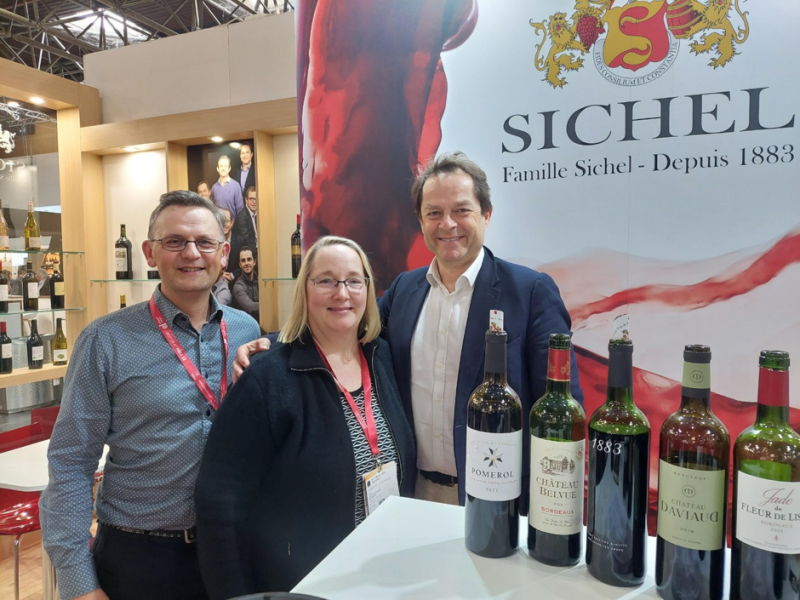
With notable Bordeaux proprietor Charles Sichel at a Wine Trade Fair
- What prompted the move to solely online sales?
- Like many city shops, during the Covid era we faced a major shift in the retail environment. International visitors who would come to the shop to find boutique New Zealand wines were shut out of the country. Inner city workers were ensconced in their home offices, and our ability to host wine tasting events was curtailed. A key moment of discovery came with a promotion fund-raising for the Alliance Francaise. I was dropping off cases of wine to several customers in suburban Wellington and found that almost all were at home on a weekday afternoon to accept delivery. A fundamental shift in our marketplace forced us to consider a major shift in our business. Wineseeker became eWine – a nod to our range of European wines and an Online experience. The focus and goal remains the same- to broaden the horizons of Wellington wine enthusiasts with great and delicious wine.
- The “customer experience” for me as a Wineseeker customer was a standout – how do you translate this to an online business?
- The personal customer experience is what I miss most about the Wineseeker shop. The daily interactions with regular clients, casual visitors, staff, winemakers, suppliers and wine enthusiasts of all colours was one of the things that really brought joy to the experience. That cannot truly be replicated in an online environment, the ability to guide people through the many bottles to choose the wines that would suit their dinner-party, thank-you gift, or wines to start tucking away in a cellar for future pleasures. The personal growth in my client’s wine experience, along with my staff and indeed myself cannot be overstated. There are ways to engage with online visitors with online chat tools, personal recommendations, and regular newsletters to try to replicate some of that engagement, but I will happily concede that nothing replaces a one-on-one chat, perhaps with a little tasting wine glass in hand! More of the interactions I have with customers is through wine events and partnerships with fine restaurants, and organisations like the Alliance Francaise of Wellington.
- Tell us more about the range of wines you stock and how you choose them. And what are the continuities and discontinuities with the range at Wineseeker
- My wine range at the moment is exclusively wines that I import from four European countries. The start of our wine import journey was over 10 years ago, and was inspired by Katie and my first joint trip to France. We visited several wine regions, and we both were utterly charmed by the experience. The difference in cultures, traditions, cuisines, and wines all varied so dramatically between neighbouring provinces. Our very first cellar door in Alsace was enough to pique our desire to share these wines with our friends and clientele. Over several years the success of our imported wine range expanded from a handful of wineries to encompass representation from most of the major French wine regions, before stepping further into neighbouring Spain, and later again to Italian wines.
-
- Together these ‘Big Three’ nations produce half of all European wine. The next consideration was to look at where else in Europe was under-represented in NZ. And which of the next array of countries would we spread our vinous tendrils to next? We considered several countries including Portugal, Germany, Austria, Greece, but settled on Hungary as our fourth nation. We tasted a wide range of Hungarian wines, entranced by their indigenous varietals, and a massively changed wine producing community since the shift from Communist control to Democracy.
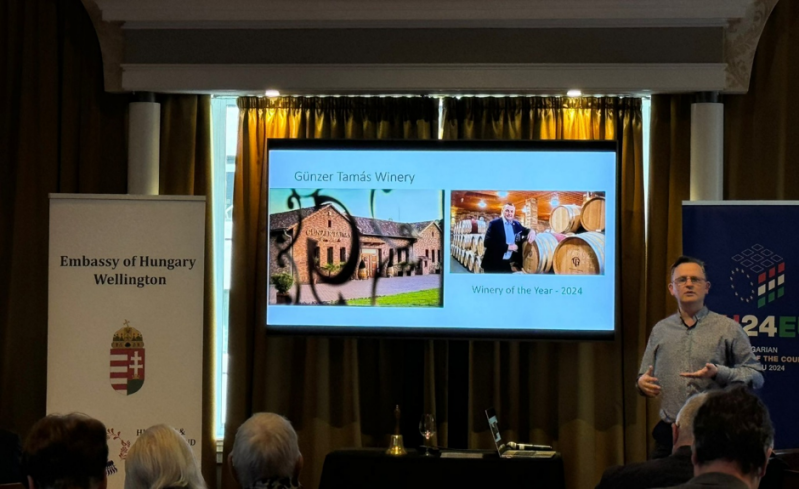
Joint launch of the new Hungarian wines in the eWine range with the Hungarian Ambassador at the Wellington Club.
-
- The result is a combined portfolio of French, Spanish, Italian, and Hungarian wines to share a diverse range of wines. I would like to think that I have something to offer most palates and budgets, the sordid secret of the collection is that these are almost all wines that Katie and I love to drink ourselves. Luckily we enjoy most quality wine, whether it be dry or sweet, savoury or fruity, delicate or bold. So long as the wine speaks to its ‘Terroir’, the place it comes from, it needs to be a true and reliable example.
- A deeply important personal celebration – what are you drinking?
- I have so many kinds of ‘favourite wine’ that choosing just one for a celebration can spur almost a paralysis of indecision. It is almost more driven by what is on the dinner menu first. Liberating a treasure from the cellar might be a White Burgundy, an aged Bordeaux (left bank preferred), perhaps a well made Spanish Tempranillo, an opulent Amarone della Valpolicella, or a Riesling. The biggest occasion we celebrated together was our 20-year Wedding Anniversary in 2021, which was accompanied by a 20 year old bottle of Chateau d’Yquem … a 100 point wine that was beyond exquisite.
- What’s your advice to someone who is becoming more interested in wine and wants to develop both their palate and their knowledge of the extensive world of wine
- Simply put- Taste extensively, and travel broadly. The temptation with wine is to discover a few ‘favourite’ wines and stick with them. Even with the growing array of wine imports here in New Zealand, they represent a tiny fraction of the world of wine. All these different flavours, textures, and experiences await the keen wine traveller. Many of these wines rarely venture beyond the borders of their own villages, much less to the Antipodes. That said, there is so much passion in the wine industry locally in New Zealand, and fellow wine enthusiasts are usually very keen to share. Hosted wine tasting events are a wonderful way to efficiently broaden horizons.
- What are your top three “bucket list” wine destinations for lifetime holidays.
- Wow that would be tough to choose. I have already visited many of my favourite regions for wine, and yet so many yet to visit. I need to walk among the gnarled old bush vines in Ribera del Duero, experience more deeply the subtle differences between stone-walled vineyards in Burgundy, understand the heritage of kvevri in Georgia, explore more of the hilltop towns of Tuscany and the sun-kissed vineyards of Sicily. The hidden cellars of Tokaj in Hungary beckon, as do the steep hillsides of the Mosel. There are far too many to choose just three.
- When I lived in Thailand – as improbable as it seems – I found there was a local wine industry – quite a lot was pretty bad but I did find some decent, albeit overpriced ones too. It sometimes seems as though every country I visit is determined to make wine regardless of the 30-50 norm. What are your thoughts about this?
- There is delight in diversity and discovery. It can be tempting to believe that the best wine regions of the world today will never be beaten. Tell that to the Napa wineries before the ‘Judgement of Paris’ tasting, or the Chinese as they planted wine regions the size of Bordeaux in less than 10 years. Perhaps ask the entrepreneurs of South America before both Chile and Argentina blitzed their way into the top 10 wine export nations. Peru is considering a wine industry to go alongside their exciting gastro-tourism. After all, they boast 28 of the 32 different climate zones of the world! The traditionalist in me says that there are reasons the great world wines are clustered in narrow areas- happy confluences of soils, climates, and long summer season daylight hours for ripening grapes. But nobody considered New Zealand potential for great wine before the 1990s either.
- Another discovery for me has been how Piwis are making wine production possible in otherwise difficult cool and wet climates. Do you see a future and would you consider stocking them?
- PIWI wine is not something I can offer any insight into besides the obvious – our world’s shifting climate demands innovation to combat new and old challenges. Disease, frost, droughts, pests… there are many natural enemies to the world of viticulture. The science will continue to evolve, as will our industry.
Our conversation ended where so many wine stories do — with a look toward the future and the challenges facing growers everywhere. From there, the obvious next step was to taste the wines Michael had chosen as a snapshot of eWine’s identity. We agreed on a concise set of bottles that offer a clear window into the character of the portfolio. Spanning four countries and styles, they provided a compact but revealing tasting.
In the Glass: Wines That Illustrate eWine’s Identity
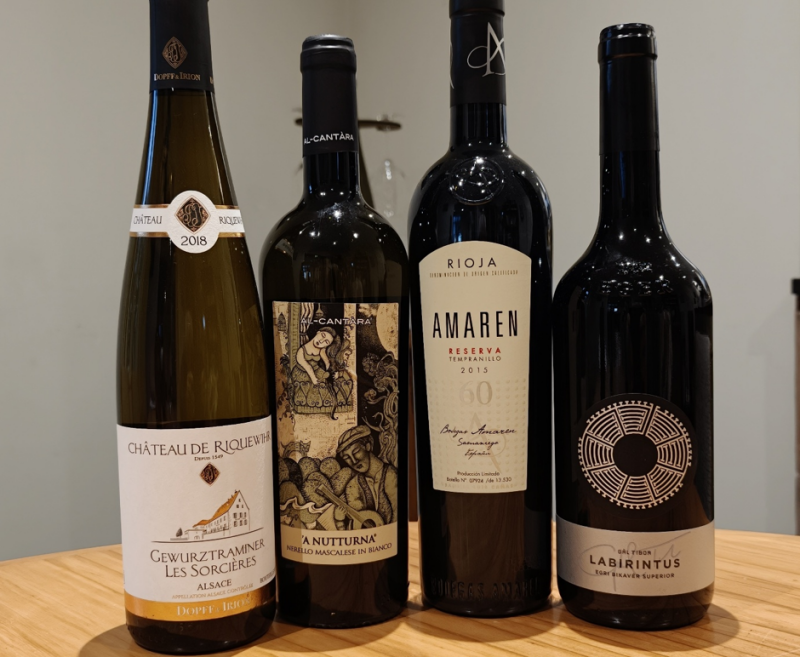
Dopff & Irion Château de Riquewihr ‘Les Sorcières’ Gewurztraminer 2018 — Alsace, France
The aromatic wines of Alsace were among the first to seriously impress Michael and Katie in their early wine travels, and this is a region close to my own heart as well, which I’ve written about here. The Dopff and Irion families have been associated with winegrowing around Riquewihr since the 16th century, merging their interests after the Second World War and organising their vineyards into four distinct estates, each tied to a particular terroir. This wine is sourced entirely from the Les Sorcières estate — so named because it was once the site where witches were burned in the Middle Ages.
Pale lemon‑gold with a faint green tinge. The nose is more restrained than expected yet unmistakably Gewurztraminer, offering rose and lychee alongside subtler notes of mango, apricot and smoky spice that emerge with aeration. The palate is rich, generous and slightly oily, with honeyed lychee, sweet poached pear and lemongrass, balanced by just enough acidity and finishing warm and gently spicy. A perfect match for light to moderately spiced Thai dishes such as green chicken curry, and equally at home with well‑ripened soft cheeses.
Al Cantara ‘A Nutturna’ Nerello Mascalese in Bianco 2022 — Sicily, Italy
An unusual white made from the famed Etna Rosso grape, Nerello Mascalese, grown at 600 metres on the black volcanic soils of Randazzo on Etna’s northern slopes. The grapes are gently pressed off the skins, with the juice fermented and aged in stainless steel for six months.
Light lemon‑gold in the glass with distinct aromas of Sicilian broom blossom, pineapple, lemon wax, wild herbs and a subtle walnut edge. The medium‑bodied palate delivers a burst of flavour: zesty herbal lift over ripe prickly pear and pineapple, refreshing acidity and the characteristic Etna saline minerality. It finishes crisp and fresh with a lingering, complex mélange of flavours — utterly delicious. Its wide aromatic and flavour profile makes it an exceptionally versatile food wine: anything Mediterranean, but also Vietnamese or even Thai dishes.
Gal Tibor ‘Labirintus’ Egri Bikavér Superior 2021 — Eger, Hungary
Bikavér, or “Bull’s Blood,” has been synonymous with Hungarian red wine since the 16th century and has undergone a revival since Communist times, led in part by Tibor Gál — the talented Hungarian winemaker who, as head winemaker at Antinori, helped create the famous Super Tuscan Ornellaia before returning home in 1993. The winery sits at the foot of the Bükk Mountains on old volcanic soils in a cool continental climate, naturally encouraging slower sugar ripeness, good acidity and elegant structure.
Medium ruby with violet florals over blue and black‑berry fruit, bitter chocolate and a touch of star anise. The light to medium‑bodied palate shows fine‑grained but firm tannins and bright acidity framing attractively spicy dark berry fruit. Elegant, balanced and long, with a gently spicy finish.
Bodegas Amaren ‘60’ Tempranillo Reserva 2015 — Rioja Alavesa, Spain
Made from Tempranillo vines averaging 90 years old, grown on nutrient‑poor calcareous clay soils in Rioja Alavesa. The grapes are hand‑sorted, destemmed and fermented in French oak before spending 18 months in new French oak barrels. I decanted this for two hours before tasting and later enjoyed it with friends over slow‑cooked beef cheeks.
Medium ruby with aromas of berries, leather, tobacco, vanilla and clove spice. The palate is rich and medium‑full‑bodied, with fine tannins and excellent acidity framing a core of ripe berry fruit, Turkish figs, dark chocolate and brown spice. The finish is lifted, fresh and long with a delicious spicy edge. Already drinking beautifully but will be even better with another three to five years of careful cellaring.
For more characterful, terroir-driven, and just plain delicious wines explore the eWine collections on their home page.
Reflections on a Legacy Reimagined
Tasting these wines after hearing Michael’s story made the evolution of eWine feel both inevitable and deeply personal. Each bottle reflected a facet of the portfolio he has built — the aromatic precision of Alsace, the volcanic tension of Etna, the revived elegance of Hungary, and the depth and longevity of Rioja. Together they formed a compact portrait of a business shaped by curiosity, relationships, and a commitment to terroir. What began as a beloved Wellington wine shop has become an exceptional online cellar with a distinctly European heartbeat yet still anchored in the same values that first drew Michael and Katie into the world of wine: discovery, authenticity, and the pleasure of sharing something genuinely delicious.
P.S. Michael has kindly shared this article on the ewine blog - you can find it here.
About the author
John Penney is a wine experience guide based in Martinborough, New Zealand. His lifelong passion for wine has been deepened through extensive international wine travel, formal wine study (WSET3) and a career in adult learning. Through his Martinborough-based business wineinsights, he provides exceptional wine tour, wine-tasting and wine education experiences for wine lovers and enthusiasts.
Add comment
Comments