Debunking the ‘no safe level’ myth with evidence and a dash of exasperation.
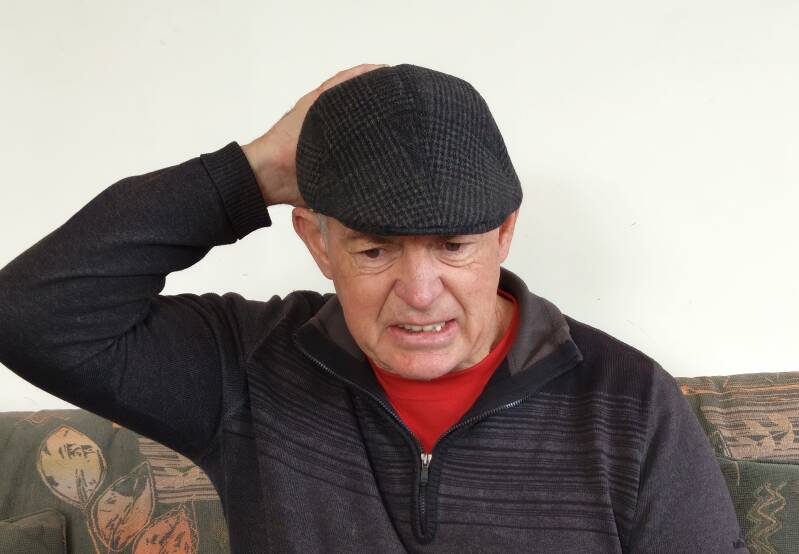
Every week I spend time with people who come to wine not for intoxication, but for flavour, connection, and culture. They come because wine gives them a way to explore the world through their senses — to taste landscapes, histories, and decisions. They want to understand why a vineyard faces a certain way, why a family grows the grapes they do, why a wine tastes like the landscape it comes from. They lean in when I pour something unfamiliar. They compare aromas, search for words, and discover that flavour isn’t just chemistry; it’s farming, climate, soil, people, and time. And every week, while I watch people open themselves to that richness, I also watch the public conversation about alcohol become more distorted, more absolutist, and more hostile. What makes me mad is not that public‑health agencies warn about risk — they should. What makes me mad is when they ignore newer evidence, flatten nuance, and cling to outdated conclusions because they fit a narrative. I wrote more generally about this a few weeks ago, but the latest barrage of headlines inspired this closer look behind them.
When the WHO stops updating its science, we have a problem
The World Health Organization continues to base its messaging on a 2016 meta‑analysis that pooled together dozens of observational, self‑reported studies and concluded that any amount of alcohol increased overall health risk. It treated all alcohol the same — wine, beer, spirits, binge drinking, meal‑based drinking — as if context didn’t matter. It also lumped former drinkers, occasional drinkers, and lifelong abstainers into broad comparison groups, a design flaw that inflates risk estimates. Despite these limitations, that 2016 analysis became the foundation for the WHO’s “no safe level” slogan.
But the Lancet’s own updated Global Burden of Disease study in 2023 revised the picture significantly, especially for older adults. It found that the “no safe level” claim simply doesn’t hold across all ages, all drinking patterns, and all cultural contexts. Yet the WHO’s public messaging hasn’t shifted an inch.
That’s not caution. That’s bias.
When an agency clings to older evidence because it supports a preferred narrative, trust erodes. And when the public hears only one side of the science — the side that sounds most alarming — we lose the ability to have an honest conversation about risk, culture, and context.
Absolute vs relative risk: the part no one explains
Another thing that makes me mad is how the public conversation treats all alcohol as if it behaves like tobacco. It doesn’t. With tobacco, the risk curve goes in one direction only: straight up from zero. With wine, the curve is different.
For cardiovascular disease — the world’s leading cause of death — the risk actually dips below the baseline for non‑drinkers at low, meal‑based levels before rising again with heavier consumption. That means moderate drinkers, especially those who drink wine with food, often have a lower risk of dying from heart disease than people who abstain entirely.
And this matters. Heart disease accounts for roughly a third of all deaths. So even a modest reduction is meaningful.
But you would never know any of this from current messaging, which focuses almost entirely on cancer — especially breast cancer — without explaining what the numbers actually mean.
Take breast cancer. The absolute lifetime risk of dying from breast cancer for women is around 12 percent. A 10 percent relative increase from moderate drinking sounds frightening, but in absolute terms it shifts the risk from 12 percent to about 12.8 percent.
That’s an increase, yes — but it’s smaller than the increased breast‑cancer risk associated with delaying childbirth past 30, a choice most women understandably accept without moral panic.
This is the part that gets lost. Relative risk makes headlines. Absolute risk tells the truth.
And when public‑health messaging refuses to explain the difference, fear wins and nuance disappears.
The ACC study: nuance that never makes the headlines
Then there’s the study of 340,000 British adults presented to the American College of Cardiology this March. It found that the health impacts of alcohol depend on what you drink and how you drink it. Moderate wine with meals was associated with lower mortality risk than zero or occasional drinking.
This is not fringe science. This is mainstream cardiology.
But because it complicates the preferred story — the story where all alcohol is equally harmful, in all contexts, for all people — it barely registers in public messaging. The nuance gets stripped out. The context disappears. And the public is left with a flattened, chemically reductive view of something that has been part of human culture for thousands of years.
The UNATI study: the first real attempt to fix the science
And now we have the UNATI study — a massive, multinational project launched this year that is finally doing what past research failed to do: separate wine from spirits, and meal‑based drinking from binge patterns.
This matters because almost all the data we currently rely on is observational and self‑reported. People misremember what they drink, under‑report consumption, and over‑report healthy behaviours. And observational studies can’t untangle whether moderate drinkers are healthier because of the wine or because they also tend to eat better, exercise more, and have stronger social networks.
UNATI is the first global study designed to fix these flaws. It uses harmonised data collection, cultural segmentation, and detailed pattern‑of‑drinking analysis to remove the confounding that has distorted alcohol science for decades. It treats drinking as a behaviour embedded in culture, not a single chemical exposure.
And here’s the part that really makes me mad: we could have had this level of evidence years ago. The MACH15 trial — a major NIH‑funded randomised study designed to test the real cardiovascular effects of moderate drinking — was shut down before it began, largely because its findings might have complicated the “no safe level” narrative. That trial would have given us causal data, not just correlations. Instead, we lost a decade.
UNATI is the first serious attempt to rebuild what was lost. If its early framework holds, it will force a rewrite of the simplistic “all alcohol is equally harmful” message. And that is precisely why some public‑health voices are already uneasy about it.
What makes me mad is not the risk — it’s the dishonesty
I’m not asking for cheerleading. I’m not asking for the Mediterranean Diet to be canonised. I’m not asking for wine to be declared “healthy”.
I’m asking for honesty.
People deserve public‑health advice that reflects the full evidence, not just the parts that fit a slogan. They deserve to know the difference between absolute and relative risk. They deserve to know that moderate wine with meals behaves differently from spirits consumed in binges. They deserve to know when agencies are relying on outdated studies while ignoring newer ones.
Wine isn’t risk‑free — nothing meaningful in life is — but the conversation has become so distorted that it no longer resembles reality.
And yes, that makes me mad.
About the author
John Penney is a wine experience guide based in Martinborough, New Zealand. His lifelong passion for wine has been deepened through extensive international wine travel, formal wine study (WSET3) and a career in adult learning. Through his Martinborough-based business wineinsights, he provides exceptional wine tour, wine‑tasting and wine education experiences for wine lovers and enthusiasts. He also writes about the cultural forces that shape how we experience wine.
Add comment
Comments