A Wine Specialist’s Guide to Martinborough Pinot Noir Styles — and How to Choose the Right Cellar‑Door Experiences.
Martinborough is best known for Pinot Noir, but the wider Martinborough Wellington wine region offers a far wider range of styles and cellar‑door experiences than many visitors realise. The district is shaped by four distinct sub‑regions: the Martinborough Terrace, with its free‑draining gravel and classic, structured Pinot Noir; Te Muna Road, where cooler, wind‑exposed terraces produce more aromatic and finely textured styles; Lake Ferry Road where more exposed sites and deeper more consistently clay soils give more linear red-fruited and floral styles; and Dry River Road where vineyards sit on warm elevated north-facing hillsides with soils composed of silty clay loams deeply infused with ancient marine sediment and limestone, leading to more opulent dark-fruited styles.
If you’d like a deeper look at the full varietal landscape — from Riesling and Gewürztraminer to Chardonnay and Chenin Blanc — I’ve covered that in Martinborough Wine District: More Than Pinot Noir.
This guide focuses specifically on the different styles of Martinborough Pinot Noir, and how understanding those styles can help visitors choose the cellar‑door experiences that suit them best.
Sub‑Regions of Martinborough: How Site Shapes Pinot Noir
Although Martinborough is compact, its Pinot Noir styles are shaped by four distinct sub‑regions. Each has its own combination of altitude, exposure, soil profile and ripening pattern — and these differences help explain why the region produces such a wide range of expressions.
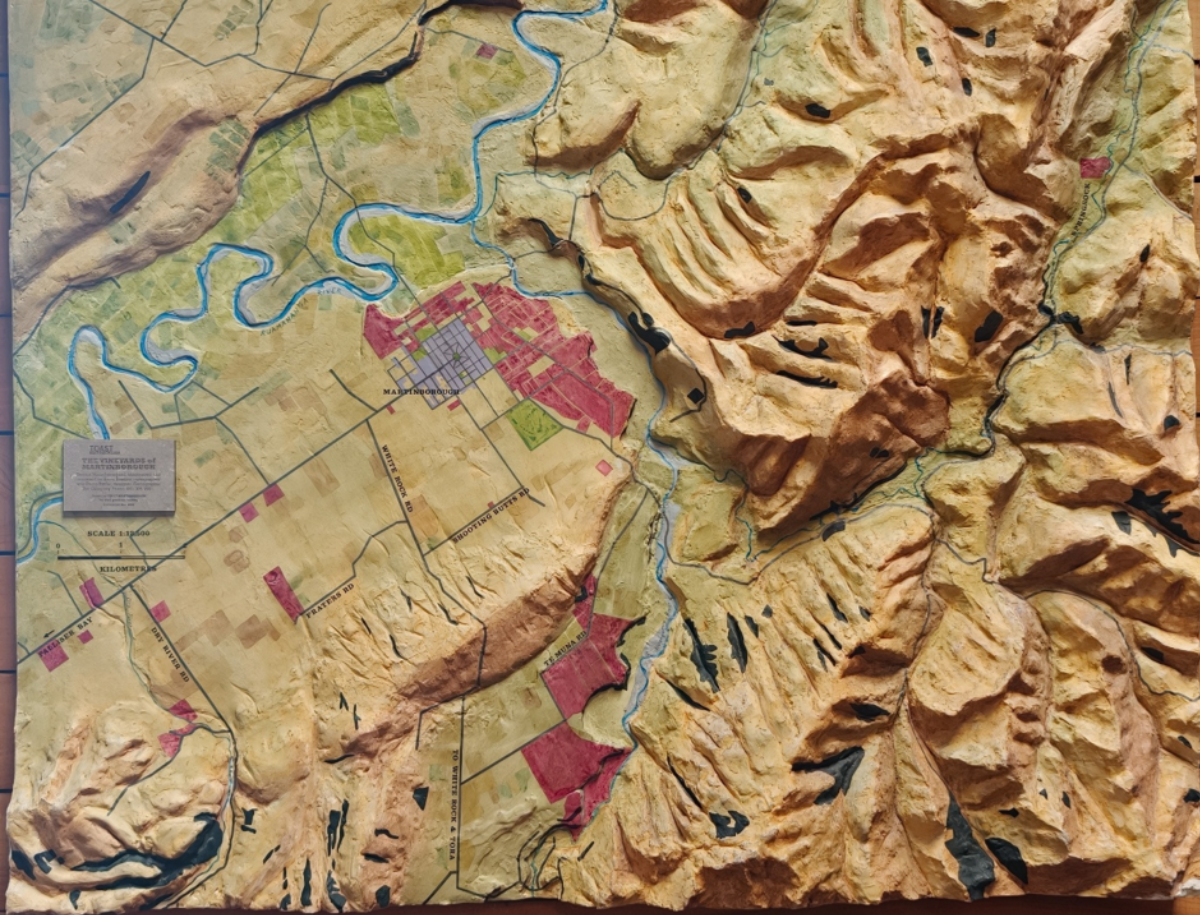
This 3D map mounted in Martinborough’s Village Café shows the four sub regions of Martinborough wine clearly
Martinborough Terrace
The Martinborough Terrace is the historic heart of the region and home to many of its oldest vines. Its free‑draining gravel soils, laid down by ancient river systems, create a warm, dry environment that encourages early ripening. Persistent north‑west winds keep the canopy open and disease pressure low, concentrating flavour and tannin while maintaining the small berry size that defines the area. Pinot Noir from the Terrace is typically structured and savoury, with firm, finely shaped tannins and the depth to reward long ageing — the style that first established Martinborough’s reputation for serious, cellar‑worthy wines.
Te Muna Road
Te Muna Road is a younger but now equally important part of the Martinborough wine district, shaped by two distinct terraces that give the area its characteristic finesse. The upper terrace sits higher and is noticeably cooler and more wind‑exposed, with fine silt loams overlaying stony, iron-rich clay infused gravels mixed with ancient loess and volcanic ash. Ripening here is later and slower, producing Pinot Noirs that are aromatic, brooding, complex and structured, leading with dark cherry, forest floor and wild herbs, and firm silky tannins built for the long-term.
The lower terrace is slightly warmer, but also much more frost prone with a mix of raw greywacke stones, gravel and silt loams with a distinct limestone element. This presents interest, but major challenge for vine growing - in the elevated frost risk, and aggressive free draining. Pastoral use with seasonal cropping remains the dominant use but Craggy Range have some pockets of Pinot Noir planting here utilising specialised high-density planting, amenable clones and massive frost protection and water storage investment. Pinot Noir from these sites retains the dark fruit profile of the upper terrace but has less savoury character darker spice and a sharp flinty mineral character.
Lake Ferry Road
The Lake Ferry Road Pinot Noirs are shaped by important microclimatic and soil considerations. The whole area sits on a deep uniform overlay of heavy yellow-grey clay averaging two meters thick overlaying the freer draining riverbed sub-strata. This clay holds onto moisture and makes the soil cooler, much slower to heat up compared with the gravel of the Martinborough Terrace. This water retention can be a boon in the traditionally drought prone summers and autumns, but also a problem in the unseasonally wet summers that accompany the climatic instability associated with global warming.
Lake Ferry Road also acts as a corridor to the Coast and Palliser Bay, and the open landscape is more exposed to cold southerly airflows from the ocean. This, combined with the cooler soils leads to later ripening than on the more sheltered Martinborough Terrace.
Pinot Noirs grown along this region lean towards a fresh wild red-berry profile with more cranberry and sour cherry and less of the dark plum more common in warmer sub-regions. They are seldom blocky or broad-shouldered and lean to more vertical styles driven by fresh acidity, fine, lacy tannins and mineral tension.
Dry River Road
Dry River Road is probably the warmest sub region in Martinborough. It features north facing slopes warmed directly by the sun and sheltered from the cold southerlies that blown down Lake Ferry Road from the coast. The dark silty clay loam soils are laced with marine limestone and scree that further aid the natural hillside draining, helps the soil warm and reflects warmth up to the vines. This extra warmth and hillside sun produces Pinot Noirs that are more opulent, dark-fruited with more blueberry and plum notes and dusty, mouth-coating tannins.
Coney Wines is the best‑known cellar door in this zone, and their Pinot Noir reflects the character of the area — generous in fruit, supple in structure, and immediately approachable. But the largest area under vine is the Blue Rock Vineyard, now owned by Luna Estate.
This sub‑region adds an important dimension to Martinborough’s diversity, offering a plush, warm‑fruited counterpoint to the savoury structure of the Terrace and the aromatic lift of Te Muna Road.
Styles of Martinborough Pinot Noir
Of course, stylistic diversity in Martinborough Pinot Noir is not only shaped by site. Winemaking preferences — from extraction levels to oak regimes and whole‑bunch use — play a decisive role in how each wine presents. Clone selection is another critical factor, with different Pinot Noir clones contributing variations in aroma, tannin structure and ageing potential.
Below are the key styles you’ll encounter across the region — with examples of producers known for each approach. These are not rigid categories: there is considerable overlap, and many wineries produce Pinot Noirs that sit between styles or shift from year to year depending on vintage conditions, vineyard blocks and winemaking choices. The aim here is not to classify producers, but to help visitors understand the broad stylistic landscape that makes Martinborough such a compelling Pinot Noir region.
Classic Martinborough Structure & Tannin
This is the style that first put Martinborough on the map. Pinot Noir in this vein is firm and savoury, built around dark cherry, forest floor and dried‑herb characters, with a distinctive line of tannin that gives the wines their shape and longevity. It’s a style closely associated with the oldest vineyards on the Martinborough Terrace, where free‑draining gravel soils and persistent north‑west winds create small berries, concentrated flavours and natural tension. Producers such as Ata Rangi, Dry River, Escarpment and Martinborough Vineyard have long championed this structural, age worthy expression — wines that carry depth, complexity and the ability to evolve gracefully over time.
Perfumed, Silky, Aromatic Pinot Noir
Alongside Martinborough’s more muscular styles, a number of producers favour a lifted, aromatic expression of Pinot Noir. These wines tend to emphasise red‑cherry brightness, rose‑petal fragrance and gentle spice, carried on a silky, finely woven palate. The extraction is typically softer, allowing perfume and texture to take the lead rather than tannin or weight. Palliser Estate Pinot Noir is a benchmark for this style, producing Pinot Noirs that are polished, fragrant and beautifully balanced, with an elegance that appeals to those who prefer finesse over power. We might also consider the Runholder expression from Te Kairanga, Devotus SV and the Nga Waka Pirinoa Pinots as representing this expression. Kusuda may present the pinnacle of this category with its pristine purity, precision, ethereal bouquet and delicate extraction.
While the Martinborough region is best known for structure and savouriness, these more aromatic, supple expressions add an important dimension to Martinborough’s diversity.
Richer, Darker‑Fruited Expressions
Alongside Martinborough’s more savoury and aromatic styles, there is a smaller but distinctive group of Pinot Noirs that lean toward darker fruit, greater weight and a plush, generous mid‑palate. These wines typically come from warmer sites or vintages where ripening is more even, allowing fruit richness to take centre stage while tannins remain softer and more approachable. Producers such as Luna Estate (particularly the Blue Rock vineyard), Te Kairanga in warmer years, and Nga Waka Martinborough, whose Pinot Noirs often show darker‑toned fruit and a textural, flowing palate, all contribute to this style. Coney Wines, based on Dry River Road, offer a clear warm‑site expression: ripe fruit, supple tannins and an immediately inviting profile. Together, these wines provide a generous, fruit‑driven counterpoint to the classic savoury structure of the Terrace.
Whole‑Bunch & Stem‑Influenced Pinot Noir
Whole‑bunch fermentation plays an increasingly important role in shaping certain Martinborough Pinot Noirs, adding savoury lift, spice, dried‑herb complexity and the distinctive aromatic thread that comes from fermenting with stems. This is very much a winemaker‑driven choice rather than a site‑driven one, and the results can range from subtle aromatic nuance to a more pronounced stem‑derived character.
Escarpment has long championed whole‑bunch fermentation as a stylistic signature, using it to build fragrance, structure and savoury detail. Ata Rangi has steadily increased its whole‑bunch proportions in recent years, bringing an extra layer of aromatic lift and fine, sinewy tannin to its already structured style. Together, these and other wines show how stem inclusion can add another dimension to Martinborough Pinot Noir, shaping both aroma and structure in ways that transcend sub‑regional differences.
Single‑Vineyard & Soil‑Driven Expressions
Martinborough’s soils vary far more than many visitors realise, shifting from free‑draining gravels to pockets of silt and clay that subtly influence water retention, vine balance and the shape of tannin. A number of producers bottle single‑vineyard Pinot Noirs to highlight these differences, allowing the character of individual sites to come through with clarity. Ata Rangi explores this through vineyards such as McCrone, Kotinga and Masters, each offering its own expression of structure and detail. Escarpment has long championed site‑specific wines — Kupe, Te Rehua, Kiwa and Pahi — each shaped by variations in soil, exposure and vine age. Palliser adds further nuance with Hua Nui. These are all wines that reflect the subtleties of their respective sites. Nga Waka Lease Block is also an important exemplar. These single‑vineyard bottlings appeal to visitors who enjoy exploring terroir, offering a chance to taste how small shifts in soil and site can create distinctly different expressions of Martinborough Pinot Noir.

Iconic Single Vineyard Expressions of Martinborough Pinot Noir
Minimal‑Intervention, Organic & Biodynamic Pinot Noir
Martinborough’s producers are almost universally committed to sustainable viticulture, and organic practices are surprisingly widespread across the region. Cover crops, careful soil management, and reduced chemical inputs are now standard practice. Within this already strong culture of sustainability, a smaller but steadily growing group of winemakers are taking things further — embracing minimal‑intervention winemaking, biodynamic principles, and experimental approaches that go beyond certification.
These wines often rely on wild ferments and lower sulphur additions, favouring open‑knit, textural structures and a focus on vineyard expression rather than polish. Seasonal variation is typically embraced rather than corrected, and many producers extend this philosophy into the vineyard through under‑vine biodiversity, composts and natural preparations, dry farming where possible, and a deep commitment to soil health and low‑input canopy management. Not every estate applies all of these elements in the same way — for example, some, like Devotus, combine organic and minimal‑intervention practices with a more active canopy management programme — but the common thread is a willingness to push beyond convention. The resulting Pinot Noirs tend to show lifted aromatics, savoury and earthy complexity, softer extraction, and a kind of “living” texture that speaks to both site and season.
Producers such as Oraterra — with vineyards that are BioGro‑certified or in conversion, dry‑farmed blocks, extensive cover cropping, natural ferments, longer ageing in larger‑format oak and no fining or filtration — exemplify this gentle, purity‑driven style. Organic producer Devotus may also be considered here. Cambridge Road, meanwhile, stands as something of an outlier even within this group, embracing many of the practices associated with the so‑called natural wine movement: extended skin contact, amphora and concrete fermentations, and a philosophy that pushes further into the realm of experimental, low‑intervention winemaking. Together, these wines offer a thoughtful counterpoint to Martinborough’s classic, structure‑driven styles and appeal to visitors interested in alternative winemaking philosophies.
How to Choose Wineries Based on Style
If you enjoy structured, age worthy Pinot Noir, look for producers working with older vines on the Terrace. If you prefer perfumed, elegant styles, seek out wineries known for gentle extraction and aromatic lift. If you enjoy richer, darker‑fruited wines, look for warmer pockets or producers who favour a more generous mid‑palate. If you’re curious about whole‑bunch ferments, look for tasting notes that mention spice, savoury lift or stem‑derived aromatics. If you enjoy terroir detail, explore single‑vineyard bottlings. If you’re drawn to minimal‑intervention wines, look for wild ferments and low‑sulphur approaches.
This isn’t a ranking, and it’s not a definitive list — simply a way to help visitors navigate the region’s stylistic diversity.
Why a Guided Tour Offers More Depth
A self‑guided visit to Martinborough is easy — the Terrace is compact, and many cellar doors are within walking distance. But if you want a deeper understanding of the region’s Pinot Noir styles, the vineyard sites, the winemaking decisions, the producer preferences and even the impact of clonal selection, a guided tour offers context that’s hard to gain on your own.
I design private, wine‑focused tours around the styles you enjoy most, drawing on years of tasting, teaching and working with the region’s producers. If you’d like to understand the thinking behind how I shape these experiences, I’ve written more about it in Why I Do Custom Tours. And for those curious about how clones and winemaking choices shape Martinborough Pinot Noir, I’ll be exploring that further in a forthcoming article.

Tasting in the winery with the winemaker, taking your own barrel sample using the wine thief – just some of the unique experiences on my wine tours
Closing Thoughts
Martinborough may be small, but the Martinborough‑Wellington wine district produces an impressive diversity of Pinot Noir styles, shaped by soil, site, vine age, winemaking philosophy and clonal selection. Understanding these differences helps visitors choose the cellar door experiences that match their palate and interests. And for those who want a deeper, more curated day, I offer private tours designed to bring the region’s wines and stories to life — with future writing to come on the impact of clones and winemaking decisions.
About the author
John Penney is a wine experience guide based in Martinborough, New Zealand. His lifelong passion for wine has been deepened through extensive international wine travel, formal wine study (WSET3) and a career in adult learning. Through his Martinborough-based business wineinsights, he provides exceptional wine tour, wine-tasting and wine education experiences for wine lovers and enthusiasts.
Add comment
Comments
Very informative read John! Great to dig deeper into the subtleties between the sub regions / areas.