On the northern slopes of Mount Etna, understanding the mountain requires more than tracing its history or walking its vineyards — it demands seeing how different hands interpret the same volcanic canvas. If the first article offered a structured introduction through Firriato, and the second explored the living continuum of tradition through I Custodi and Graci, then this final chapter turns toward two estates whose influence has shaped the modern identity of Etna Nord. At Tenuta delle Terre Nere and Pietradolce, altitude, purity, and site‑specific expression converge, revealing yet another dimension of the volcano’s character — one defined not by revival or restraint, but by precision, luminosity, and a deep commitment to articulating place through clarity.
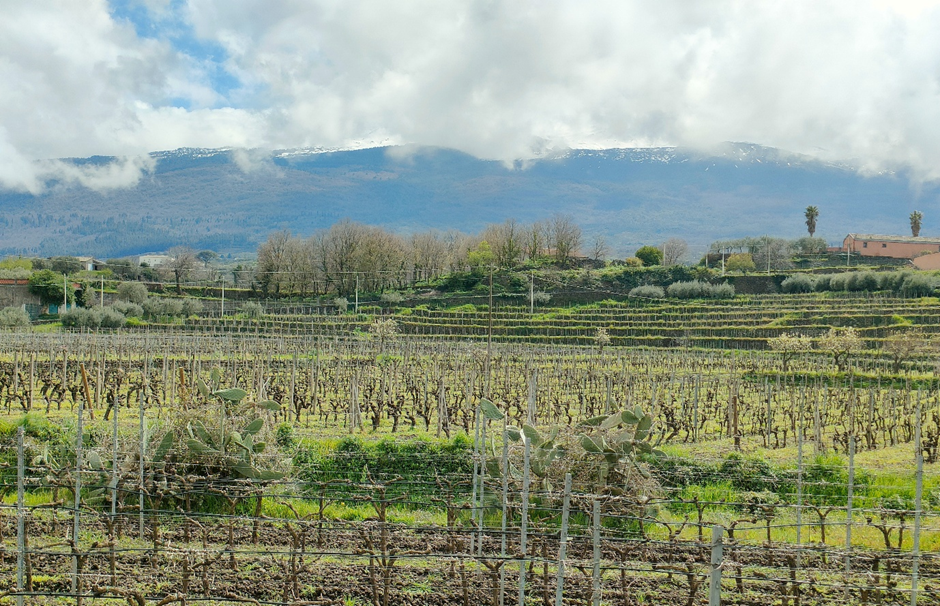
The High Slopes and the Modern Etna: A New Perspective
To follow the contours of Etna Nord is to recognise that the mountain is not defined by a single narrative but by a series of overlapping interpretations. Each producer reads the same volcanic landscape through a different lens. In the first part of this series, Firriato offered a structured and composed introduction — a way of understanding Etna through clarity, organisation, and a polished expression of its terroir. The second instalment stepped into the realm of continuity, exploring how I Custodi and Graci engage with the past: one through revival and custodianship, the other through refinement and interpretive restraint.
Yet there is another dimension to Etna’s identity that has emerged more recently — one shaped not by tradition or by structure, but by a contemporary pursuit of definition. Over the past two decades, a new generation of producers has approached Etna not simply as a historical wine region, nor as a canvas for stylistic interpretation, but as a landscape whose individuality can be articulated with remarkable precision. This shift is not about contrada delineation alone — a long‑standing feature of Etna’s viticulture — but about a modern sensibility that seeks to reveal the mountain’s complexity through clarity, purity, and finely judged restraint.
It is within this movement that Tenuta delle Terre Nere and Pietradolce have become central figures. Though different in age, philosophy, and stylistic emphasis, both estates share a commitment to expressing Etna through a contemporary lens — one that privileges articulation over adornment, and nuance over narrative. Their work is shaped in part by the character of the sites they farm: Terre Nere’s highest and most emblematic parcels lie in the upper reaches of Contrada Guardiola, one of the loftiest cultivated zones on Etna Nord, while Pietradolce’s identity is anchored in the steep, sandy terraces of Contrada Rampante, where elevation and exposure contribute to the estate’s distinctive sense of tension and purity. Altitude is not the defining distinction — many producers on Etna work high — but in these two contrade, height and exposure sharpen the edges of expression.
Where Firriato provided structure, and where I Custodi and Graci explored continuity and reinterpretation, Terre Nere and Pietradolce turn the focus toward precision: not in the sense of technical polish, but in the sense of allowing each site, each lava flow, each subtle shift in soil and exposure to speak with its own voice. Their wines feel less like interpretations and more like transcriptions — articulate, finely drawn, and deeply rooted in place.
In this final part of the series, the journey arrives at this contemporary frontier. Through Terre Nere and Pietradolce, Etna reveals itself not only as a region of history and tradition, but as a living, evolving landscape whose identity continues to expand through new perspectives and new philosophies. This is Etna as it is being defined today: expressive, precise, and alive with possibility.
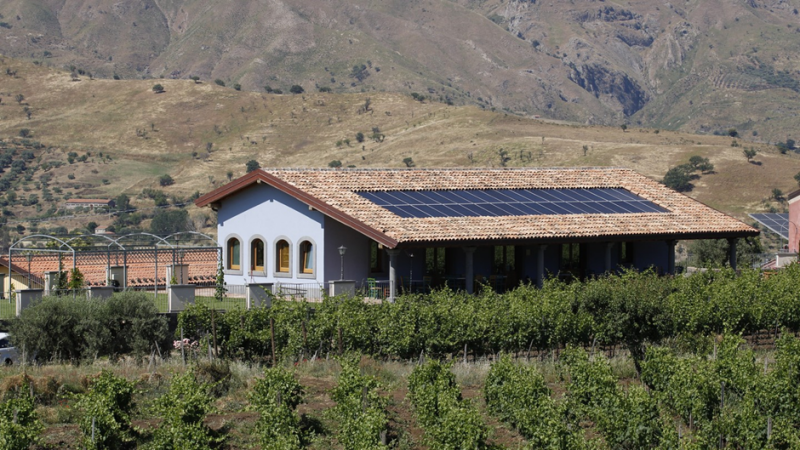
Tenuta delle Terre Nere: Mapping the Mountain, Defining a Benchmark
Few estates have shaped the modern understanding of Etna Nord as profoundly as Tenuta delle Terre Nere. Founded in the early 2000s by Marco de Grazia, the estate emerged at a moment when Etna was only beginning to re‑enter the consciousness of the wider wine world. De Grazia — already well known for championing terroir‑driven Italian wines abroad — recognised something in Etna that had not yet been fully articulated: a landscape whose complexity rivalled the great vineyard mosaics of Europe, and whose ancient vines and fractured volcanic soils offered a level of nuance that had long gone under‑explored.
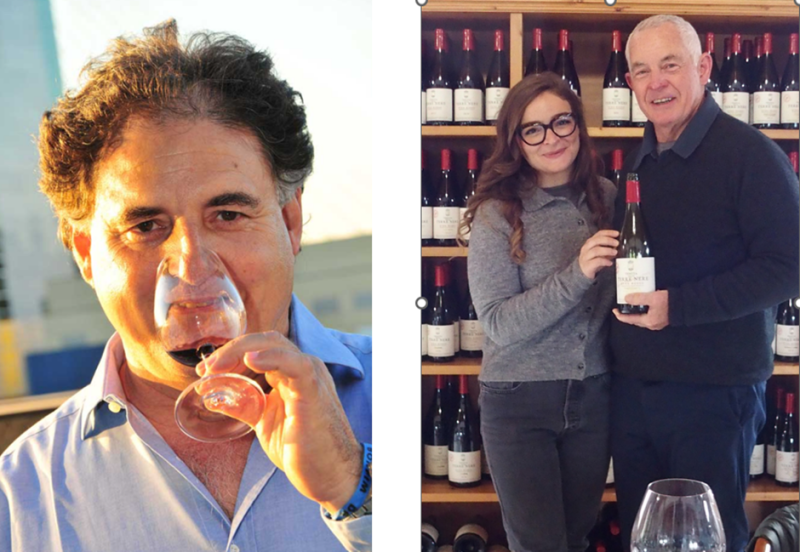
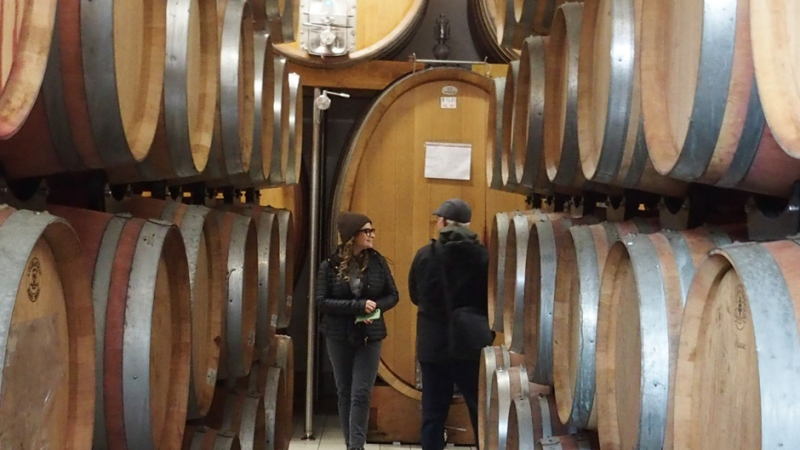
L. Marco de Grazia. R. The author with host Debora Cavallaro
From the outset, Terre Nere’s philosophy was built on a simple but radical premise: Etna should be understood through its individual sites, not as a monolithic region. While contrada names had always existed, they were rarely used as a framework for vinification. De Grazia changed that. He began to vinify parcels separately, treating each contrada as a distinct expression of the mountain’s geology, history, and microclimate. This approach — inspired in part by the vineyard logic of Burgundy — helped establish the idea of Etna as a patchwork of micro‑terroirs, each capable of producing wines with their own identity.
The Burgundian Lens: Etna as a Patchwork of Crus and Grand Crus
What set Terre Nere apart — and what made de Grazia’s work so influential — was his insistence that Etna should be read through a Burgundian lens. Not in terms of style, but in terms of structure: the belief that a volcanic slope could be understood as a series of crus, each shaped by its own lava flows, exposures, and histories. This was more than a marketing analogy. It provided a vocabulary for critics, importers, and consumers to grasp the mountain’s complexity, and it offered local growers a new way of valuing their land. In many ways, Terre Nere did for Etna what Burgundy’s climats did for the Côte d’Or: it transformed a landscape into a hierarchy of meaning.
Viticulture: Old Vines, Volcanic Soils, and the Upper Slopes of Guardiola
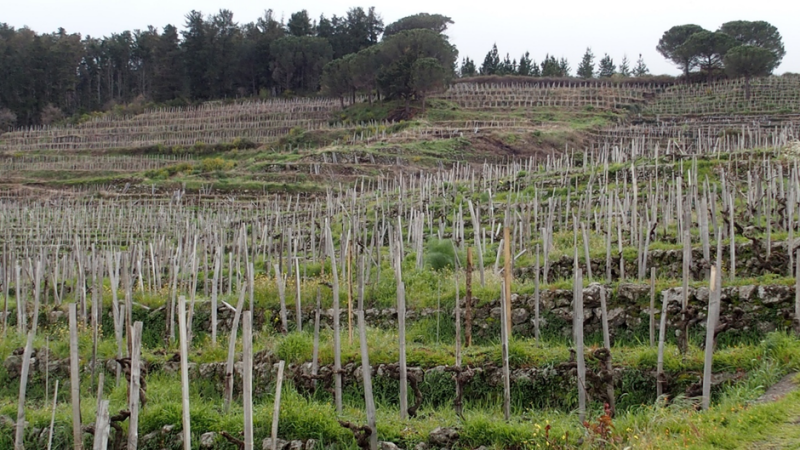
The estate’s holdings span several of Etna Nord’s most celebrated contrade — Calderara Sottana, Feudo di Mezzo, San Lorenzo, and others — but it is the upper reaches of Contrada Guardiola that have become emblematic of Terre Nere’s identity. Here, some of the highest cultivated parcels on the northern slope rise toward the 1,000‑metre mark, planted to ancient alberello vines rooted in decomposed lava and ash. These vineyards are steep, terraced, and demanding, shaped by centuries of human labour and the mountain’s restless geology.
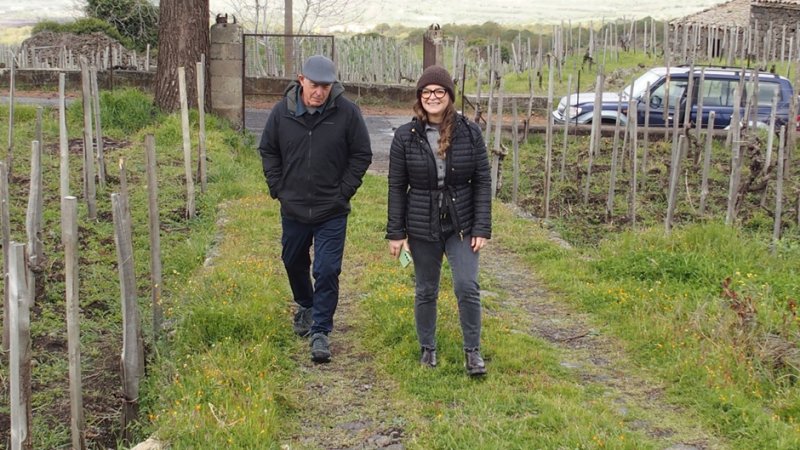
Our host, Debora Cavallaro, opened the visit with a drive to, and then walk through some of these terraces — a thoughtful exploration that brought the contours and character of the vineyards into sharp focus before we even reached the cellar.
Viticulture is organic and attentive, with each parcel treated as a discrete entity. Harvesting is done by hand, often in multiple passes, to capture the precise moment when each site reaches balance. The old vines — many between 60 and 100 years of age, some pre‑phylloxera — contribute not only concentration but a kind of textural depth that feels inseparable from the mountain itself.
Winemaking: Precision, Restraint, and the Pursuit of Clarity
In the cellar, the approach is defined by gentle extraction, neutral oak, and a commitment to clarity over weight. Fermentations are controlled but not manipulated; élevage is long but unobtrusive. The goal is not to craft a house style but to allow each contrada to articulate its own character. This philosophy results in wines that are finely etched, mineral, and expressive — wines that feel less constructed than revealed. Carricante from the estate’s white vineyards shows a lifted, saline profile, while the Nerello Mascalese bottlings — from the broader Etna Rosso to the single‑contrada wines — offer a spectrum of expression: from the dark, stony depth of Calderara Sottana to the more vertical, high‑toned clarity of Guardiola.
Tasting and Interpretation: A Benchmark for Modern Etna
Taken together, the wines of Terre Nere form a kind of cartography — a map of Etna Nord drawn not in lines but in textures, aromas, and mineral signatures. They have become reference points for understanding the mountain’s potential, not because they impose a definitive interpretation, but because they illuminate the individuality of each site with precision and restraint.
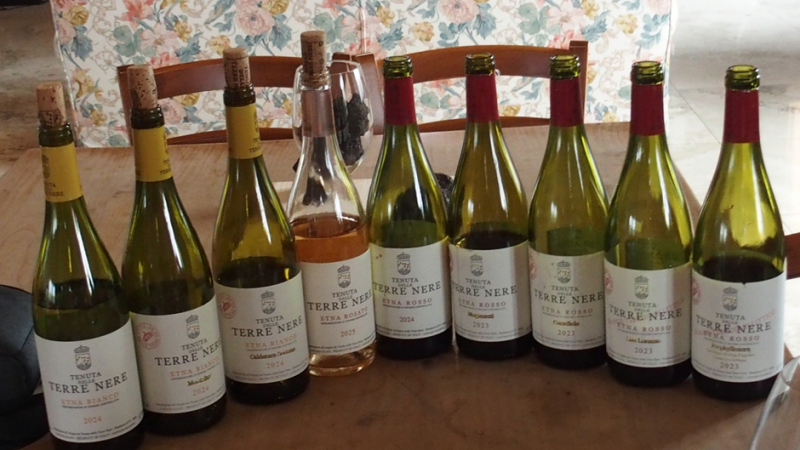
Debora led us through a very generous and comprehensive tasting across the range of Classic, Premier Cru and Grand Cru wines, as follows:
Etna Bianco 2024.
Made from a blend, primarily of Carricante but with small amounts of Cataratto, Inzolia and Grecanico from a mix of young and old vines grown on the North and East of Etna between 600 and 900 metres above sea level on a range of different volcanic soils. Gently pressed and fermented at low temperatures in stainless steel.
Pale lemon in the glass with aromas of yellow flowers, citrus and minerals. On the palate citrus and herb flavours are outlined with a distinct saline edge and the clean finish is quite persistent.
Etna Bianco Montalto 2024
100% Carricante grown on a small high altitude (950m) vineyard on the SW slopes of Etna on deep dark volcanic ash–rich soils, where altitude and breeze help compensate for the southern exposure. Gently pressed, cool temperature stainless ferment and 9 months aging in tank
Pale lemon in the glass with distinct lemon and lemon wax aromas and some subtle spice. Generous ripe Meyer lemon and nectarine flavours on the palate, with soft spice and excellent persistence.
Etna Bianco Cuvee delle Vigne Niche Calderara Sottana 2024 100% Carricante from the black pumice/scoria soils of Contrada Calderara at Randazzo. Gently pressed and fermented in large format French oak, then aged 9 months in French oak barriques with malolactic conversion.
Pale lemon in the glass with salted lemon, yellow flowers and fennel aromas, a hint of smoke too. Powerfully flavoured with lime, lemon peel, gooseberry, apple and flint flavours, leading to a long salty phenolic edged finish.
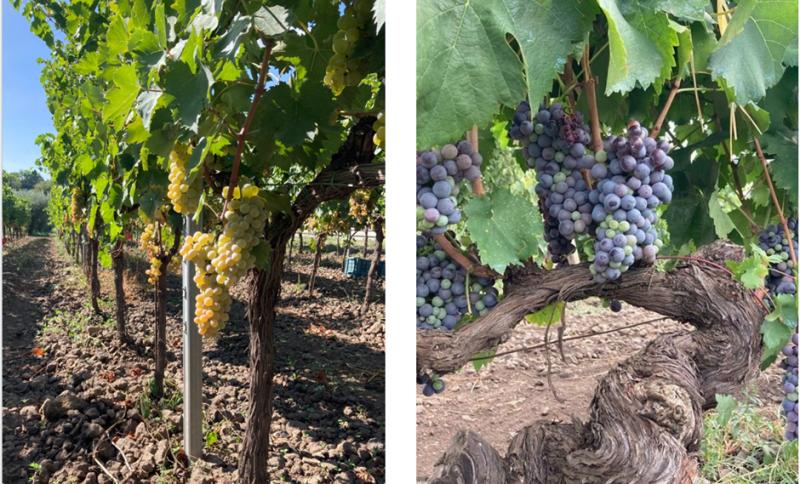
L. Carricante grapes. R. Old vine Nerello Mascalese
Etna Rosato 2025
100% Nerello Mascalese from vineyards in Castiglione di Sicilia and Randazzo municipalities and a range of volcanic soils, mainly younger vines. Fermented in stainless steel at low temperatures.
Pale copper pink in the glass with red apple, cherry and strawberry aromas. On the soft textured palate, there is plenty of ripe strawberry and cherry fruit underpinned by a crisp mineral spine and good length.
Etna Rosso 2024
Mostly Nerello Mascalese with a little Nerello Cappuccio from mixed age vines grown in Castiglione di Sicilia and Randazzo municipalities on a range of volcanic soils. Warm ferment in stainless steel with a small portion aged 15 months in large format French oak, the rest in stainless before bottling.
Light ruby in the glass with aromas of sweet cherry and cinnamon spice. Soft and silky tannins on the palate with bright cherry and berry flavours and good persistence and gentle acidity.
Etna Rosso Moganazzi 2023.
From 80 year old Nerello Mascalese vines on steep terraces 700 metres high in Contrada Moganazzi which along with Guardiola is considered one of the best terroirs in Castiglione. Volcanic ash soils overlaying layers of stones. Warm ferment followed by aging in a mix of French oak barriques and tonneau.
Darker ruby in the glass with dark cherry, plum, brown spice and sous-bois aromas. The tannins are fine but still have some grip, there is a hint of smokiness over the cherry and berry fruit and well-judged acidity with a nice tension on the mineral -edged finish.
Etna Rosso Guardiola 2023
From 90-120 year old Nerello Mascalese vines grown on the lean volcanic sand and pumice soils of Contrada Guardiola at the extreme altitude (900-1000m) limit of the DOC. Vinified and aged as for Moganazzi and a stunning contrast.
Lighter ruby with a distinct smoky minerality, violets and herbal notes over red cherry fruit aromas. The tannins are fine and silky on the palate, and there is a real sense of linearity, with fresh acidity and distinct minerality framing the red fruit flavours and driving to a surprisingly powerful finish.
Etna Rosso San Lorenzo 2023 From an 8 Ha vineyard at 700-800m in Contrada San Lorenzo at Randazzo, with soils of almost pure volcanic ash. Nerello Mascalese vines aged 70-100 years old. Warm ferment in stainless followed by 14 months aging in French oak barriques and tonneau.
Ruby in the glass with intense aromas of red fruit, licorice and pot-pourri. There is a richness of ripe dark cherries and spice on the elegant and precise palate with perfectly balanced fine tannins and acidity leading to an incredibly long finish.
Etna Rosso Calderara Sottana Pre-phylloxera La Vigna di Don Pepino 2023. From 140 year+ old ungrafted vines that have survived phylloxera in a 4 hectare vineyard in Calderara Sottana at 620m altitude, just in front of the Terre Nere cellar. Pumice soils mixed with basalt and just a trace of ash. Warm ferment followed by 14 months aging in French oak barriques and tonneaux.
An incredible wine, deep ruby in the glass with complex aromas of red cherries and berries, sous-bois, smoke and licorice. Rich and generous on the palate with firm still chewy tannins, balanced acidity, crunch minerality, spice and lavender with a very long finish. Already great, it will only improve with time.
In the context of this series, Terre Nere represents the modern interpretive turn on Etna: a shift from tradition and structure toward articulation, nuance, and the disciplined pursuit of terroir. Where Firriato offered a structured introduction, and where I Custodi and Graci explored continuity and reinterpretation, Terre Nere stands as a benchmark for the contemporary expression of Etna Nord — a producer whose work has helped define how the mountain is understood today.
Pietradolce: Purity, Altitude and the Vertical Expression of Etna
If Tenuta delle Terre Nere helped articulate Etna’s modern vocabulary of site expression, then Pietradolce has become one of its most compelling contemporary speakers — a producer whose wines capture the mountain’s energy with a clarity that feels both immediate and finely tuned. Founded in 2005 by the Faro family, Pietradolce is a relative newcomer compared to many of Etna’s historic estates, yet its rise has been swift and decisive. From the beginning, the estate’s focus has been singular: to craft wines that express the purity, tension, and luminosity of Etna Nord’s volcanic slopes with as little interference as possible.
Origins and Philosophy: A Modern Voice Rooted in Ancient Vines
Though young as a winery, Pietradolce’s foundations lie in some of the region’s oldest and most characterful vineyards. The Faro family began by acquiring small, high‑altitude parcels in Contrada Rampante, one of Etna Nord’s most distinctive and geologically complex zones. Many of these vines — especially those destined for the estate’s flagship bottlings — are 90 to 150 years old, trained as traditional alberelli and rooted in sandy, decomposed lava that has accumulated over centuries.
From the outset, the estate’s philosophy has been defined by minimal intervention and purity of expression. Rather than shaping the wines through technique, Pietradolce seeks to reveal the inherent tension and clarity of its sites. This is not a revivalist project, nor an attempt to recreate historical styles. It is a distinctly modern approach — one that embraces restraint, precision, and a belief that the mountain’s voice is most compelling when allowed to speak without adornment.
Viticulture: Rampante’s Steep Terraces and the Discipline of Balance
Pietradolce’s identity is inseparable from Contrada Rampante, a steep, terraced landscape where elevation and exposure sharpen the edges of expression. While altitude alone does not distinguish the estate — many producers on Etna work high — Rampante’s combination of decomposed lava, sandy soils, and dramatic diurnal shifts creates conditions that naturally favour wines of tension and aromatic lift.
Viticulture here is painstaking and entirely manual. The alberello vines, many ungrafted, require individual care; terraces must be maintained stone by stone; and ripening is slow, often extending well into October. Farming is organic and deeply attentive to vine balance, with yields kept low to preserve concentration without sacrificing finesse. The result is fruit that carries both intensity and precision — a duality that defines Pietradolce’s style.
Winemaking: Minimalism, Clarity and Volcanic Linearity
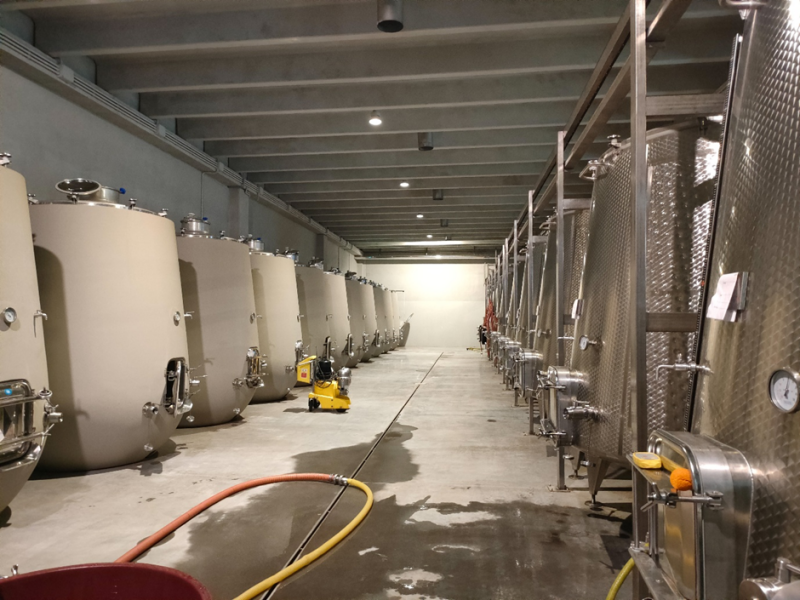
In the cellar, Pietradolce’s approach is guided by restraint and transparency. Whilst fermentations are controlled, extraction is gentle, and oak is used sparingly — typically large, neutral vessels that support structure without imposing flavour. The aim is to preserve the natural purity of the fruit and the mineral drive of the soils.
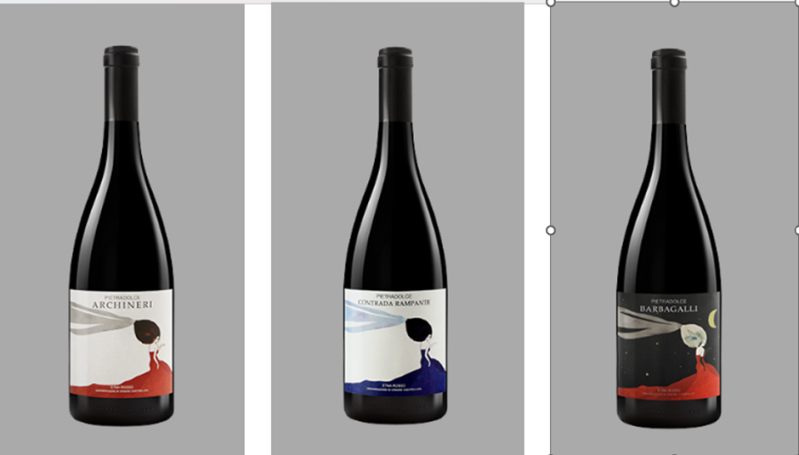
Carricante from the estate shows a linear, saline profile, marked by citrus, herbs, and a distinctive volcanic edge. The Nerello Mascalese bottlings — from the elegant Archineri to the profound, pre‑phylloxera Barbagalli — are celebrated for their clarity, depth, and almost weightless intensity. These wines do not seek power; they seek definition. They feel carved rather than crafted, shaped by the mountain’s energy rather than by the hand of the winemaker.
Tasting and Interpretation: The Vertical, Luminous Face of Etna
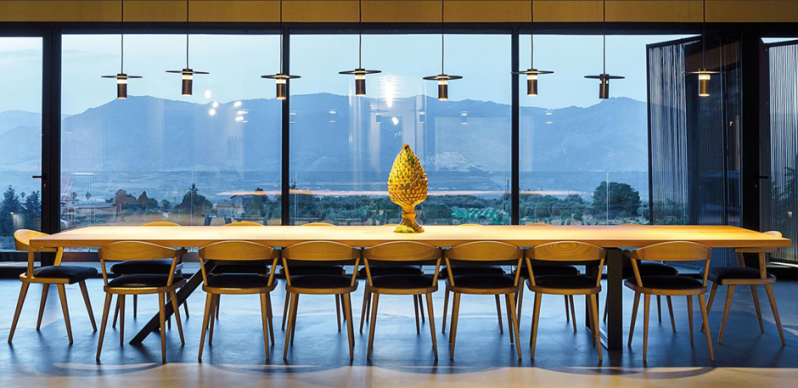
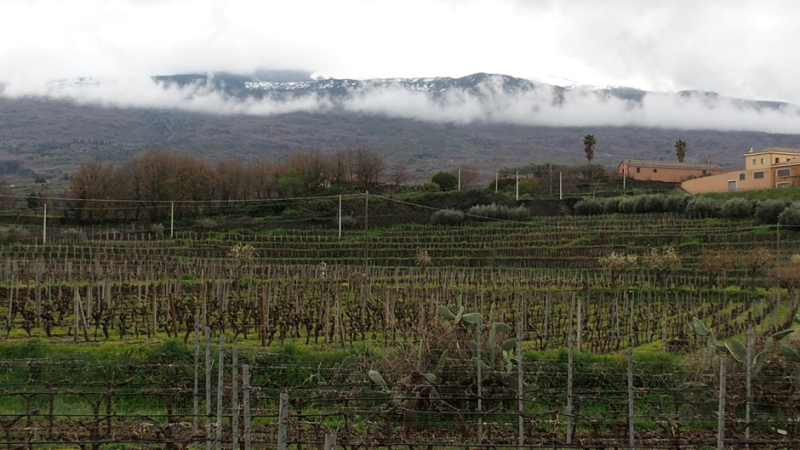
The stunning outlook from the main tasting table
Etna Bianco 2024.
Solely Carricante grapes grow from grafted vines in vineyards on the Northern slopes of Etna at altitudes of 700-800m. Gently pressed fermented and aged six months in stainless tank.
Lemon in the glass with citrus, green apple, chamomile and mineral aromas, mineral & herb-edged apple and pear flavours and a long salty lemon finish.
Etna Bianco Archineri 2023
100% Carricante from pre-phylloxera vines grown in Milo on the Eastern slopes of Etna in Contrada Caselle, at 850m on deep sandy soils. Gently pressed fermented and aged initially in stainless steel for 6 months followed by a further 9 months in bottle.
Bright lemon in the glass with a more restrained nose than the base Etna Bianco, with citrus, herb and smoke aromas. On the palate a rich fresh citrus entry with elements of dried herbs unfolding, a round mouthfeel and distinct salinity on the long, delicious finish.
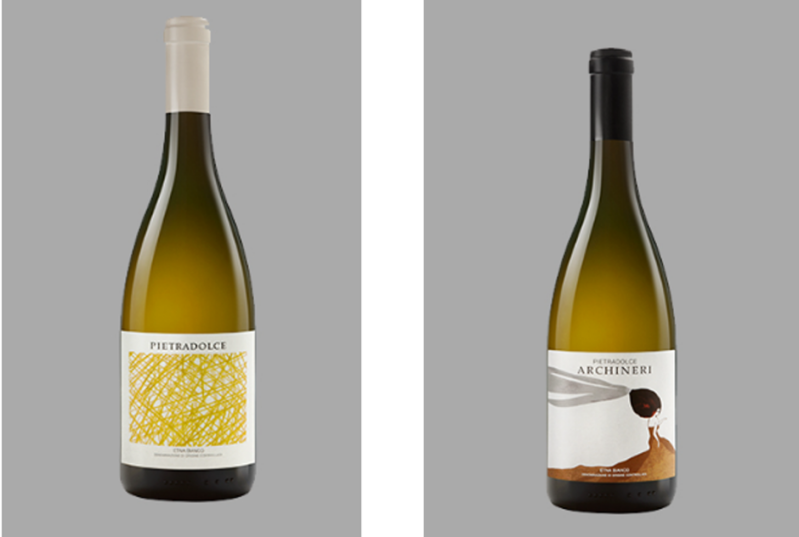
Etna Rosso Archineri 2021
Made from a single 90-year-old pre-phylloxera vineyard of Nerello Mascalese in Contrada Rampante at 850m on the Northern slopes of Etna. The crushed and destemmed grapes have an 18-day maceration in tulip shaped raw cement tanks, followed by 14 months in lightly toasted, fine-grain oak barrels and then bottle maturation.
Light ruby in the glass with a pale rim, aromas of cherry, juniper, pepper and rose. On the palate, soft, round and generous with good length.
Etna Rosso Rampante 2021
Pre-phylloxera Nerello Macalese from a small vineyard in Contrada Rampante on the Northern slopes of Etna. Destemmed and crushed grapes have an 18-day maceration in raw concrete tanks followed by 14 months aging in fine grained lightly toasted oak and further maturation in bottle.
Light ruby with a pale rim, presenting cherry and juniper aromas and a whiff of cedary spice. The palate is layered with cherry fruit, dried herbs and pepper spice with a long finish.
Etna Rosso Barbagalli 2019.
Made with grapes from pre-phylloxera century old Nerello Mascalese vines from a tiny plot in Contrada Rampante at 900 m. Maceration for 18 days in raw concrete tanks is followed by 20 months aging in fine-grained lightly toasted oak and further maturation in bottle.
Mid ruby in the glass with violets cherry, smoke and tar aromas. Theres a bit of grip on the palate with firm tannins and lively acidity framing spicy fruit and balsamic herb flavours, yet there is also a roundness and balance that makes this wine absolutely delicious with a very long finish.
Taken together, Pietradolce’s wines offer a vision of Etna that is both modern and elemental. They express the mountain not through structure or tradition, but through purity, tension, and verticality — a sense of lift that seems to rise directly from the volcanic soils of Rampante. In the context of this series, Pietradolce represents the luminous, contemporary face of Etna Nord, a producer whose work complements the precision of Terre Nere while offering its own distinct register of expression.
Design and Identity: The Built Expression of Pietradolce’s Modern Vision
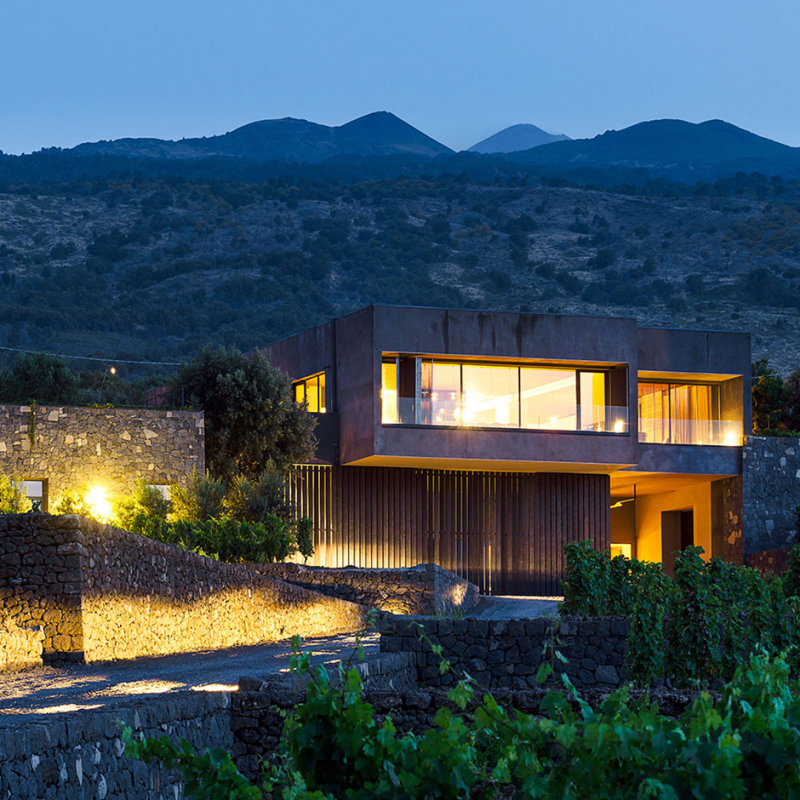
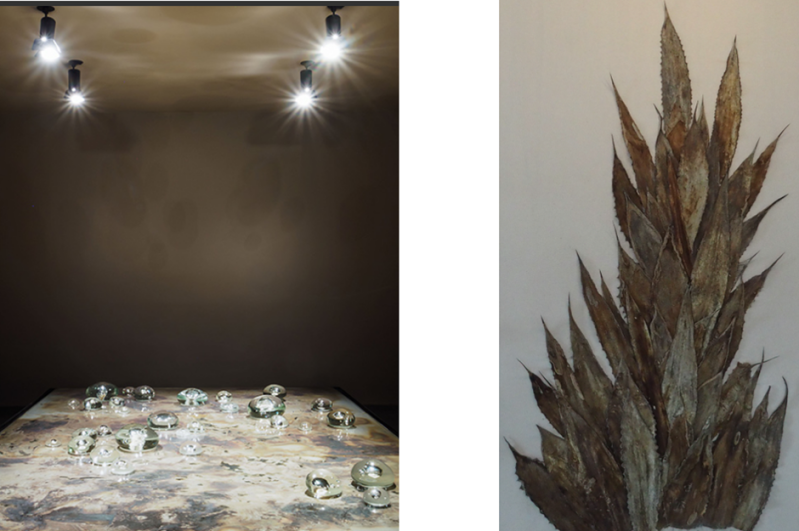
Beyond the vineyards and the cellar, Pietradolce’s new winery building adds an unexpected and deeply contemporary dimension to the estate’s identity. Set into the slope with clean, angular lines, the structure feels both rooted in the volcanic landscape and quietly sculptural — a modern counterpoint to the ancient alberelli that surround it. Inside, the space opens into a series of light‑filled rooms that function as both working winery and cultural gallery, showcasing striking large‑scale artworks by local Sicilian artists. These pieces — abstract, textural, and often echoing the colours and forms of Etna itself — give the building a sense of place that is emotional as much as aesthetic. The result is an environment where winemaking, landscape, and art are held in deliberate conversation, reinforcing Pietradolce’s belief that the mountain’s identity is not only agricultural or geological, but cultural, creative, and continually evolving.
Two Modern Visions of Etna: Precision, Purity and the Future of the Volcano
Encountering Tenuta delle Terre Nere and Pietradolce in succession reveals how far Etna Nord has travelled in its modern evolution — and how many directions that evolution can take without losing its centre. Both estates work with old vines, steep terraces, and the same elemental palette of ash, sand, and decomposed lava. Both are deeply rooted in the mountain’s viticultural heritage. Yet their interpretations diverge in ways that illuminate the breadth of Etna’s contemporary identity.
Terre Nere approaches the mountain as a landscape to be mapped and articulated, a mosaic of micro‑sites whose individuality can be revealed through precision and restraint. Its wines feel like finely drawn transcriptions of place — detailed, textural, and quietly authoritative. Pietradolce, by contrast, channels Etna’s energy through purity and tension, crafting wines that seem to rise from the glass with a vertical, almost luminous clarity. Where Terre Nere offers definition, Pietradolce offers lift; where one sketches the contours of the mountain, the other captures its pulse.
Together, they represent the modern frontier of Etna Nord: a shift from tradition and structure toward articulation, nuance, and the disciplined pursuit of terroir. Their work does not replace the perspectives explored in the first two parts of this series — the structured introduction of Firriato, the custodianship of I Custodi, the interpretive refinement of Graci — but rather completes them. Each producer, in their own way, reveals a different facet of the same volcanic truth.
What emerges from this journey is not a single definition of Etna, but a recognition that the mountain’s identity is inherently plural. It is a place where history and modernity coexist, where revival and innovation overlap, and where the future is being shaped not by uniformity but by the diversity of its voices. In the wines of Terre Nere and Pietradolce, Etna speaks with clarity and confidence — a reminder that this is a landscape still in the process of becoming, still expanding its vocabulary, still alive with possibility.
As the series draws to a close, the impression that lingers is one of movement rather than conclusion. Etna is not a story that can be captured in a single visit or a single perspective. It is a living, evolving terrain — geological, cultural, and human — whose complexity reveals itself only through contrast, dialogue, and time. And it is precisely in these modern expressions of precision and purity that the volcano’s next chapter is beginning to take shape.
About the author
John Penney is a wine experience guide based in Martinborough, New Zealand. His lifelong passion for wine has been deepened through extensive international wine travel, formal wine study (WSET3) and a career in adult learning. Through his Martinborough-based business wineinsights, he provides exceptional wine tour, wine-tasting and wine education experiences for wine lovers and enthusiasts.
Add comment
Comments
What a great article!
Many thanks for featuring us in it.